Purple Belt: How Jiu-Jitsu Coaching and Progress Evolved
Discover how achieving a purple belt in BJJ shifts focus from personal growth to coaching, impacting training intensity, game development, and ego.
The journey through the belt ranks in Brazilian Jiu-Jitsu is often marked by significant shifts in perspective and training methodology. For many, the purple belt represents a pivotal moment where the focus begins to broaden beyond just personal advancement to encompass the development of others. This stage is where the intricacies of coaching, managing ego, and achieving genuine progress truly come into play, fundamentally altering how one approaches the art.
The Shift to Coaching at Purple Belt
Earning a purple belt often coincides with an increased responsibility and opportunity to coach. This period marked a substantial expansion of the author's role within the jiu-jitsu community, dedicating more time to teaching and nurturing the skills of fellow practitioners.
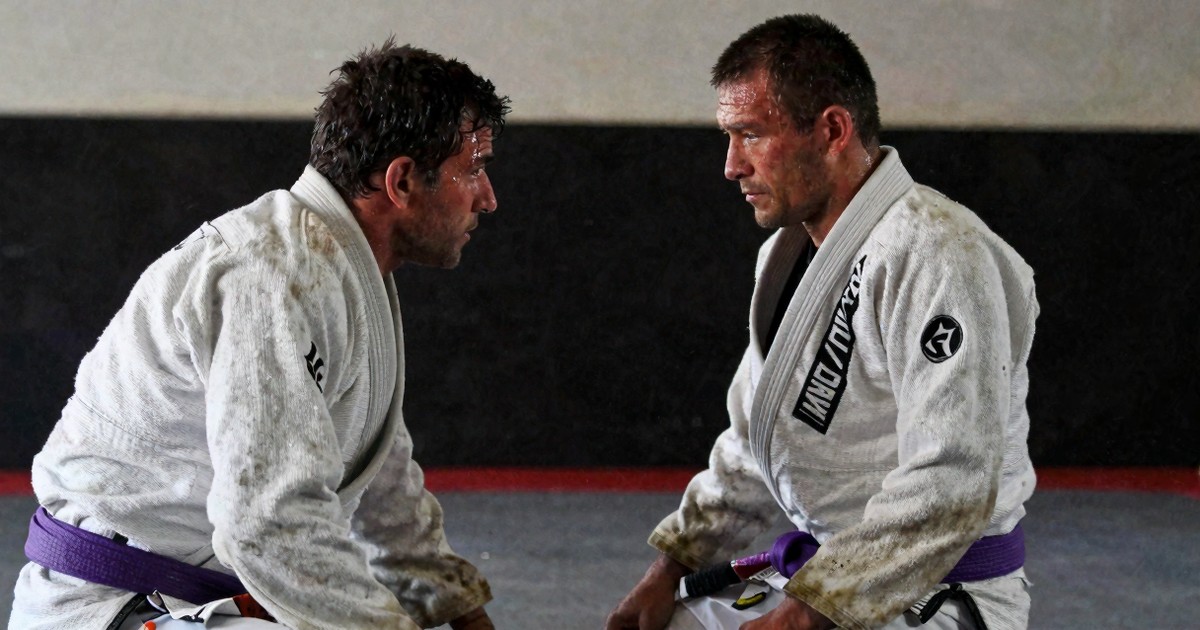
"I would say my role at Purple Belt expanded massively, so that is when you saw me do the most coaching, do the most teaching, and really dedicate myself in terms of jiu-jitsu," the author recalls. This increased involvement wasn't just about imparting techniques; it was about a deeper commitment to the art and its practitioners. The physical evidence, such as a "mangled" purple belt, underscores the intense engagement during this phase, signifying more time spent on the mats.
Tailoring Intensity for Competitors
A crucial development during the purple belt journey is the ability to tailor training intensity to the individual. The author found this skill particularly valuable when coaching a promising competitor, stating, "In fact, at Purple Belt, I would say I had the best version of this I have in general, right? In terms of not making mistakes and giving too much, too much difficulty to someone or too easy difficulty to someone."
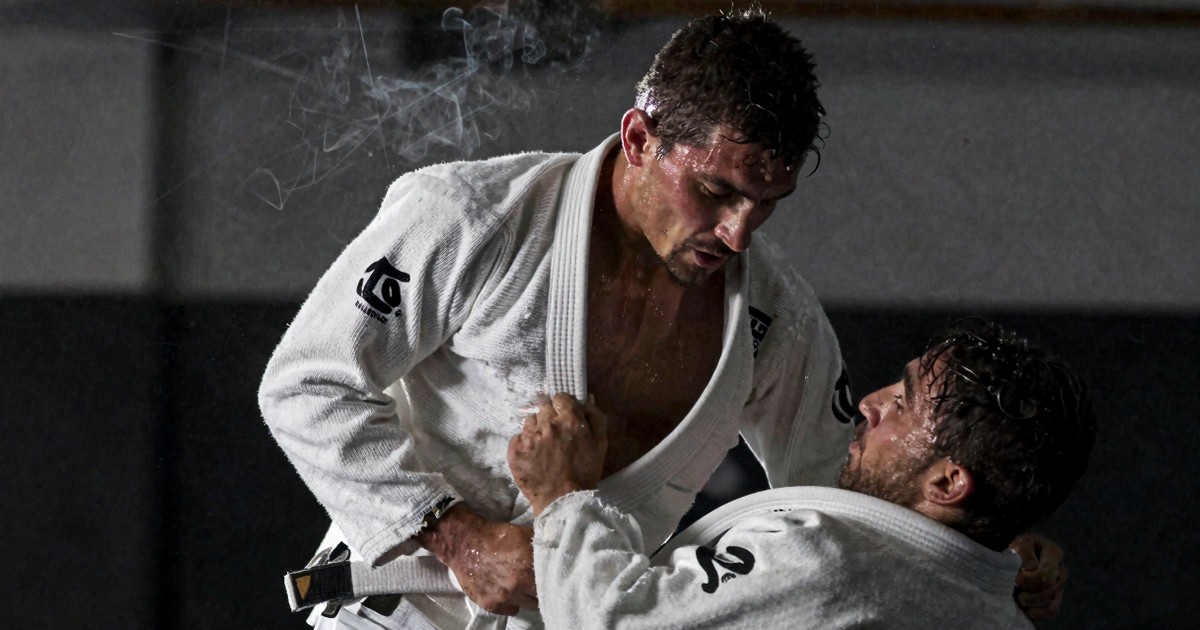
This nuanced approach meant that each training session was individualized. For a student preparing for competition, the author would create a challenging yet realistic sparring environment. "My favorite thing is I had him beating me every match, like every match he beat me, right? Going into this competition. And the funny thing is he's like, he talked to me afterwards. And he's like, I still thought I was beating a purple belt. Because you didn't just let like I didn't just let him win. I made it a real struggle for him. I made it really difficult," the author explains. This controlled adversity was designed to build confidence and prepare the competitor for real match scenarios without overwhelming them.
Conversely, when training less experienced students, the intensity would be significantly dialed back to prevent injury and foster a positive learning experience. The author notes the importance of not wasting a student's time but also not "just kill[ing] them," especially when at a heavier weight himself. This ability to "set dials of how hard I go" is a hallmark of effective coaching developed at the purple belt level.
Building a Focused Game
The purple belt is also a time for solidifying one's own jiu-jitsu game. Instead of learning every technique, the focus shifts to mastering a core set of skills and understanding how they flow together. The author emphasizes this by sharing an anecdote about a newly promoted purple belt stressed about learning numerous new moves.
"I'm like, stop wasting your time with that. You know?" the author advised. He elaborates on his own approach: "He's not wrong. You know, most of the time I do hit people with triangles. Uh, I do have other moves, right? I, I, I, but I prefer that triangle in a lot of situations, you know, that is, that is the go-to move for me." This highlights the value of developing a signature, reliable game built on a few well-executed techniques, rather than a superficial understanding of many.
The purple belt requires a deeper understanding of one's strengths and weaknesses. The author mentions his own journey, stating, "I know now, you know, I'm moderately okay with leg locks. I'm actually, you know, I would say decent and working on them. You know, it's something that I'm actually been actively working on again. But I wasn't that good at them at purple belt." This demonstrates that even at purple belt, the journey of skill acquisition is ongoing, but the emphasis is on deepening proficiency in chosen areas.
The Role of Ego and Real Progress
The transition to purple belt often forces a confrontation with ego. The author reflects on a time when he was heavier but still dominant in training, leading to a "delusion that it was acceptable for me to be at that weight." This internal struggle underscores how ego can sometimes mask areas needing improvement.
True progress, the author argues, isn't just about winning rolls or accumulating techniques. It's about learning from mistakes and allowing losses to sting, driving a desire for improvement. "No, you lost. Like I get in the training room, we're not going a hundred percent. You don't know what the person was doing ahead of time. But I can assure you every time I've lost a match, every time I've lost a role, I go back and I look at what went wrong and I try to figure out how to fix it," he asserts.
The author strongly advocates for acknowledging losses, not as failures, but as crucial learning opportunities. "Losses should sting. You know, I had one where I lost to a purple ball, uh, because, and I lost, uh, I definitively lost," he admits. This acceptance of defeat, coupled with a rigorous analysis of what went wrong, is presented as the engine of genuine progress, far more potent than the "I don't lose, I learn" mentality that can sometimes dilute accountability.
Mastering Difficult Positions and Teaching
An often-overlooked aspect of jiu-jitsu development is the strategic use of difficult positions for learning. The author touches on this when discussing his competitor's susceptibility to the "belly-down armbar." He admits, "I saw it in there whenever I was rolling with him, he'd leave himself open with it. He would have his what he would have is he'd have his hand dug really deep, like near your collar on the cross side, which which sets that up."
The revelation that he could have used this submission more frequently in training to prepare his student better illustrates a common pitfall: holding back out of a misplaced desire to not overwhelm a training partner. At purple belt, there's a growing understanding that pushing boundaries in a controlled way is essential for growth.
Ultimately, the purple belt marks a significant turning point where teaching becomes intertwined with learning. "So in general, at purple belt, you should be teaching, you should be doing the most learning of, of anything because you're learning from other people. You're learning your entire time on the mats. So you're watching other people. You're really emphasizing, you know, becoming better at jiu-jitsu and all in all ways," the author concludes. This reciprocal relationship between teaching and learning accelerates personal development, making the purple belt a truly transformative stage in the BJJ journey.
Watch the full video here: Purple Belt Changed Everything: Coaching, Ego, Real Progress.
Continue the training story
Put this BJJ story in the context of the full training record
See the belt timeline, competition notes, and the videos behind the written analysis.