What BJJ White Belts Actually Need to Learn for Success
A deep dive into why defense, physical conditioning, and managing ego are the essential habits white belts must build for long-term Brazilian Jiu-Jitsu success.
Hello and welcome to Toby on Fitness Tech. Today, I am taking a bit of a detour back into the world of jiu-jitsu to discuss the foundational rank of our sport. White belt is arguably the most critical stage of your development. It is where you build the habits that either support everything that follows or make the later belts much harder than they need to be. As someone who is currently a four-stripe brown belt, I want to look back at my journey and share actionable items for what you should be working on at the very beginning of your path.
I spent an unusually long time at white belt—three full years, from 2017 to 2019. During that period, I was training five to six days a week. I actually ended up with five stripes on my white belt because I spent so much time there and couldn't always make it to the specific promotion seminars. While some might see a three-year white belt tenure as a setback, it was actually the best thing that could have happened to my game. By the time I reached blue belt, I was already competitive with purple belts. This transition period is where I learned the most important lesson for any beginner: you must focus on your defense first.
The Priority: Build Your Defense First
At white belt, your primary goal is to learn how to not get submitted. It sounds simple, but many beginners get distracted by flashy submissions they see on YouTube. You should have a viable way to defend against essentially every basic submission thrown at you. This isn't just about knowing the moves; it’s about understanding the mechanics of why you’re getting caught.
Early in my journey, I had an upper belt who bow-and-arrow choked me every single day for six months straight. Instead of asking him for help immediately—which was a mistake that cost me months of progress—I spent hours trying to figure it out on my own. Eventually, a black belt walked me through the escape. I learned that the best solution to a bow-and-arrow choke is simply to not get in it. Once the opponent establishes the hand on your leg, the choke is essentially finished. You have to attack the arm locking the choke and keep your legs away from their reach. These conceptual defensive realizations are what bridge the gap between surviving and actually playing jiu-jitsu.
I also recall a roll where, as a white belt, I managed to catch a purple belt in a triangle. He tried to posture straight up to break my collar grip, but he didn't use his hands to address the grip itself. At white belt, you must learn that you cannot leave a collar grip on you at any cost—it pulls your head down, breaks your posture, and makes you susceptible to everything. Understanding these basic defensive principles pays massive dividends when you finally move up the ranks.
Physical Foundation: Weight, Strength, and Load
One piece of advice I frequently give to new white belts—which often surprises them because it isn't strictly technique-related—is to establish a weight you are comfortable at and maintain it. Size matters in jiu-jitsu. I’ve seen many white belts lose significant weight because they are training five or six days a week, but they become so light that they struggle to play their game against 200-pounders like me.
When I started, I was around 170 lbs. I had previously been morbidly obese and lost a significant amount of weight through running. However, I only started having real success in tournaments when I took the restrictor plates off and moved up to 185 lbs. Even though I added some body fat in that process, it allowed me to start strength training, which I hadn't been doing at all. That extra mass and the accompanying strength made a world of difference in my ability to hold positions and defend against larger opponents.
The Friday Strength Routine
If you are a dedicated white belt training five or six days a week, your body is getting beat up. You cannot add a complex, three-day-a-week strength routine on top of that without burning out or getting injured. My recommendation is to add one heavy strength training session on Friday.
If you beat yourself up too hard on a Friday, you have Saturday and Sunday off to recover. You will still be a bit sore on Monday, but you’ll be much better off in the long run. Use these sessions not just for raw power, but as quasi-physical therapy to fix the shoulder impingements and minor back issues that jiu-jitsu inevitably causes. Strength is your armor; it protects your joints from the rigors of the mat.
Avoiding the "Blue Belt Blues"
We often talk about the "blue belt blues," where people quit shortly after getting their first promotion. I didn’t experience this, and I believe it’s because I stayed at white belt for three years. Most people spend a year or maybe eighteen months at white belt and then find themselves in a "no man's land" as a fresh blue belt—good enough to beat new white belts easily, but not good enough to compete with purple or brown belts.
Because I was a five-stripe white belt who had been training consistently for three years, I was already used to the intensity of upper-belt rolls. I had already developed the peace of mind necessary to stay in the sport. If you feel like you're "stuck" at white belt, use that time to sharpen your defense until you can survive against the higher ranks. It makes the transition to blue belt much smoother because you aren't just a "target" anymore; you're a problem for them to solve.
Strategic Hardship: Choosing the "Death Match"
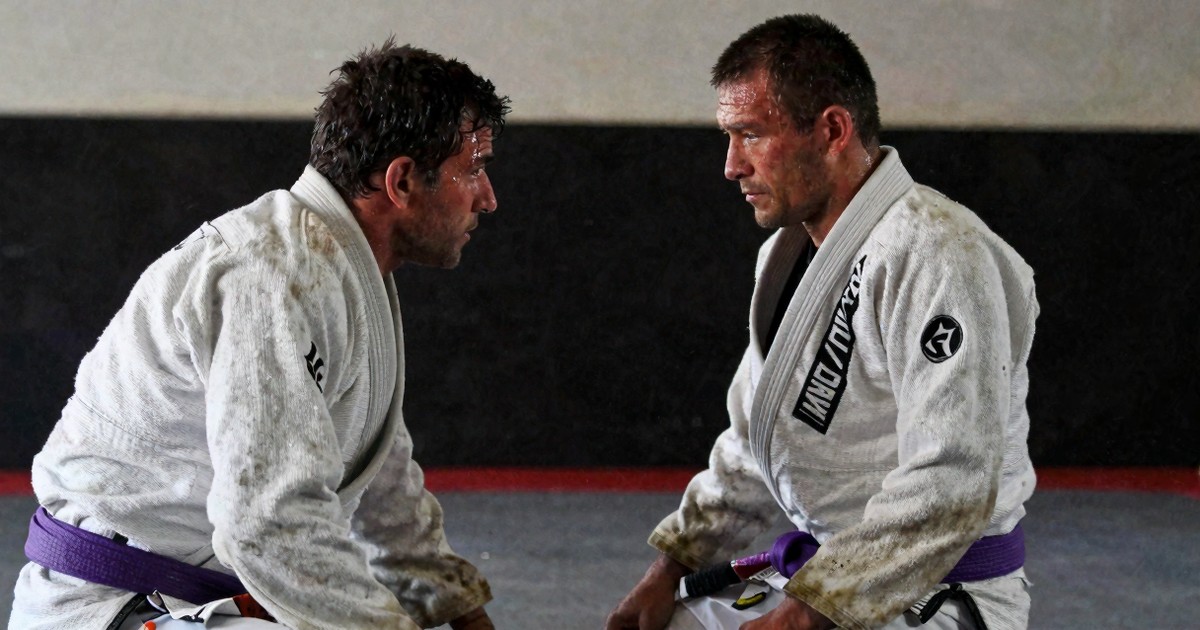
White belt is the time to decide what kind of training partner you are going to be. Are you going to shy away from competitive rolls, or are you going to lean into them? When I was a two-stripe white belt, a brand-new white belt came in who was highly competitive and athletic. Many people in the gym avoided that kind of partner because it was "too much work," but I decided I was going to face him every day at the end of class.
We called it the "Death Match." It was a no-time-limit match until someone tapped. We weren't being unsafe, but we were going 100%. Even though he was progressing at an incredible rate, facing him constantly forced me to hone my style and develop my techniques much faster than if I had only rolled with partners I could easily beat. That precedent of not walking away from a hard roll is essential for longevity in BJJ.
Managing the Ego: Turning Off the Power
This is a controversial point for some, but I feel strongly about it: if you are a larger or stronger white belt, you should practice turning your power off in most of your matches. When I outweighed someone by 30 or 40 pounds, I would dial my power way down to see if my technique actually worked. You learn significantly more when you aren't just using your weight to crush a smaller opponent.
However, there is a cautionary tale regarding ego. I once rolled with an upper belt whom I outweighed, and I had my power turned off. He submitted me twice, which I took as a learning experience. But later, I heard he was in the locker room bragging about how he had easily submitted me and that it wasn't even competitive. My ego got the better of me. The next time we rolled, I turned my power to 100%. When I went for a rear naked choke and he tried to push my hand over his chin, I simply neck-cranked him. I didn't have the patience for his arrogance.
The lesson there is twofold: turn your power off to learn, but be aware of your own ego. You have to be prepared to tap often and learn from every session without letting the results in the gym dictate your self-worth. Don't let someone else's lack of mat etiquette force you into bad habits, but also don't be afraid to assert yourself when necessary.
Jiu-Jitsu as an Anchor
Finally, I have to acknowledge that jiu-jitsu was an anchor for me during my time as a white belt. I went through a divorce during the transition from white to blue belt, and the gym became my primary coping mechanism. The friends I made at the mats were the ones who took me in when I had to move. While I wouldn't necessarily advise using the sport solely as an escape, it provided a focus and a community when everything else was falling apart. For more on the intersection of training and life, check out my other videos at Toby on Fitness Tech.
Summary of White Belt Action Items:
- Prioritize Defense: Learn the escapes for every basic submission before you worry about your own attacks.
- Ask Questions: When an upper belt catches you, ask them how they did it immediately. Don't wait six months.
- Manage Your Weight: Don't let high training volume make you too light to be effective.
- Strength Train: Add one heavy session (ideally Friday) to support your joints and build your "armor."
- Face Hard Partners: Seek out the "Death Matches" with athletic peers to test your progress.
- Check Your Ego: Be willing to turn off your power to develop actual technique, but know when to turn it back on.
Thank you for watching and reading. White belt is a long journey, but if you build these habits now, you'll be set for a lifetime on the mats.
Continue the training story
Put this BJJ story in the context of the full training record
See the belt timeline, competition notes, and the videos behind the written analysis.