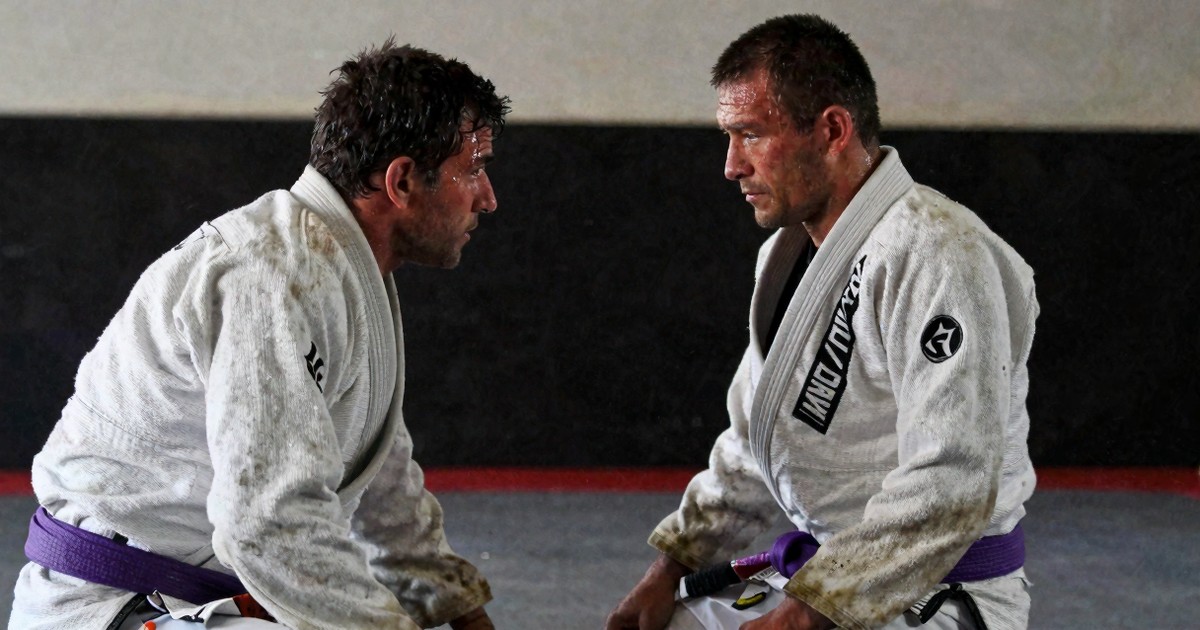
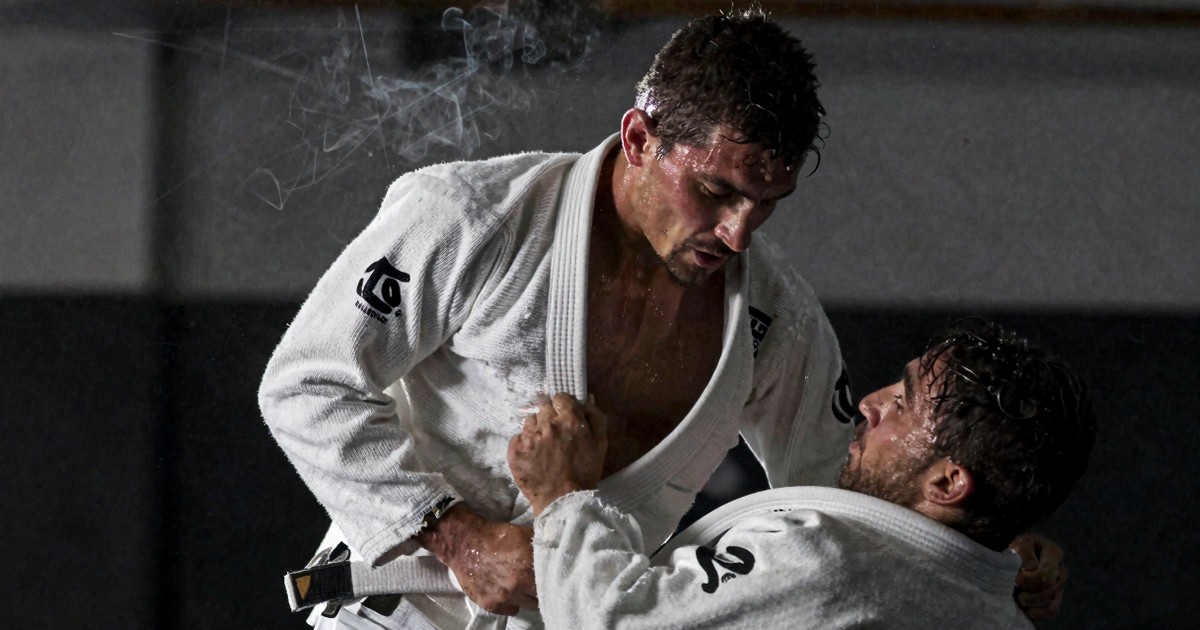
When MMA Commentary Meets BJJ Reality
A recent Ariel Helwani take on Gordon Ryan exposed a familiar problem: cage-side MMA commentary doesn't automatically equal jiu-jitsu literacy.
Every few months, the jiu-jitsu world gets a reminder that not everyone who talks about grappling actually understands grappling. The latest reminder came courtesy of Ariel Helwani, who put out a take so disconnected from how the sport actually works that it barely took the rollout of the next match to blow up in his face.
The specifics of the take don't matter as much as what it revealed. The claim was essentially that a high-level competitor would "stand no chance" against Gordon Ryan and wouldn't make it past thirty seconds. Anyone who has actually rolled, trained under a black belt, or spent more than a passing afternoon on Flograppling could tell you the gap between "would lose to Gordon" and "wouldn't make it past thirty seconds" is roughly the gap between a parking ticket and a felony. Both are technically car-related. That's about where the comparison ends.
The Commentary Pipeline Problem
This isn't the first time an MMA-centric commentator has wandered onto BJJ terrain and gotten the lay of the land completely wrong. It's a pattern, and it has a name: the MMA commentary pipeline. You spend ten or fifteen years calling fights inside a cage, you develop a black-belt-adjacent reputation by association, and then one day someone hands you a microphone in front of an ADCC bracket and assumes the analysis will translate.
It doesn't. And it never has.
The reason is simple, and it has nothing to do with Helwani specifically. Mixed martial arts commentary is built around a very specific grammar: striking, cageside wrestling, finish-or-survive dynamics, and the pacing of rounds. BJJ operates on a completely different clock. Submissions take time to set up. Positional hierarchy is its own language. The way a top competitor can look "behind" to a casual observer and then suddenly pull guard, invert, and threaten a heel hook is something that only makes sense if you've been on the receiving end of it, or at least spent hundreds of hours watching it done at a high level.
Helwani has a black belt behind his name. So does every other major MMA journalist who has been around the sport long enough — sometimes literally handed to them at a ceremony, sometimes earned through years of legitimate training. The point isn't whether the belt is "real" in some gatekeeping sense. The point is that even a legitimately earned black belt, when combined primarily with MMA commentary experience, doesn't produce jiu-jitsu analysis at the level people tune in expecting.
What Helwani Actually Got Wrong
The take in question flattened a matchup into a meme. It treated a contested elite-level grappler as if he were an entry-level white belt trying to survive his first promotion. That kind of framing is forgivable on a hot take show when the topic is, say, whether a particular UFC fighter's cardio will hold up at altitude. On jiu-jitsu, where the entire spectator infrastructure has only recently matured, that kind of framing is actively harmful to the sport.
Here's why. The audience for BJJ content is shifting. It's no longer just competitors and their training partners. There are now genuine fans who have never trained a day in their lives but will pay for Flo subscriptions, follow Flo tournament brackets, and buy athlete merch. Many of those fans first encountered the sport through MMA podcasts and YouTube channels where Helwani is a fixture. When those fans hear a confident, polished voice declare that an elite grappler would be obliterated in thirty seconds, a lot of them take it at face value.
That's how bad analysis becomes received wisdom. One confident voice, one bad take, and suddenly a casual fan's mental model of who the top competitors are is shaped less by matches and more by whoever happens to be holding the microphone.
The Greg Doucet Comparison
The other name that came up in the fallout — Greg Doucet, the IFBB pro bodybuilder who runs hit pieces on competitors — is worth pausing on. The reason that comparison landed is that both figures operate from the same fundamental posture: commentary without accountability. Doucet critiques physiques and careers from a position that no one in the bodybuilding community takes seriously as analysis. Helwani was making a grappling take from a position that, again, no one in the grappling community takes seriously as analysis.
The shared problem isn't the harshness of the take. Harsh takes are fine. Sport is harsh. The problem is the confidence-to-competence ratio. When you've spent a career building a brand on being plugged in, your takes carry weight even when they shouldn't. And once you've established that pattern, every wrong take erodes the brand a little more.
Why Gordon Ryan Specifically Trips People Up
One reason this kind of bad take keeps happening with Gordon Ryan matchups is that Gordon is genuinely an outlier. His gap over the rest of the no-gi field is real. He has made elite black belts look like hobbyists on multiple occasions. So there's a lazy shortcut that says: "Anyone Gordon faces, regardless of credentials, is going to get smashed."
That shortcut fails because it ignores two things. First, "would lose to Gordon" and "wouldn't last thirty seconds" are wildly different statements, and the audience hears the difference. Second, the way you frame the loss matters. A competitor who loses to Gordon 0-0 on advantages after ten minutes of tense positional chess is a fundamentally different story than a competitor who gets folded in thirty seconds. Conflating those outcomes doesn't flatter Gordon. It insults the loser.
What Good BJJ Commentary Actually Sounds Like
If you want to hear what jiu-jitsu analysis sounds like when it comes from someone who has actually lived it, spend an afternoon listening to the Leg Lock podcast, or the more recent BJJ-focused breakdowns on channels run by current competitors and coaches. The difference is immediately audible. You'll hear specific grips, specific setups, specific reactions to specific positions. You'll hear competitors disagree about technique in ways that make you want to go drill the move in question. You'll hear takes that are strong but grounded.
Compare that to a hot take from someone whose primary BJJ exposure has been sitting at cageside and asking athletes about their feelings between rounds. The contrast is stark.
The Takeaway for Fans
Here's the honest version: BJJ is having its moment in the mainstream, and that mainstream attention is going to bring more takes like this, not fewer. The best defense a new fan has is to seek out the actual grapplers when they want grappling analysis. The best defense an established figure has is to know when they're out of their lane.
And the best defense the sport itself has is the matches themselves. They keep happening. The results keep showing up. The competitors keep performing in ways that no podcast hot take can rewrite. Eventually the takes age out, and the footage stays.
That's how it should work.
Continue the training story
Put this BJJ story in the context of the full training record
See the belt timeline, competition notes, and the videos behind the written analysis.