The Blue Belt's Seminar Strategy
Craig Jones revealed his seminar nightmare: a blue belt strategically waiting at the back of the line. This observation highlights ego, survival tactics, and the importance of smart training for all grapplers.
If you've spent any time at a jiu-jitsu seminar, you already know the scene. The instructor walks in, demos a sweep or a submission, the room buzzes with excitement, and then the inevitable happens: who's going to roll? A line forms. Belts self-select. The experienced competitors drift toward the front. The curious white belts hover at the back, half-hoping they won't be picked. And somewhere in the middle, sandwiched between a chatty purple belt and a nervous first-day student, the line takes shape.
It's a small moment. It feels harmless. But as I heard recently — and as Craig Jones himself has been quoted saying — the position you take in that line tells a story. And sometimes, that story is the whole seminar.
The Quote That Stuck With Me
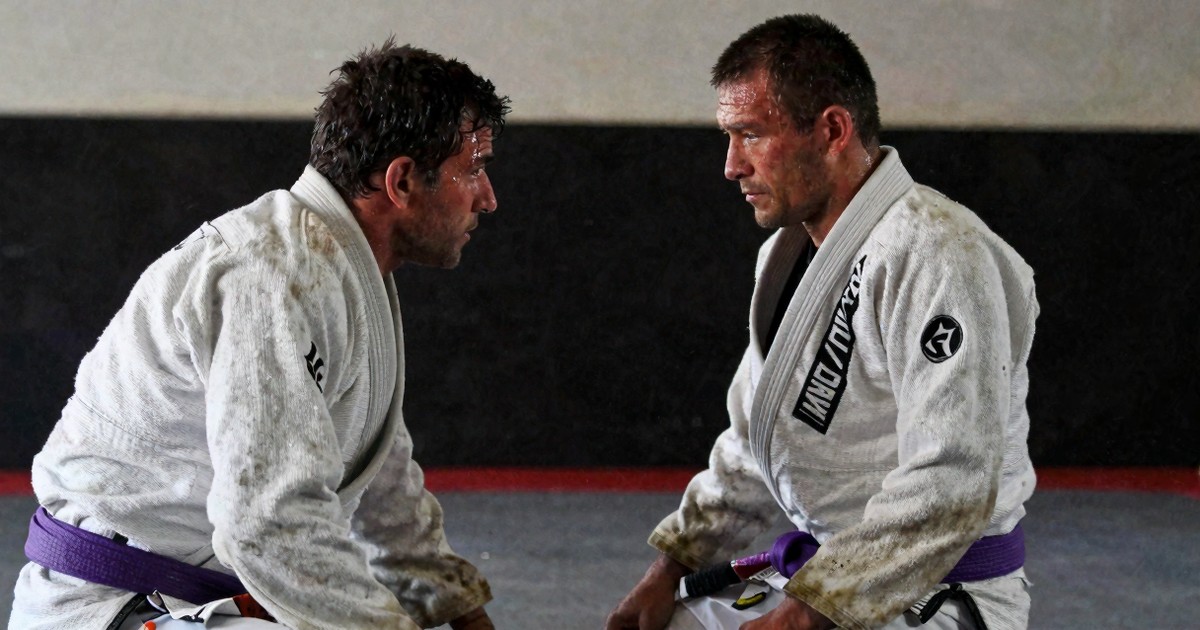
The original short was simple. Someone was explaining a well-known Craig Jones story: when he runs open mats at his seminars, the lineup becomes a microcosm of the gym. Purples, browns, and blacks confidently post up at the front. White belts usually hang back, deferring to seniority. The middle is a mixed bag of hobbyists, hobbyists-who-think-they're-competitors, and the occasional competitor working their way back from injury.
But Craig's "nightmare," as the clip framed it, isn't any of those people. It's the blue belt — and specifically, where that blue belt chooses to stand.
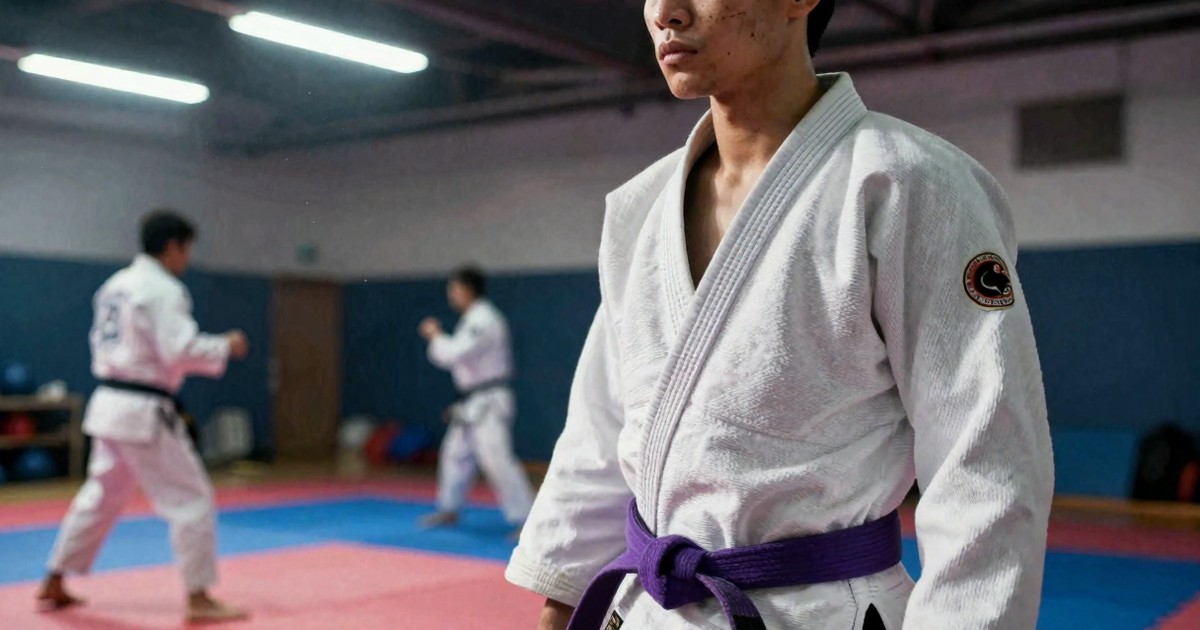
The horror scenario: a blue belt slots himself at the very end of a 20-person line. He's not trying to roll first. He's not hiding. He's lying in wait. Every higher belt ahead of him has to fight through the gauntlet, and by the time he steps onto the mat, the black belt has already rolled several hard rounds. The blue belt, fresh and unspent, gets a softened-up opponent who is now operating on fumes.
Craig's reported solution is to literally stop the rolling segment right before that last blue belt, just to short-circuit the strategy.
It's funny. It's also kind of brilliant. And the more I thought about it, the more it stopped being a punchline and started being a mirror.
Why the Line Matters More Than the Technique
A seminar is one of the strangest environments in jiu-jitsu. You show up to a room where half the people know each other from Instagram, a quarter know each other from competition brackets, and the rest are there because their buddy said the instructor was cool. You have no idea who you're about to roll with. You have no idea how hard they'll go. You have no idea if the person across from you is a hobbyist on a Tuesday night or someone who just flew in from a world championship camp.
Most of us figure this out by trial and error. The line order is one of the few signals you get before a single grip is taken.
The experienced grapplers read the line instinctively. They know that rolling early with a fresh, motivated stranger is a coin flip. They know that rolling late with a competitor who has already expended energy is an opportunity. They know that the position in the line is its own form of strategy, separate from anything that happens on the mat.
And that's exactly why a quiet, confident blue belt choosing the back of the line is such a fascinating data point.
The Subtle Art of the Energy Read
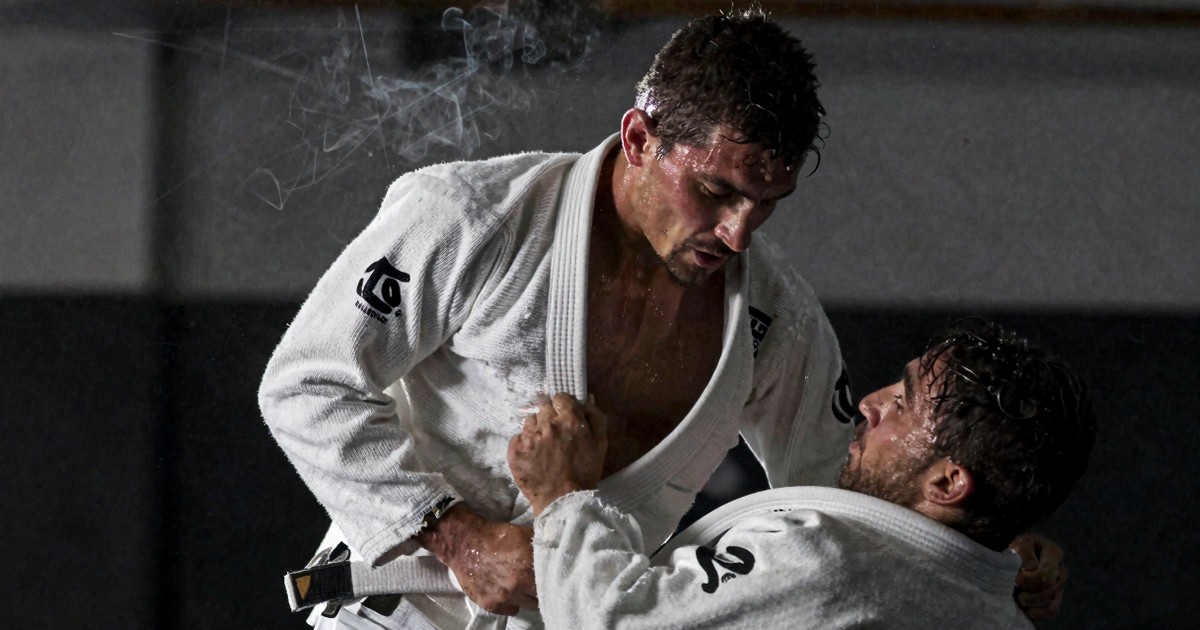
If you've rolled long enough, you know what a tired black belt feels like. It's not that they've gotten worse — they've just lost the explosive snap that defines their A-game. Their top pressure is still there, but their transitions are a half-beat slower. Their ability to recover from a bad position drops. They're still dangerous, but they're working from a smaller margin.
A fresh blue belt who has waited patiently for twenty minutes to roll is not a fresh white belt. He's had time to warm up properly, watch every round in front of him, and pick his moment. He's had time to study his opponent's habits, to see which submissions they got caught with, to notice the limp they don't favor out loud. He's had time to decide exactly how hard he's going to go.
The blue belt's edge isn't skill. It's freshness against a depleted opponent. And the higher the belt on the other side of that exchange, the more jarring the realization that they just got out-positioned by a 20-minute strategic wait.
The Ego Layer Nobody Wants to Talk About
Here's the part the transcript only hints at, but that every regular seminar-goer has felt. The front of the line is "typically the most arrogant of all of" — and the clip cuts off right there, but you can fill in the rest yourself. The people at the front want to be seen rolling first. They want to demonstrate that they belong. They want the bragging rights of saying they took on a black belt and "did fine." They are loud before the round and quiet during it.
The blue belt at the end of the line has a different energy. He's not there to perform. He's there to win a specific round, against a specific person, in a specific window of time. There's nothing wrong with that. There's also nothing wrong with the front-of-the-liner, honestly — both are choices about how to engage with an unfamiliar training environment.
But the part that's worth sitting with is this: the blue belt's choice implies a level of tactical thinking that many white belts and even some purple belts never develop. He's not the most skilled person in the room. He's just the most aware of how the room works.
What This Has To Do With Smarter Training
I think about this story a lot when I'm reviewing my own training data. There's a temptation, especially in the gadget-heavy corner of the jiu-jitsu world I write about here, to think that performance comes from gear, from gadgets, from supplements, from who has the best smart scale or the most accurate heart rate monitor. Some of that matters. Most of it doesn't.
The thing that separates good grapplers from great ones — and great grapplers from legends — is the quality of their decisions in unscripted moments. Where do you stand in line? Who do you pick to roll with? When do you tap early to save your elbow? When do you push through because this is the round your coach is watching? When do you skip the third roll of the night because your body is begging you to?
These aren't technique questions. They're judgment questions. And judgment, in jiu-jitsu and in life, almost always comes down to reading the situation accurately.
Three Things I Now Do Differently at Seminars
- I warm up properly before the rolling segment, not after. The blue belt who waits in line gets to warm up by watching. Most of us don't have that patience. But we can simulate it by arriving early, moving well before the rolls start, and showing up to the first exchange already warm.
- I pick my spot in the line based on energy, not status. If I'm tired from the day's training, I move up. If I want a specific opponent and they're several rolls away, I find a way to be near them in line without obviously angling. Reading the room beats announcing your intentions.
- I treat the back of the line as a strategy, not a punishment. If you're a lower belt at a seminar and you're nervous, taking the back of the line is a legitimate choice. You get to watch, you get to warm up, and you get to roll with someone whose gas tank is more depleted than yours. There's no shame in any of that.
The Real Lesson Craig Was Teaching
The reason Craig Jones's story lands is that it's not really about blue belts. It's about the fact that training is full of small asymmetries that compound into big outcomes. The line order is one asymmetry. The time of day is another. The instructor's mood is another. The music in the gym, the temperature, your last meal, your phone calls before class — all of these tiny inputs shape whether you have a great training session or a mediocre one.
The great competitors don't ignore these inputs. They engineer them. They understand that "showing up and rolling hard" is only one variable in a much bigger equation. The blue belt at the back of the line understood it too — probably before he could even articulate it.
So the next time you're at a seminar and you see someone quietly take the last spot in line, don't laugh. Watch them. Notice how they move during their warm-up. Notice how they engage once it's finally their turn. There is almost certainly a lesson in there — one that has very little to do with belt color and a great deal to do with the kind of grappler you want to become.
And if you're a higher belt reading this, maybe also take a little extra care during your last round of the night. You never know who's been quietly waiting for you to get tired.
Continue the training story
Put this BJJ story in the context of the full training record
See the belt timeline, competition notes, and the videos behind the written analysis.