Speediance 2S First Look: Heavier Than Expected, Better for It
The Speediance 2S surprises with its unexpected weight, signaling a level of build quality and stability rarely found in smart home gyms. This first look explores why physical heft is the ultimate proxy for engineering trust.
There is a particular kind of surprise that only happens when you try to lift something that was supposed to be light. You brace for the weight you were promised, and then the package doesn't move. You brace again, shifting your stance and engaging your core. It still doesn't move. You look down at the box, then up at the room, then back down at the box, and the only thing left to say is what I said out loud the first time I picked up the Speediance 2S: that feels really heavy.
This is the story of that moment, and what it taught me about why the "weight of innovation" is not a metaphor I want to apologize for anymore. In a world of fitness tech that is becoming increasingly flimsy and disposable, the Speediance 2S makes a physical argument for its own permanence before you even plug it in.
The Unboxing That Doubles as a Workout
I've unboxed a lot of fitness gear over the years. Smart mirrors, foldable racks, app-connected kettlebells, you name it. Most of them arrive in a box that promises more than the contents deliver. Often, the packaging is heavy because of the sheer volume of protective foam and cardboard required to keep a delicate instrument safe. The unit itself weighs about as much as a microwave, and once you pull it out, you can already picture the day you'll shove it into a closet and forget it exists because it feels like it might snap under real pressure.
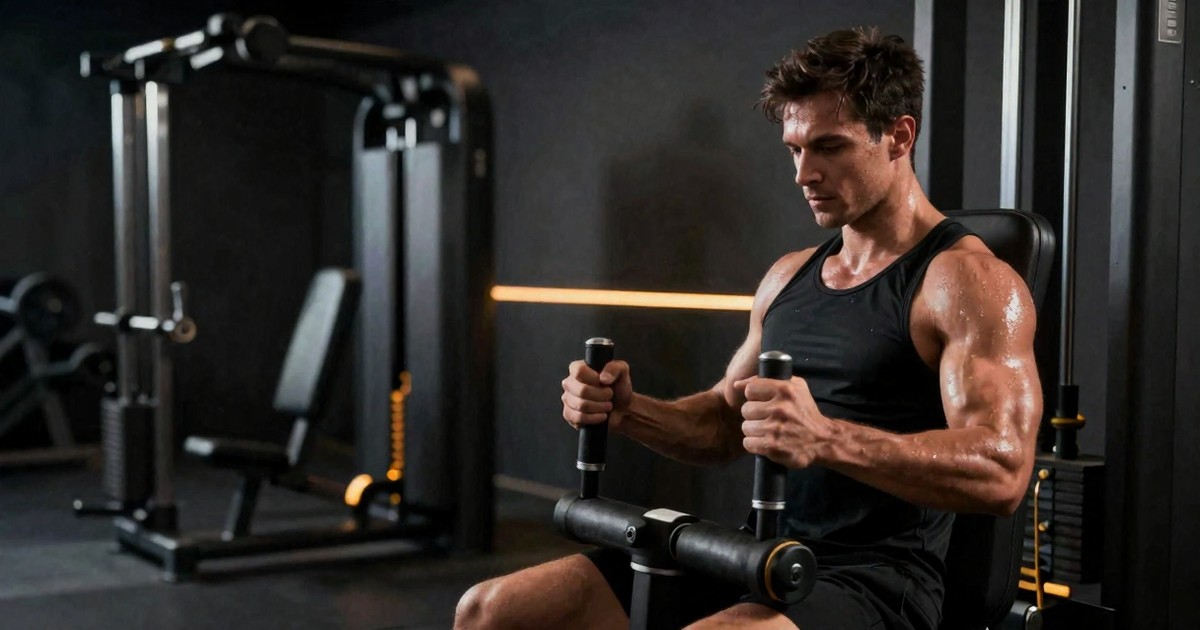
The Speediance 2S did not give me that experience. From the moment I started unpacking, the resistance was real. Lifting the unit into position was its own little set of reps. Sliding the carriage, locking in the components, even adjusting the arms — every interaction reminded me that this is not a toy that has been engineered to be moved every other day. This is a piece of equipment that wants to live in your home, anchor to a corner of your room, and stay there. The powder-coated finish and the thickness of the metal rails immediately set it apart from the plastic-heavy competitors I've tested recently.
The "220 to 260" That Stopped Me in My Tracks
In the video clip I recorded of the initial setup, I noted that the resistance range — the 220 to 260 lbs the machine offers — feels heavy. Not "challenging" heavy. Not "hard to push" heavy. The kind of heavy where you stop mid-sentence because your brain is recalculating what this device actually is. Digital weight is different from gravity; there is no momentum to help you on the concentric phase, and the constant tension of the Speediance motor makes 50 pounds feel like 70 pounds of iron.
Because here's the thing about fitness tech: when a product markets itself as a smart, connected, all-in-one solution, you usually expect a tradeoff. You expect the "smart" to mean light, compact, and unfortunately, a bit plastic-y. You expect the "connected" to mean small motors, limited resistance, and a vibe that says this was designed for early adopters, not for athletes. The Speediance 2S breaks that expectation. The resistance profile feels even, not jittery. The flywheel is real. The frame under your hands is not hollow in a way that makes you nervous during a heavy row.
Why Heft Matters in a Connected Trainer
I want to talk about weight for a second, because I think it's the most underrated feature of any home gym system. Weight — actual, physical, gravitational weight — is a proxy for build quality. You can't fake it. You can't put a 50-pound motor inside a 20-pound shell and have it feel premium. You can't simulate the stability of a heavy base with software updates. The chassis either has mass, or it doesn't.
When a smart trainer feels light, you start asking questions like: How long before the frame starts to wobble under load? How long before the belt slips or the resistance drifts? None of those questions came up with the 2S. The frame is planted. The arms lock with the kind of solid thunk you want from a piece of equipment you plan to keep for years. It doesn't groan when you lean into it. It doesn't slide across the floor when you're doing cable crossovers.
What the Weight Tells You About the Engineering
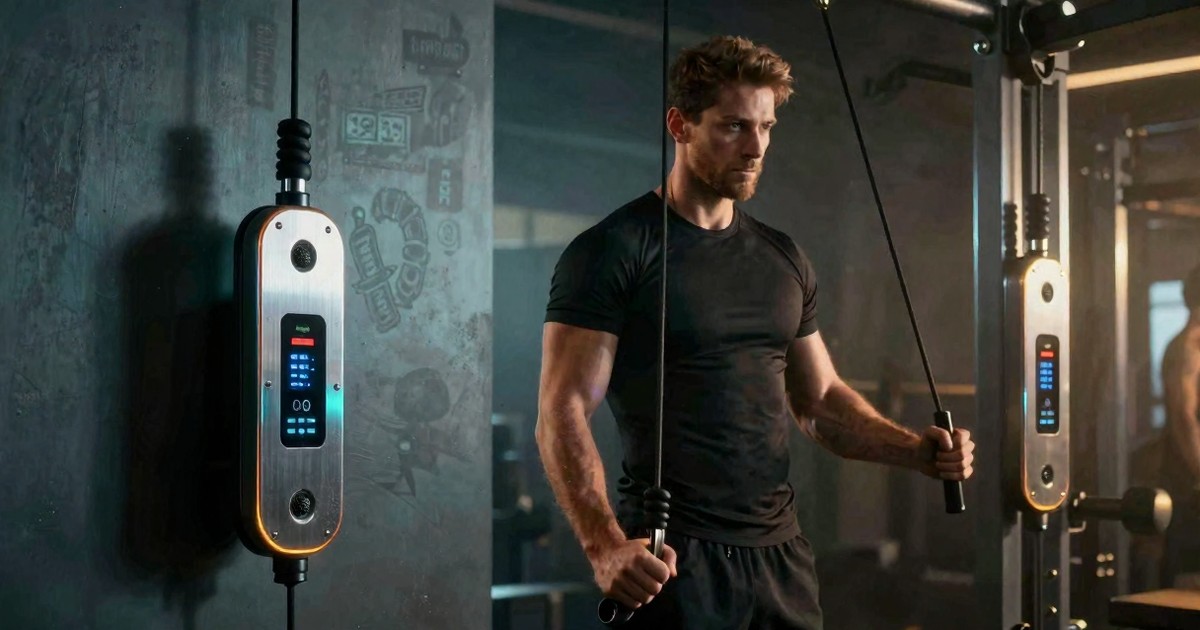
There's an old saying in product design: a device's weight is its résumé. Looking at the 2S, you can almost reverse-engineer the engineering decisions. The wide base isn't decorative — it's load-bearing, and you can feel it the moment you load up a heavy pull. The internal motor cooling is likely more robust, given the thermal mass of the casing. The rails are stiff, not flexible, which is essential for a machine promising legitimate cable-style resistance that mimics a commercial gym experience.
Even the handle attachments click in with resistance, not friction-fit ease. That's a feature, not a bug, even if it requires a bit more effort to swap accessories during a fast-paced circuit. It tells you the tolerances are tight. It tells you that Speediance isn't afraid of a little friction if it means a more secure connection.
The Real Surprise: A Gym That Doesn't Apologize
The biggest surprise of the Speediance 2S isn't that it works well — most modern smart trainers work well. The surprise is that it doesn't feel like it's trying to hide what it is. It's not pretending to be a piece of furniture or a sculpture. It's a gym. It's just a gym that happens to have a screen and a small footprint. And after years of fitness tech that prioritized looking like a gadget over training like a gym, that honesty is refreshing.
What I can tell you is the first thing I told the camera: I am very impressed with the machine so far. The resistance is heavy enough to take seriously, and the build is heavy enough to trust. More to come in the full review — including programming notes and accessory testing. Subscribe so you don't miss the long-term verdict.
Keep comparing
Make the next smart-gym decision with the full picture
Move from one review into model comparisons, real lifting data, and the matching video demonstrations.