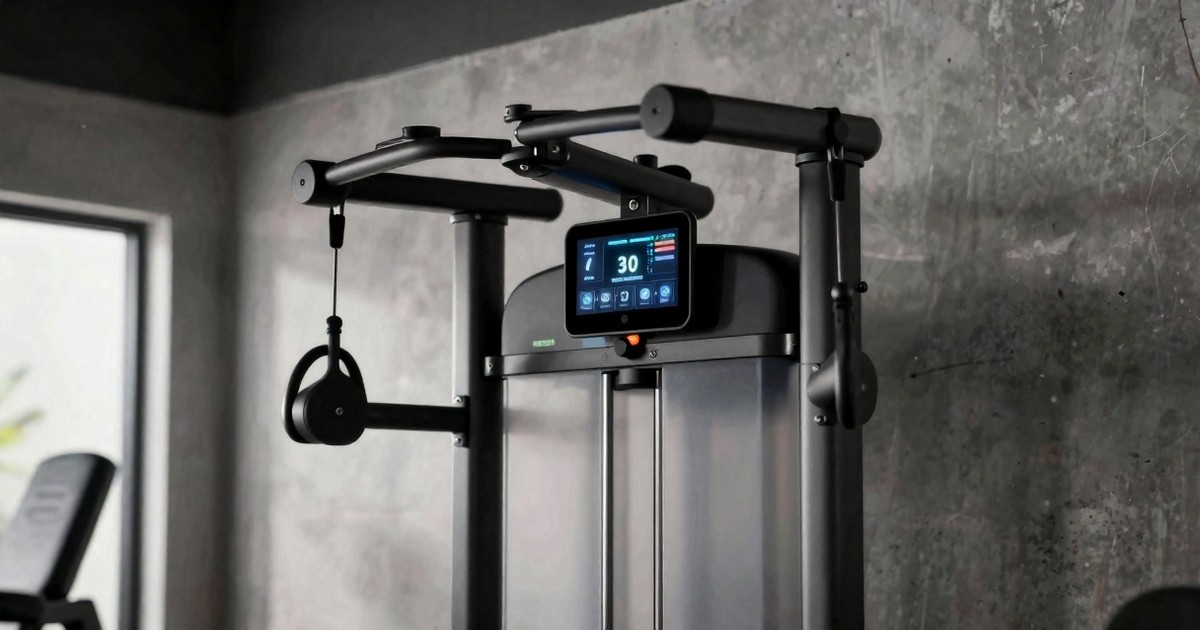
Speediance Ring Clip vs Bare Ring: Which Actually Works?
The Speediance ring without its clip degrades your grip in ways the on-screen trainer proves. Here is why the ring clip is mandatory for serious lifting sessions.
If you have a Speediance Gym Monster or Gym Monster 2S, the short answer is this: keep the ring in the ring clip. The bare ring forces a thumbless grip on at least one hand, and that cost shows up on every working set you do. After a Reddit argument about whether the Speediance ring is "trash," I went back to the device, watched the on-screen trainer frame by frame, and came away more convinced than ever that the clip is mandatory, not optional.
The three ways to change weight on a smart home gym
Before getting into the specific tier list, it helps to understand what each hardware option actually represents and the design philosophy behind them. Speediance sells a finger ring that pairs over Bluetooth and adjusts weight on a single press. Tonal, their primary competitor, ships a hard plastic clicker that snaps onto their bar and features distinct tactile indents so you can feel exactly when your finger is on the edge of the button without looking.
Speediance also sells a separate ring clip that holds the ring in a fixed position on the bar. This is a critical distinction: the clip turns a wearable accessory into a fixed-position bar accessory. It means you never have to wear the ring on your finger at all, which is how most traditional lifters prefer to interact with a barbell or handle.
| Option | Where it sits | Accidental presses | Best for |
|---|---|---|---|
| Bare Speediance ring | On your finger | Hits weight every time you grip | Nobody, in my experience |
| Speediance ring + ring clip | Fixed to the bar | Yes, but you can correct by sound | Freelift mode users |
| Tonal clicker | Movable on the bar | Also yes, but tactile indents help | Tonal owners |
The Tonal clicker earns respect because the button has real edges you can feel. The Speediance ring also has edges you can feel, but the button is so sensitive that in the act of feeling for them, you often bump the weight up or down accidentally. It does not take long before you realize there should be a software setting to lock the weights during a set, but that gap has not been closed in any software version I have used to date.
Proof the bare ring degrades your grip
I went looking for proof beyond my own anecdotal lifting experience. The on-screen trainer on the Gym Monster provided the evidence. If you watch her two hands during any curl, row, or pulldown, she does not grip the same way on both sides. On one hand, her thumb wraps fully across and presses against her index finger—this is the standard, strong closed grip used for heavy lifting.
On the other hand—the one wearing the Speediance ring—her thumb is either pinned awkwardly under the bar or floating out past the ring entirely. That second position is exactly what Speediance makes every user adopt if they put the bare ring on a finger and try to keep the button accessible. You cannot maintain a full wrap and keep your thumb free to press a button on top of your finger simultaneously without shifting the bar's position in your palm.
When your thumb is not pressing against your index finger, you are in what lifters call a thumbless or "suicide" grip. While it is a real grip used in specific jiu-jitsu situations and some very specific pulling variations, it is not the same as a closed grip. You simply cannot generate the same force because you cannot engage the full musculature of the hand and forearm. There is no serious biomechanical argument otherwise.
The Reddit thread was full of people insisting their grip was identical with or without the ring on their finger. However, none of them posted the actual weight they were moving. The trainer on the screen is wobbling at 7 lb with one thumb fully wrapped and one thumb floating, which proves the point: even at light weights, the floating thumb is a weak link that compromises the symmetry of the lift.
The thumbless math with real-world lifts
To understand why this matters, you have to look at how grip affects your top-end strength. Here is what the difference looks like in numbers, using my own deadlift and bench history as the reference point for the Gym Monster's digital resistance.
- 265 lb deadlift: I hit this on the Gym Monster with a broken right wrist specifically because I used the ring clip. I am not sure I could hit that with the bare ring because the instability of the thumbless grip would have likely aggravated the injury.
- 300+ lb deadlift: Off-device (using a regular straight bar), my personal top is around 385 lb. At these weights, grip is the first thing to fail.
- 245 lb bench press: This was my off-device bench. I am certain I could not touch this weight with a true thumbless grip; I would expect my safe working range to drop closer to 185 lb.
That gap is not a rounding error. It is the difference between training in your actual working range and training well below it because your hardware interface is holding you back. Because the change applies to every lift you do, the cost compounds across an entire workout, leading to less total volume and slower progress.
Tier list for weight adjustment methods
After testing these configurations extensively, my tier list for adjusting weight on a Speediance or Tonal looks like this:
- Tonal clicker, A tier. Tactile, movable on the bar, and easy to find without looking. The only caveat that keeps it from a perfect score is Tonal’s pricing and support policy. When a software bug broke the button response on a Tonal-style accessory, they tried to charge me $80 for a replacement. It was only confirmed as a software issue when a later update magically fixed it. That kind of support behavior is the only thing holding the hardware back.
- Speediance ring in the ring clip, B tier. This is the gold standard for Speediance owners, especially for Freelift mode users who want to change weights between sets. The clip itself is well-designed and secure. While the ring still occasionally bumps the weight if I brush it, the device plays two different click sounds (one for up, one for down) so I can correct by ear without stopping the set.
- Bare Speediance ring, F tier. It forces a thumbless grip on at least one hand on every lift. Anyone who says otherwise has not posted their working weights. If you want to prove me wrong, I would need to see a clip of a user hitting the machine maximum with a bare ring and confirming they could not pull significantly more using the clip or no ring at all.
A quick note worth adding: Speediance has an open third-party ecosystem. Someone has already built a foot pedal that triggers weight changes, which sidesteps the finger-grip problem entirely. This kind of accessory flexibility is one of the underrated advantages of owning a Speediance over a Tonal.
Software regressions and the trust gap
Dynamic weight modes are the single biggest reason I keep using the Gym Monster. Since the V3 software release, the core loading mechanism has been stable. I haven't seen the old bugs where the device would overshoot the prescribed weight or fail to add load across warm-ups. That part is stable, and it matters because my entire training philosophy is built around warm-up sets flowing into working sets with auto-adjusted load.
However, small bugs persist. A UX issue with workout-screen text bounds—specifically a barbell icon that sits outside its intended box—was fixed two releases ago and has reappeared in the current release. Bluetooth ring disconnects happen occasionally, mostly on one of my two rings. The device does play a sound when it disconnects, so I catch it, but these regressions shouldn't happen in mature software.
The most concerning issue is the support experience. Similar to my Tonal story, a software bug once stopped my ring from registering single presses. Speediance tried to sell me a new ring for $80. A later update fixed the bug with no acknowledgment. This kind of treatment erodes trust faster than a technical hiccup, and it’s why even the B-tier recommendation comes with an asterisk.
The missing feature: Partner Training
The biggest loss for my household isn't the ring hardware; it’s the removal of partner functionality. Speediance previously had a guest-profile version of partner free-lift. They removed it and replaced it with a "dual mode" that doesn't track progress against real logged-in profiles. My wife and I used the old partner free-lift weekly. Since neither of us likes the stock workouts on the device, we now cannot lift together effectively. I would rather have that feature back than any new camera-based form guidance or Pilates mode.
If Speediance brings back real partner free-lift and partner custom workouts, the Gym Monster stops competing with Tonal just on price and starts competing on workflow. Until then, my plan is to keep the Tonal for partner sessions and the Speediance for my personal heavy lifting—always with the ring clip installed.
Source video: Is the Speediance Ring Actually Trash? Here's the Truth.
Keep comparing
Make the next smart-gym decision with the full picture
Move from one review into model comparisons, real lifting data, and the matching video demonstrations.
Keep Reading
Related Posts
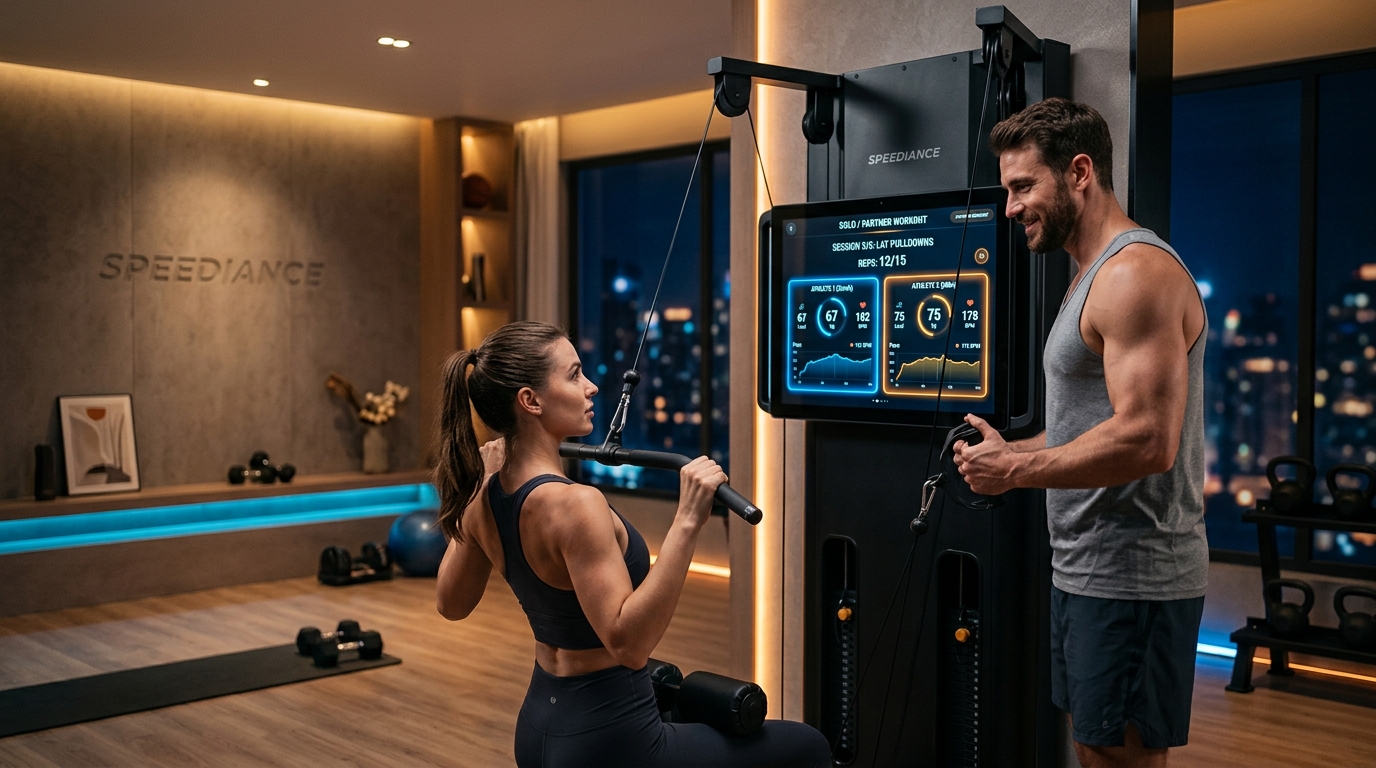
Speediance Partner Custom Workouts Are Finally Here: The Surprise Update That Changes Everything
The One-Set Bicep Curl Warmup That Actually Works