Why I Use Garmin (Even Though Its Metrics Are Questionable)
After testing nearly every smartwatch on the market, I've landed on Garmin as the 'best of breed' for serious training—even if its data requires a healthy dose of skepticism.
When it comes to wearable technology, we often get bogged down in a race for the most data. We want the most precise sleep stages, the most accurate calorie burns, and the most predictive recovery scores. But after years of testing virtually every major smartwatch on the market, I have reached a conclusion that might seem counterintuitive: I use Garmin because it is the best of breed, even though I find many of its primary metrics questionable at best.
The Best of Breed Choice
If you are looking for a direct answer on where Garmin stands compared to the rest of the market, here it is: Garmin is the superior choice for those who prioritize a dedicated training tool over a miniature phone on their wrist. While other devices excel at being extensions of your smartphone, Garmin excels at being a robust, reliable piece of fitness hardware designed for the long haul.
The trade-off is simple. By choosing Garmin, you are choosing a device that may provide data you occasionally disagree with, but you are gaining a platform that stays out of your way and focuses on the performance of the athlete rather than the convenience of the consumer. For my needs, the reliability of the ecosystem and the hardware's durability outweigh the periodic inaccuracies of the individual software metrics.
Comparison: Garmin vs. The Standard Smartwatch
| Feature | Standard Smartwatch (Apple/Samsung) | Garmin (My Optimized Setup) |
|---|---|---|
| Smart Features | Always on, high distraction, high utility | Disabled / Stripped to the basics | Sleep Tracking | Core focus, daily monitoring focus | Ignored / Not a primary driver | Training Focus | Secondary to connectivity and apps | Primary "Best of Breed" focus | Metric Utility | Passive observation for health | Active "Sanity Check" tool for training |
Why I Killed the "Smart" in My Smartwatch
I have owned almost all the different smartwatches available today, from the Apple Watch Ultra to various WearOS devices. Through that process of trial and error, I realized a fundamental truth about my relationship with technology: I do not actually like smartwatches. I don't want my wrist buzzing with notifications, I don't want to reply to texts on a tiny screen, and I don't want another device demanding my attention throughout the day.
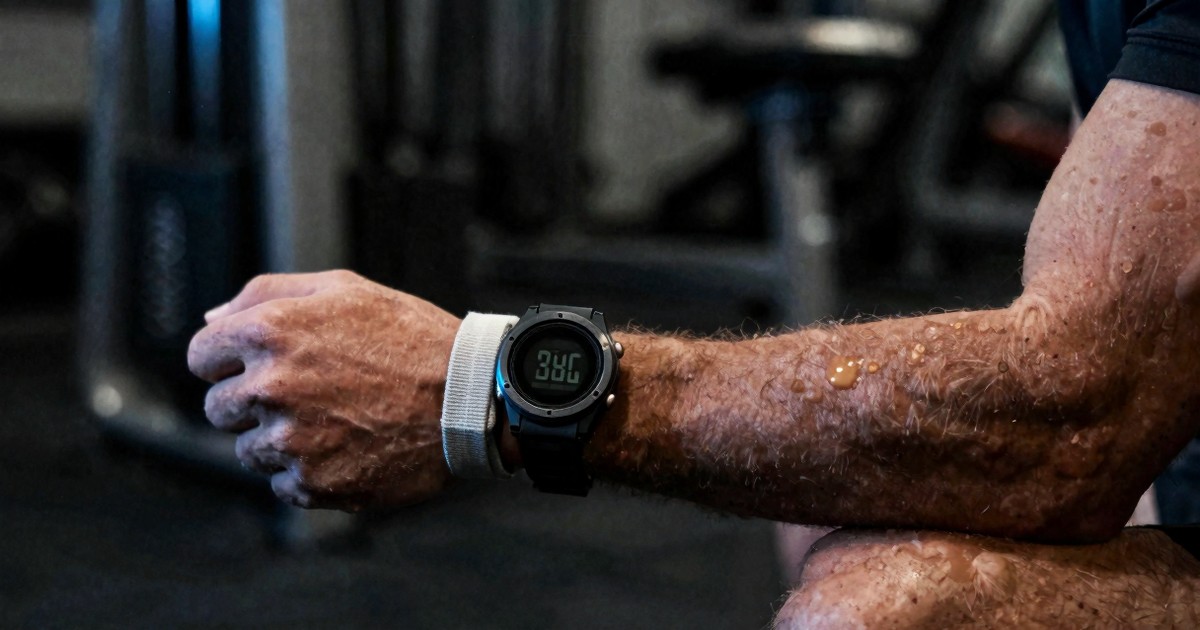
On my Garmin, I have all the smartwatch features turned off. No emails, no texts, and no app alerts. By stripping away the bloat, I transform the device back into a dedicated tool. It becomes a piece of fitness technology rather than a productivity distractor. This allows me to appreciate the build quality, the physical buttons (essential for sweaty training), and the GPS reliability of the Garmin without the friction of the "smart" features that I've found to be more of a nuisance than a benefit.
Navigating Questionable Metrics
One of the biggest hurdles for any wearable user is deciding which data to trust. Many people live and die by their sleep scores. I’ve taken a different route: I don't use the sleep tracking at all. I find that I don't need a watch to tell me if I slept poorly, and often, the data provided by these devices doesn't align with my actual recovery state. If I feel rested but the watch gives me a 40/100, I risk letting the watch dictate my mood rather than listening to my body.
The same applies to most of the internal metrics Garmin provides, like VO2 Max estimates or Stress scores. I view them with a healthy dose of skepticism. However, being "best of breed" doesn't mean being perfect; it means being the most functional tool in the shed despite the flaws in the software's interpretation of your physiology. The hardware is reliable, even if the algorithm is an opinion.
The Only Role for Body Battery
While I ignore 90% of the daily health tracking, there is one specific instance where I pay attention to the Garmin metrics: the "Body Battery" sanity check. I don't check it to see how I'm feeling; I check it to see if the watch's suggestions have completely lost the plot.
Every now and then, the Garmin coaching software or the daily suggestions will recommend a ridiculous run—something high-intensity or long-distance when I know I'm not up for it. In those moments, I look down at the Body Battery. If it says my energy is sitting at almost zero, it serves as a veto. It’s the watch's way of finally admitting, "You’re not doing that run, Toby. In fact, you're not running at all today."
In this context, the metric isn't a guide for my training; it's a guardrail. It is a secondary check that prevents the more aggressive parts of the software from pushing me into an injury or overtraining when the recovery data actually matches my subjective feeling of exhaustion. It is the only metric that seems to occasionally align with the reality of high-intensity training fatigue.
Who Should Choose Which Path?
Choosing between Garmin and a traditional smartwatch comes down to your personal relationship with data and distraction.
- Choose a Standard Smartwatch if: You want an extension of your phone, you value seamless integration with your apps, and you prefer a device that handles your digital life as well as it handles your steps.
- Choose Garmin if: You want a durable, high-performance tool rather than a lifestyle accessory. You should choose Garmin if you have the discipline to turn off notifications and use the device for its primary purpose, and you don't need 100% accuracy in every metric to find value in the overall ecosystem.
The deciding tradeoff is between connectivity and focus. If you want to be connected to your digital life at all times, a traditional smartwatch is better. If you want a device that supports your training while remaining largely invisible to your daily life, Garmin—even with its questionable metrics—remains the king of the mountain.
Final Thoughts
We often expect our fitness tech to be an infallible oracle, but the reality is that these are just tools. I use Garmin because, for me, it is the most reliable tool available once you clear away the noise. By turning off the features I don't need and maintaining a healthy skepticism of the metrics I do see, I've found a way to make the "best of breed" wearable work for my specific lifestyle. It isn't about the data the watch gives you; it's about how you use that data to stay on the path and stay focused on the work.
Use the data
Compare the wearable, then see what the numbers look like
Continue into hands-on comparisons, live WHOOP recovery data, and the broader tracker guide.
Keep Reading
Related Posts
Are Fitness Trackers Actually Accurate? Garmin Body Battery vs Whoop
Why Official APIs Are Not Enough for Your Fitness Data Ecosystem