Why Official APIs Are Not Enough for Your Fitness Data Ecosystem
Stop waiting for official APIs from Speediance or Whoop. Learn how to use AI agents and reverse-engineered endpoints to claim ownership of your fitness data.
Your Data Is Yours. Stop Waiting for an API.
If you are waiting on Speediance, Whoop, or Garmin to ship a comprehensive, official API before you build anything on top of your own training data, you are waiting for the wrong thing. For the serious data nerd, an official API is often a sanitized, limited window into your own metrics. To truly own your fitness stack, you have to look past the documentation and find where the data actually lives.
The choice between these platforms depends entirely on your technical threshold and data needs: Garmin is the gold standard for those who want a stable, documented API and local device intelligence; Whoop is for the cloud-first user who doesn't mind using AI agents to scrape what the API hides; and Speediance is for the power user willing to use reverse-engineered endpoints to track resistance training before the official doors open. Stop viewing the API as the gatekeeper and start viewing it as just one of many potential endpoints.
The core principle is simple: as long as you can reach the endpoint that holds your data, you have access to your data. Whether that endpoint is documented, called an API, or wrapped in a Model Context Protocol (MCP), is secondary. The interface is not the prize. The data is the prize.
The Stack: LLM, Harness, Tools, and Devices
When I talk about an AI workflow for fitness data, I think in four layers. This is how I structure my daily data pulls without waiting for vendor permission:
- LLM — The brain. This is the model (like Claude or GPT-4) that decides what to do based on the context of my training.
- Harness — The execution layer. This is the framework (like OpenClaw or a custom Python script) that holds the brain and exposes what it can call.
- Tools — The actual software on the machine. This includes FFmpeg for video processing, custom scrapers, or scripts that execute cURL commands. Tools sit alongside the harness as the things the LLM can ask to run.
- Devices — The physical limbs. These are the local computer, the wearables on your wrist, and the IoT hardware in your gym. Devices are what actually turn an instruction into something physical—a sensor read, a server call, or a file write.
APIs and MCPs are not in this list as a separate layer because they are descriptions, not requirements. An API tells you how to call a thing. An MCP tells a model how to call a thing. If I can call the endpoint without that description, I do not need the description. In an agentic world, we are moving toward a reality where the LLM can figure out how to interact with an undocumented endpoint as long as we give it the "Tools" to try.
Speediance: Waiting on an API Is the Wrong Move
Speediance is launching an official API later this year. Recently, a user told me he is going to wait for that launch before building his custom dashboard. He listed out what he planned to do with it—basic rep counts and weight totals. His list was maybe a tenth of what I already do today, and I do it without an official API.
How? Through reverse-engineered mobile endpoints. When you use the Speediance app on your phone, it talks to a server. By looking at those requests, we can see exactly how the data is structured. My AI agents talk to those endpoints directly, in the same way the phone app would. This is the only reason my Speediance workout volume, peak power, and eccentric ratios end up in my personal database every night.
However, there is a risk to this approach. My fear is that when Speediance ships the official API, they may lock down those mobile endpoints to force users into a metered or limited official path. Official APIs are often a strict subset of the raw data. If that happens, the system I built today might actually get worse the day their "feature" launches. This is the contract you accept when you buy hardware from a company without a mature data export story: you must be ready to maintain the path yourself.
Whoop: The API Exists and It Is Still Not Enough
Whoop has an API. It is real, it is documented, and yet it is fundamentally incomplete. There are features inside the Whoop app—like daily step counts—that you simply cannot reach through the developer API. For a wearable focused on recovery, Whoop seems strangely protective of certain activity metrics.
That used to be a hard problem for automation. It isn't anymore. Whoop now provides a web app interface that includes their own AI coaching layer. Instead of banging my head against a limited REST API, I have my agents (running via Hermes or Codex) log into the web app. The agent literally asks the Whoop web interface: "What were the step counts for the last 24 hours?" It reads the text response, parses the number, and inserts it into my system.
This is a fully automated daily steps pipeline where the official Whoop developer API is never touched. The lesson here is that when a vendor gives you one locked door, look for the next door. In an AI-first world, there is almost always a web surface, a chat surface, or a screen-scraping surface you can drive instead.
Garmin: The API Works, the Watch Doesn't Cooperate
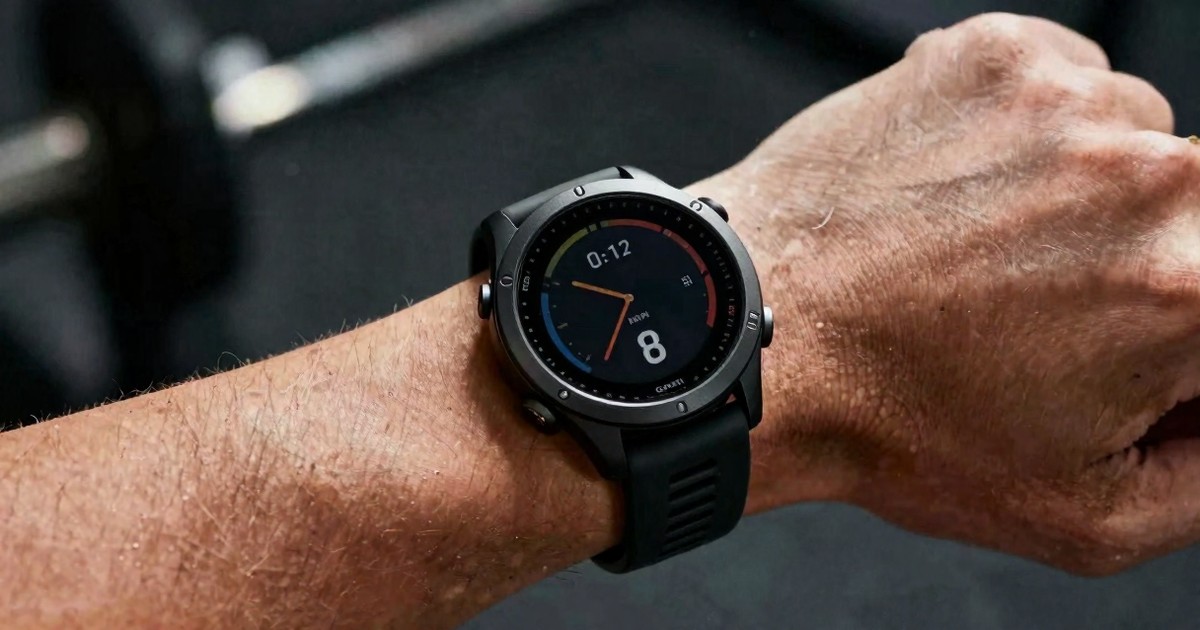
Garmin is the inverse of the Whoop problem. Garmin’s API is robust and does expose steps, heart rate variability, and sleep data reliably. If I were only wearing a Garmin, this would be the easiest pipeline to maintain. The problem isn't the software; the problem is the hardware behavior.
I take the Garmin off to charge. I take it off to lift because I prefer the freedom of movement for my wrists. When I do that, the data stream breaks. Unlike the Whoop, which is designed for 24/7 wear and constant cloud streaming, Garmin often relies on a manual or semi-automatic sync via Bluetooth to the phone. If I forget to sync or if the watch is on the charger, the API reflects a day with zero activity.
Garmin makes up for this with high-end on-device intelligence. If I lose network connectivity for three days in the mountains, the Garmin keeps logging and serving me daily suggested workouts and recovery metrics locally. Whoop has almost no local smarts—it is essentially a "dumb" sensor that requires a cloud "brain" to function. Garmin is a computer on your wrist; Whoop is a straw that sucks data into the cloud.
Comparison Summary: Choose Your Data Path
| Vendor | Official API Status | Reliability | On-Device Intelligence | Best Workaround |
|---|---|---|---|---|
| Speediance | Coming soon (Limited) | Medium (Requires maintenance) | High (Machine functions offline) | Reverse-engineered mobile endpoints |
| Whoop | Yes (Very limited) | High (Constant cloud sync) | Minimal (Cloud-dependent) | AI agent interaction with web app |
| Garmin | Yes (Comprehensive) | High (When worn) | Extreme (Full local processing) | Standard API + consistent wear habits |
Choose your device based on which failure mode you can tolerate:
- Choose Speediance if you want deep resistance training data and are comfortable maintaining custom scrapers or endpoint calls.
- Choose Whoop if you want the most seamless "set it and forget it" cloud data, provided you use an AI agent to bypass their API limitations.
- Choose Garmin if you want the strongest on-device experience and a standard API, and you can commit to the charging and wearing discipline required.
The Shift to Device-First Thinking
We are entering an era where the device itself is the bottleneck, not the software interface. Local computers, smart watches, and connected fitness machines like Speediance are the "limbs" of our digital nervous system. The LLM can decide what to do, and the harness can orchestrate the movement, but if the device is sitting on a charger or the endpoint is throttled, the system fails.
This is why I now think about devices first when planning a new data pipeline. What is the device? Where does its data physically reside? Can my tools reach that endpoint, with or without a formal invitation? If the answer is yes, I can build. If the answer is no, no amount of official API documentation will save the project.
Stop waiting for permission to use the data you generated with your own sweat. The tools to take it are already here.
The full discussion on these workflows is available in the source segment: Watch the original segment on YouTube.
Keep comparing
Make the next smart-gym decision with the full picture
Move from one review into model comparisons, real lifting data, and the matching video demonstrations.