Why Your Fitness Tracker Might Be Lying to You
Garmin's Body Battery often contradicts how we feel after a heavy lift. Understanding the gap between physiological data and perceived exertion is key to using wearables effectively.
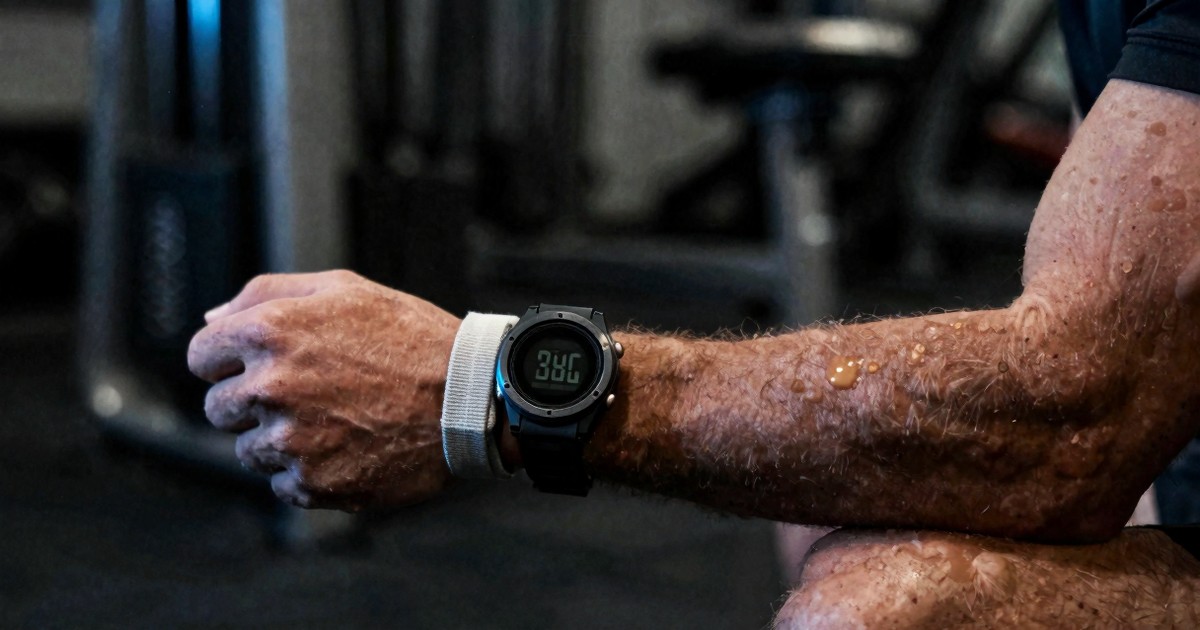
I glanced down at my Garmin after wrapping up what I assumed was a normal strength session. The watch said my Body Battery was sitting at 5%. Five. Percent.
That got my attention fast. Because the workout itself hadn't felt like it had hollowed me out. It felt like a hard training day, sure, but not a "my watch thinks I'm about to die" kind of day. And yet, there it was: nearly the bottom of the scale, and presumably one tick away from zero. This disconnect between how you feel and what your data says isn't a bug in the system; it's a conflict of perspective that every athlete needs to reconcile.
That's the thing about fitness trackers that nobody warns you about. They can be telling the physiological truth and lying to your subjective experience at the same time. Let me explain what I mean by looking at how these metrics actually function in the wild.
The Moment You Realize Your Watch Has Opinions
Body Battery is one of those Garmin features that sounds great on paper. It takes the various signals your watch collects throughout the day—things like heart rate variability (HRV), sleep quality, recent activity, and stress—and rolls them into a single number that, in theory, tells you how much gas you have left in the tank.
The pitch is clean: glance at the number, know whether to push hard or take it easy. The reality, as I keep discovering, is messier than the marketing materials. If you rely solely on the watch, you might skip a session you're actually prepared for. If you ignore it entirely, you might be sleepwalking into an injury.
What surprised me on that particular day is just how dramatically a strength training session moves the needle. I've seen plenty of people online shrug off strength work as something the watch barely notices compared to a 10-mile run. The opposite seems to be true here, at least for my physiology. Garmin is picking up the central nervous system strain of the session loud and clear, and it's draining my Body Battery accordingly.
So What Does This Number Actually Mean?
Here's where the "lying" framing comes in. Body Battery isn't a measure of how you feel. It's a measure of how your physiology appears to be recovering, based on whatever the watch's algorithm has decided to weight most heavily. These two things—perceived exertion and physiological load—do not always move in lockstep.
There are three specific things worth keeping in mind when your watch tells you that you're empty:
- The watch sees recovery load, not session quality. A heavy compound lift day will absolutely crater your Body Battery, even if you walked out of the gym feeling like a million bucks. The metric doesn't know whether you felt powerful during your sets or if you hit a new PR. It only knows that your heart rate variability dropped and your metabolic cost was high.
- Strength training gets weighted heavily by the CNS. I've now seen enough data points to say with confidence: a real strength session drags Body Battery down more than most other activities. While cardio tends to nudge the battery down gradually, heavy lifting seems to kick the floor out from under it. This is likely due to the impact on the autonomic nervous system.
- The floor is a technical limitation. In my case, the watch only got down to 5%. I've since learned that for many Garmin models, 5% is the functional floor. It won't show you a zero because, technically, if you're alive, you have some biological "battery" left. Knowing the floor helps you realize that 5% might just mean "highly taxed," not "unable to function."
Why This Is Still Useful, Even If It's Misleading
Now, before this turns into a "throw your Garmin in the ocean" post, let me say the obvious: the watch isn't lying in the sense that it's giving me bad data. It's giving me high-quality data, but I am often the one misinterpreting the context.
Body Battery is a single number trying to summarize a complex biological system. The moment I expect that number to match my subjective mood is the moment I'm going to be frustrated. The moment I treat it as one input among many—alongside sleep score, HRV trends, and my own internal check-in—is the moment it becomes an elite tool for longevity.
That's the reframe that changed everything for me. The watch isn't telling me whether I'm tired. It's telling me whether my nervous system appears to be taxed. Sometimes those line up perfectly. Sometimes they don't. The days they don't are exactly when I need to pay the most attention, because they signal a hidden fatigue that hasn't manifested as muscle soreness yet.
What I Actually Do With the Number Now
I've developed a few habits that have helped me stop treating Body Battery like gospel and start treating it like a useful clinical clue for my training blocks.
Compare the number to subjective feeling
If Body Battery is in the tank and I feel terrible, the decision is easy: I rest. However, if Body Battery is in the tank and I feel fine, I take that as a signal that the watch is picking up a physiological trend I should respect. I might still train, but I'll avoid hitting a true 1-rep max or adding extra volume that could lead to a multi-day crash tomorrow.
Stop obsessing over the absolute value
The specific number matters less than the trend. A 5% reading the morning after a brutal session of squats is expected information. A 5% reading three days into a recovery week, when I haven't done anything strenuous, is a massive red flag. Context determines whether the number is a normal result of training or a warning of oncoming illness.
Use it to schedule, not to decide
If I'm trying to decide between an easy day and a hard day, the watch isn't the final tiebreaker—my long-term training plan is. The watch exists to flag when something is clearly off-path. If the data is consistently low for a week, I don't just push through; I adjust the plan. The watch is the smoke detector, not the fire chief.
The Bigger Lesson About Wearables
Fitness trackers are amazing tools. They collect data we never had access to before, they surface patterns we'd miss during the grind of a 12-week program, and they make the invisible process of recovery visible in a way that pure intuition can't match. But they are also products of engineering.
They are algorithms based on decisions a team made about what to measure and how to weight it. Body Battery being low after a strength session is a fact about how Garmin views stress, and it's also a fact about my body, but it isn't the same thing as my internal drive. Treating data as a verdict rather than a feature sets you up to under-trust your own capabilities.
The honest framing is this: my watch isn't lying to me. It's telling me a different story than the one I was telling myself. The way I get better at training is by learning to hold both stories—the data and the feeling—at the same time without letting either one dictate my entire identity as an athlete.
Where I'm Landing
If you're staring at a freakishly low Body Battery reading and wondering whether your watch is broken, it probably isn't. It's likely working exactly as designed, reacting to the massive physiological cost of your recent training. The question is whether you've built a framework for what to do when the data disagrees with your gut.
Mine is simple now. I look at the number, I look at how I feel, and I make an informed call. Sometimes the watch wins and I take the nap. Sometimes I win and I hit the mats. Either way, the data is a feature of my training, not a verdict on my fitness. On the days where I roll out of the gym thinking it wasn't that hard, only to see my Body Battery in the basement, I don't get annoyed anymore. I just realize the watch is telling me the truth about the recovery I haven't started yet.
Use the data
Compare the wearable, then see what the numbers look like
Continue into hands-on comparisons, live WHOOP recovery data, and the broader tracker guide.
Keep Reading
Related Posts
Are Fitness Trackers Actually Accurate? Garmin Body Battery vs Whoop

Why Official APIs Are Not Enough for Your Fitness Data Ecosystem