Switching From OpenClaw to Hermes Agents: My Current AI Workflow
Learn how to split Project Aria, Agent Stack Daily, and adaptive workouts across Hermes agents on an M3 and a DGX Spark, using Fable for major architectural changes.
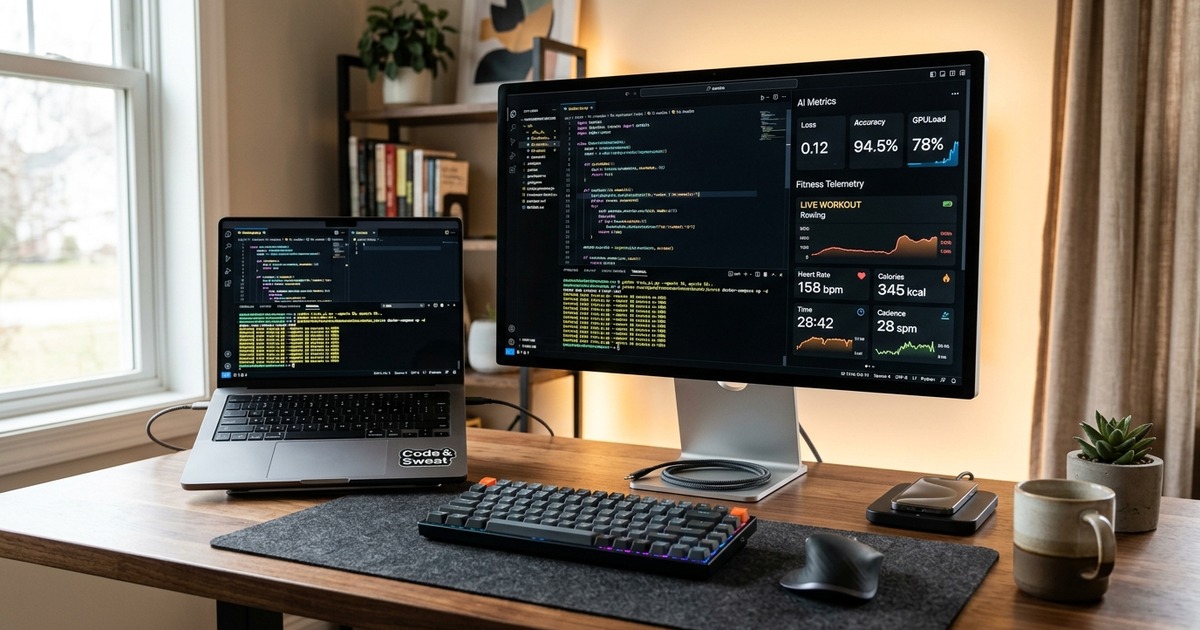
I keep getting asked how my AI setup is wired together right now, so here is the short version: my workflow has officially transitioned from OpenClaw to a distributed Hermes agent architecture, with Fable serving as the heavy lifter for comprehensive rebuilds. Currently, Project Aria, the morning fitness report, adaptive workouts, and the Agent Stack Daily podcast pipeline are all running on Hermes agents split across an M3 Max and a DGX Spark node.
For those deciding between these tools, the choice comes down to the scale of the task and the location of your data. If you are doing a ground-up rebuild or a multi-file architectural shift, Fable is the superior choice for its planning capabilities. However, for daily, incremental operations and data-dependent triggers, a local Hermes agent is more efficient. While I have moved most operations to Hermes, I am keeping OpenClaw in a standby state due to some lingering reliability concerns with Hermes' OpenAI API connectivity.
Where the Infrastructure Lives Right Now
The transition away from OpenClaw wasn't about a lack of power, but about better segmentation. My current environment is split between two primary machines, which allows me to separate personal data from public-facing production environments. The OpenClaw instance is still sitting on my local machine, but it’s essentially idle—a safety net in case the newer stack hits a wall.
- M3 Max (Local Machine): This is the hub for personal telemetry. It runs the Hermes agent responsible for Project Aria’s fitness tracking, the adaptive workout builder, and the entire Agent Stack Daily podcast pipeline. Because the M3 is where I consume my data, it makes sense for the agent to live here.
- DGX Spark (Compute Node): This Hermes agent handles the heavy lifting for website updates and the server-side slice of Project Aria’s historical tracking. Placing this on the Spark ensures that public-facing updates don't clog my local machine’s resources.
That split matters because it fundamentally changes the "personality" of each agent. The M3 agent is highly personal—it builds my morning report, scripts my workout, and renders the podcast audio. The Spark agent functions more like a production server, focused on stability and site deployment.
The Morning Report: Turning Data into Action
Every morning, the Hermes agent on the M3 fires off a daily brief to my Telegram. This isn't just a notification; it’s the primary input for the day’s physical training. It aggregates data from the previous 24 hours to provide a clear "Green Light" or "Red Light" for training intensity. A typical report looks like this:
Morning Toby. Recovery 76%, HRV 25 ms, resting heart rate 75 after 8h 6m of sleep at 92% efficiency. Whoop strain 2.4. Load ratio 0.9. Step target 12,600. Yesterday: 14,490 steps against a 14,700 target. Recovery trending 76% vs 71% seven-day, 62% twenty-eight-day. Cardio green light. Train to the recovery signal.
This report acts as the prompt for Project Aria to select the day's workout. It isn't a vanity dashboard that I look at and ignore. If the recovery trending is up, Aria increases the volume. If the load ratio is skewed or sleep efficiency is low, the workout is throttled back. Aria actually executes on the recovery signal, removing the "ego" from my training decisions.
How Project Aria Automates Training Decisions
Since returning from recent health issues, I have handed all exercise selection and volume decisions over to Aria. I no longer spend time picking movements or rep ranges. Aria uses the same logic my old personal trainer employed—20 RM (Rep Max) volume work, accessory movements, prep, and cool down—but the specific selection is entirely dynamic.
It analyzes yesterday’s BJJ load, my current recovery metrics, and how hard I pushed in previous sessions to select movements. This is critical because Aria forces me to do the parts of training I would normally skip: the prep and the cool down. For example, yesterday it assigned seated arm circles—a flexibility drill that I found incredibly difficult, while my wife cleared it easily. Without the agent "holding the keys," I would have likely substituted that for something easier. By giving Aria control, I ensure that my training addresses weaknesses rather than just reinforcing strengths.
Agent Stack Daily: The Consumer-First Podcast
The other major component on the M3 is the Agent Stack Daily podcast pipeline. I built this because I wanted a daily news digest in a format I could consume during my morning routine. This is a "consumer-first" piece of software; I am the primary listener. I listen to the generated cut every morning before it gets published.
This internal feedback loop is what maintains the quality. If the agent does a poor job with the summary or the audio edit, the episode simply doesn't ship. Because I am my own gatekeeper, the quality bar remains high. This shift—from content production to personal utility—has changed how I evaluate the agents' performance. If it isn't useful to me, it isn't useful to the audience.
The Multi-Agent Split: Fable vs. Hermes
After months of testing, I’ve established a clear rule for when to use which tool. This avoids the frustration of trying to force a "generalist" agent to do a specialized job.
| Task Type | Tool | Strategic Reasoning |
|---|---|---|
| Large-scale rebuilds or new features | Fable | Better at multi-file context and broad architectural planning. |
| Bug fixes and daily operations | Hermes (Local) | Faster execution; has direct access to the local codebase. |
| Adaptive workout generation | Hermes (M3) | Co-located with biometrics and the morning report trigger. |
| Website production updates | Hermes (Spark) | Handles the site stack without local resource contention. |
| Complex Project Aria logic | Fable + Hermes | Fable plans the logic; Hermes executes the daily updates. |
A practical example occurred today: I initially thought Agent Stack Daily required a major architectural change, so I sent the task to Fable. It turned out to be a simple UI bug where stories were being truncated. That was a Hermes-level fix. Fable is great for when you don't know the blast radius of a change, but once the path is clear, Hermes is the more efficient tool for surgical edits.
Current Limitations and Reliability Concerns
While the move to Hermes has been largely successful, I haven't deleted OpenClaw yet for two specific reasons. First, Hermes updates occasionally break existing workflows, requiring manual intervention. Second, I’ve encountered intermittent drops in the OpenAI API connection within the Hermes agent environment—an issue I rarely saw with OpenClaw.
Reliability is the most important metric for any tool that runs your daily life. If an agent fails to generate the morning report, the entire training chain is disrupted. I am currently monitoring these connection drops closely. If they persist, I may revert certain critical data-logging tasks back to the more stable OpenClaw environment.
Recommendation: Who Should Use This Setup?
If you are managing a multi-agent system, the takeaway is to stop searching for the "one true agent." Use Fable when the task is big, messy, and involves multiple files. Use Hermes agents when the task is local, incremental, and needs to react to daily data.
For those using AI in fitness: The agent must live where the data lives. If your workout logic doesn't react to your biometrics in real-time, a static plan is sufficient. But if you want a system that forces you through the "boring" work—the mobility and the cool downs—you need a reactive agent that owns the decision-making process. Keep yourself in the loop as the primary consumer; it’s the only way to ensure the AI is actually solving your problems instead of just creating more noise.
Full workflow segment is in the source video. Not medical, legal, financial, or training advice—just the current state of the machines on my desk.
Go deeper
Follow the AgentStack system from build notes to daily episodes
The AI work has its own path now: implementation reports, daily analysis, and the podcast archive.
Keep Reading
Related Posts

LLMs Don't Edit Videos: Why the Agent Harness and Tools Matter

Building BJJ Buddy Live: A Speediance Workout and AI Dev Session