The Day the Barbell Bent: Why You Should Never Bench Press Alone
A first-person account of a near-death bench press mishap while training alone. Learn the critical safety lessons every solo lifter must implement to survive the iron.
I've been lifting weights for years, and for most of that time, I trained alone. Not because I wanted to be a lone wolf hero of the gym floor, but because my schedule didn't line up with anyone else's, and honestly, I liked the quiet. No small talk between sets. No waiting around. Just me, the iron, and the work.
That preference for solo training came with a tradeoff I didn't really think about until the day it almost cost me everything.
The Moment the Bar Came Down
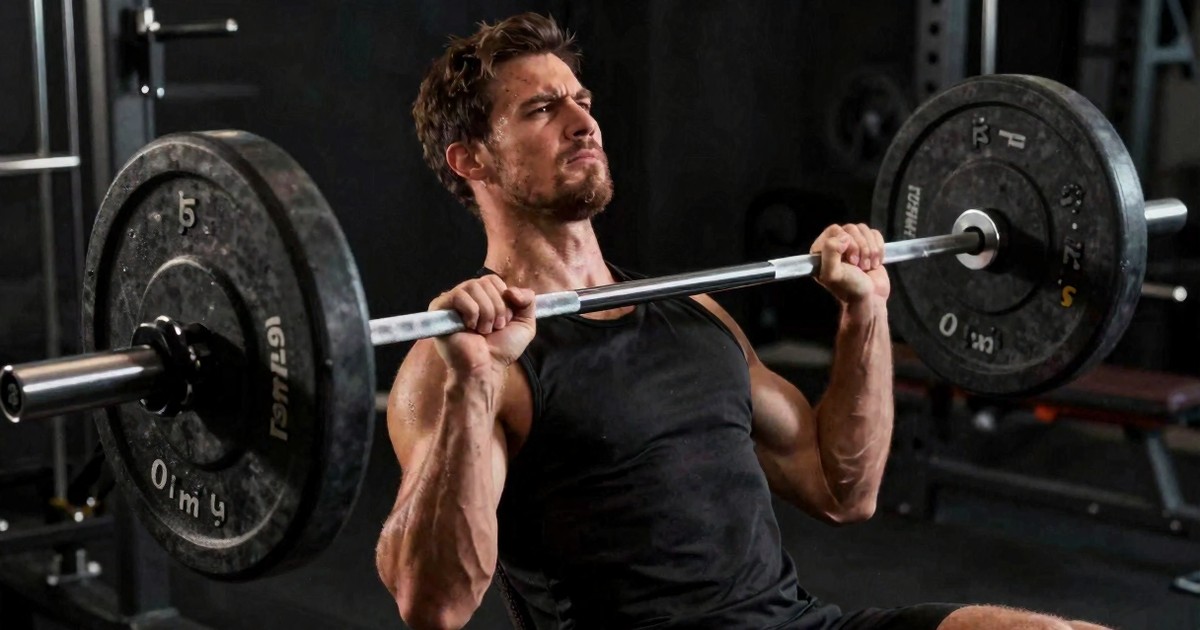
I was deep into a heavy bench press session. The bar was loaded up with serious weight—more than I probably should have been handling without anyone around to watch. I unracked it, lowered it to my chest, and pressed. Somewhere around the midpoint of the rep, things went wrong. My grip slipped, or my path shifted, or maybe my fatigue finally caught up to me—to this day I'm not entirely sure what gave first.
What I remember clearly is the weight dropping.
The bar came down hard and fast. In that fraction of a second, I realized I had two problems at once: a barbell headed toward my chest and throat, and no one within earshot to help. I got my head out of the way—barely—and the bar crashed into the safety catches I'd set up on my rack. The catches held. My neck didn't take the impact.
But the bar didn't survive.
It bent. Not a small cosmetic bend either—the bar came out of that set bent almost in half. Looking at it afterward, I couldn't believe the metal had flexed that far without snapping completely. The amount of force involved, the energy released when hundreds of pounds drop from chest height onto steel pins, was sobering to see written into the steel itself.
Why Training Alone Is Risky Business
The first thing every lifter learns, or should learn, is that heavy compounds like the bench press, squat, and overhead press carry real risk. Most of us accept this in the abstract. We tell ourselves we'll be careful, we'll use good form, we'll bail safely if a rep goes south. And most of the time, that's true. Most sets go fine.
But "most of the time" isn't "always."
The issue with training alone isn't that the movements themselves are inherently more dangerous—a barbell doesn't care whether you're being spotted or not. The issue is that when something does go wrong, the consequences escalate dramatically. A failed squat in a commercial gym might mean a stranger rushes over to help you out from under the bar. A failed bench press alone might mean you lie there until someone happens to walk by, if anyone walks by at all.
Here's what makes solo lifting particularly dangerous:
- No one to call for help: If you're pinned, knocked unconscious, or otherwise incapacitated, you may not be able to reach your phone, and even if you can, emergency services may take too long to matter.
- No one to share the load: Spotters aren't just for ego boosts. They share the physical burden of a heavy lift and can guide a bar back to the rack when your form breaks down.
- Fatigue gets underestimated: Alone, with no one watching your face strain or your tempo slow, it's easy to push past the point of safe execution. A spotter often notices fatigue before you do.
- Mental shortcuts become easier: When nobody is watching, the temptation to skip the safeties, to add an extra plate, or to skip warm-ups gets stronger. Solo doesn't just mean physical risk—it means the absence of social accountability.
Safety Equipment Isn't a Substitute for a Spotter
After my incident, I made some changes. I committed to setting the safety pins or safety catches on every single heavy bench press, every time, no exceptions. I'd actually had them set that day—they're why I'm writing this and not someone else writing about me. The catches saved my life, full stop.
But here's the uncomfortable truth I had to face: safety catches are a backup. They're a last line of defense, not a strategy. They don't help you complete a rep you can no longer finish. They don't lift the bar off your chest if you get pinned in a bad position. They don't call 911 if you pass out.
A spotter does those things. A spotter can also provide something safety equipment never can: real-time feedback. They can tell you your left side is dipping. They can tell you to re-rack before you grind into a dangerous position. They can take a few pounds off the bar mid-set if something feels off.
What Changed in My Training
I still train alone sometimes. Sometimes there's just no other option. But I've restructured how I approach solo sessions:
1. I cap my working weights
When I'm alone, I leave my ego at the door. The heaviest sets of the week happen when I have at least one other person in the gym with me, ideally someone competent enough to actually spot a bench press. Solo days are for volume work, accessory movements, and technique refinement—not personal records.
2. I never skip the safeties
Belt, safeties, controlled descent, full stop. The safety pins on a power rack are the cheapest insurance policy in the gym, and I treat them as mandatory equipment. If a rack doesn't have them, I don't use that rack for heavy compounds.
3. I tell someone I'm training
If I'm at a home gym or a remote facility, I text someone before I start and after I finish. It's a small thing, but if I disappear mid-session, at least someone knows where to start looking. There are also apps that can send an automated alert if you don't check in by a certain time.
4. I train the bail-out
I practice dumping the bar, rolling it down my body, and escaping from beneath it—all with lighter weight—until the bail-out is muscle memory. When something goes wrong, you don't have time to think; you only have time to react.
5. I keep my phone accessible
Not in a locker. Not on silent in a bag. On the floor within arm's reach, so that if the worst happens, I can call for help without crawling across the room. I also make sure my smartwatch is charged and ready for voice-activated emergency calls.
The Real Lesson
I got lucky. The safety catches held, my head moved out of the way in time, and the bar bent instead of my ribs or my neck. The barbell paid the price for my mistake, and now it sits in my garage, permanently warped, as a reminder.
Free weights are unforgiving. They don't care about your goals, your schedule, or your preference for quiet training. They respond only to physics, and physics doesn't care about you at all. Hundreds of pounds dropped from even a few inches creates enormous force. Dropped from chest height with no spotter to intervene, that force has nowhere to go except into your bones, your cartilage, or your airway.
If you're reading this and you train alone, please take it from someone who bent a barbell almost in half and walked away with a story instead of a casualty: build your training around safety, not convenience. Find a training partner. Hire a coach for the heavy days. Move your heavy sessions to a busier gym. Do whatever you need to do to make sure that when something goes wrong—and eventually, something will—there's someone there to help.
The bar I bent that day still reminds me of the question I should have been asking all along: not "Can I lift this alone?" but "What happens when I can't?"
Choose the next view
Move from the story into the underlying training data
Explore the weekly plan, video library, and the best place to start with the site.
Keep Reading
Related Posts
Speediance Bar Tilt Bug: Why Your Workout Weights Keep Resetting
Speediance Handle Bugs and FitHub Titan’s Marketing Chaos