The One-Set Bicep Curl Warmup That Actually Works
Most lifters overthink warmups. Here's the simple Speediance setup I use to prime my biceps with a single set before going to work — and why the exact numbers matter.
For years, I treated warmups like a chore. A few light reps, a quick stretch, maybe a band or two, and then I jumped into my working sets. The problem is, my elbows and shoulders started complaining. I knew something had to change, but I didn't want to spend thirty minutes "getting ready" before I even touched a real weight. So I started experimenting with a different approach: one deliberate warmup set, programmed with intention, before I ever loaded the bar.
What I'm about to walk you through is the exact setup I use on my Speediance for a single-arm bicep curl warmup. It's not flashy. It doesn't involve six different exercises or a lacrosse ball against a wall. It's one set. It's about thirteen reps. And it has done more for the health of my elbows than anything else I've tried in the last two years.
Why Most Warmups Fail
The typical warmup routine is built on a comforting myth: more is better. Three sets with a band. Two sets with an empty bar. A few push-ups to "wake everything up." By the time you actually get to your first working set, you've already accumulated enough fatigue to compromise the quality of that first set. Your biceps aren't fresh. Your numbers are slightly off. And worse, you may have already irritated whatever tendon or joint was bothering you in the first place.
The goal of a warmup isn't to feel tired. The goal is to feel ready. There's a massive difference, and it comes down to one idea: the warmup should leave you feeling like you could do more, not less.
The One-Set Philosophy
When I switched to a single warmup set, everything changed. I stopped dreading the ramp-up. I stopped skipping it because I was short on time. And I started actually paying attention to the set, instead of mindlessly spinning my arms around before grabbing a heavy cable.
The key is to make that one set count. That means choosing the right handle, the right weight, the right rep range, and the right rest period. On a smart machine like the Speediance, that means using the app to lock in those parameters before you ever step up to the cable.
Setting Up the Warmup on Speediance
Here's the step-by-step. If you've got a Speediance at home, this should feel familiar.
Step 1: Pick the Right Handle
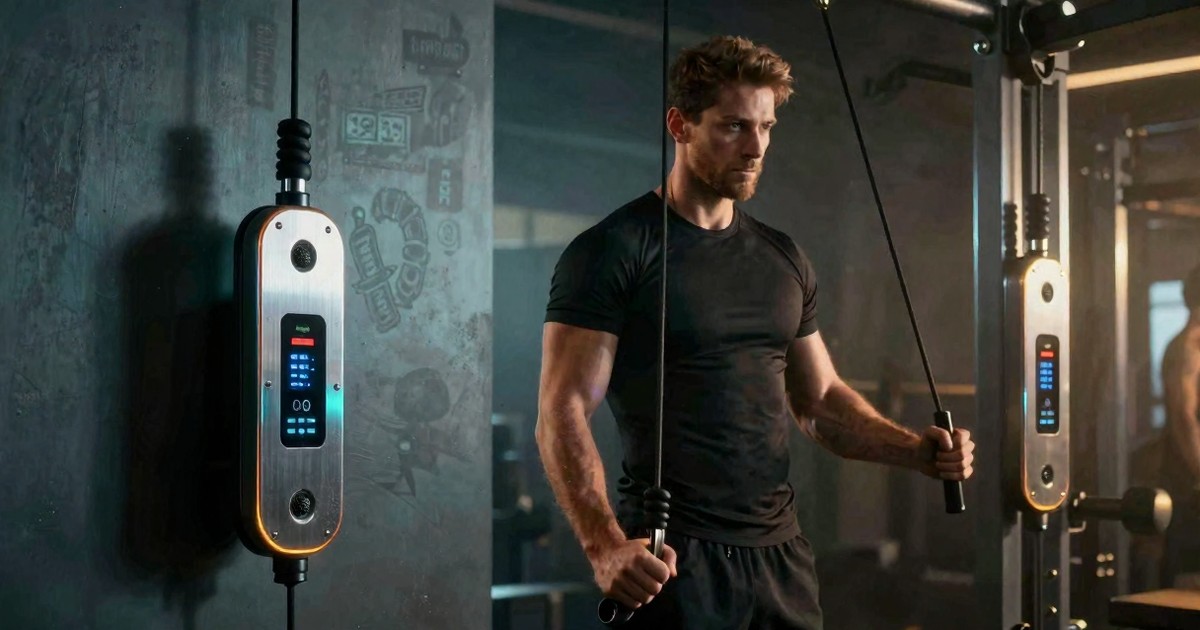
For single-arm bicep curls, I reach for the dual handle. It's the one that lets me grab with both hands but isolates one arm at a time. The geometry of the handle changes the angle of pull on the bicep, and the dual handle gives me the most natural wrist position. A straight bar tends to torque my wrist inward. The dual handle keeps everything stacked.
Step 2: Close Out Everything Else
This is the part most people skip, and it's the part that matters most. I open the Speediance app, find the single-arm bicep curl, and delete every set in the template except one. I do not want the machine prompting me to do four more warmup sets. I want one. That's it. If you leave the default template, the machine will happily walk you through a long warmup ladder that you don't need.
Step 3: Switch the Mode to Stamina
Here's a small trick that makes a big difference. When you switch the exercise mode from "Strength" to "Stamina," the rest timer drops from 45 seconds to 30 seconds. That might not sound like a lot, but it changes the entire feel of the warmup. With a 30-second rest, the set feels like a warmup. With 45 seconds, it feels like a working set. Your nervous system picks up on that difference, even if your conscious mind doesn't.
Step 4: Choose Your Numbers
For the warmup, I set the weight to 20 and the reps to 13. Both of those numbers are deliberate.
- 20 pounds is light enough that I can move through the full range of motion without any strain, but heavy enough that I actually feel my bicep working. If I can't feel it, the warmup is wasted.
- 13 reps is the lowest volume the machine allows. That's the floor. Anything below that and the machine won't register the set as complete. So 13 it is. It's enough reps to lubricate the joint, wake up the muscle, and pattern the movement. It's not enough reps to cause any meaningful fatigue.
Why 13 Reps Is the Magic Number
I want to spend a moment on the rep count, because I think this is the part that gets overlooked. There is a real reason why a slightly higher rep range works better for a curl warmup than a low-rep, heavy-warmup approach.
Your biceps cross two joints — the shoulder and the elbow. They have a long tendon that runs up into the shoulder, and a short tendon that attaches just below the elbow. That short tendon in particular doesn't love sudden, heavy loads when it's cold. It prefers to be coaxed into work with smooth, repeated contractions. Thirteen reps gives you enough time under tension to flood the tendon with blood, but not so much that you're pre-exhausting the muscle before your real sets.
If you've ever felt a weird "tweak" in the front of your shoulder or the inside of your elbow on your first heavy set of curls, the fix is probably not more stretching. The fix is probably a longer, lighter rep scheme during the warmup. Try 13 reps next time and see what happens.
The Actual Movement
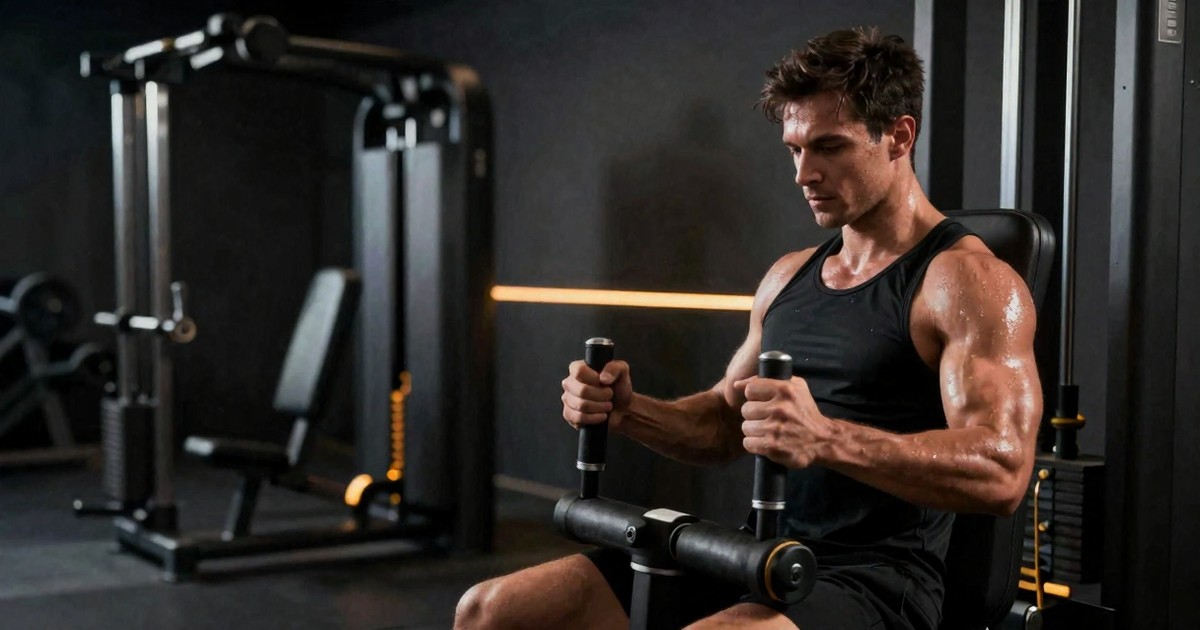
Once the machine is set, I move the bench out of the way so I have a clear line of pull. I don't want anything interfering with the cable path. Then I stand tall, brace my core, and start curling.
I'm not rushing. I'm not trying to set a PR. I'm paying attention to three things:
- The path of the cable. Is it smooth from the top of the rep to the bottom? Any sticking or grinding tells me something is off with my setup.
- The position of my wrist. Am I letting it flex forward at the top of the rep? That usually means I'm using too much forearm and not enough bicep. I back the weight off mentally and reset.
- The bottom of the rep. Am I getting a real stretch at the bottom? A curl warmup is the perfect time to find your end-range stretch, because the weight is light enough that you can hang out there and feel what's going on.
After 13 reps, I'm done. I rack the handle, take my 30 seconds of rest, and walk over to load my real working set. By the time I pick up the working weight, my bicep feels warm, my elbow feels calm, and I'm not the least bit fatigued.
What I Stopped Doing
I want to be honest about what I gave up to get to this point, because I think the deletions are as important as the additions.
- No more band work before curls. The band is fine for general warmup, but it doesn't replicate the curl pattern. I'd rather warm up with the actual movement at a lighter weight.
- No more standing behind the bench doing air curls. Same logic. It doesn't load the tendon the way a real set will.
- No more than one warmup set. If 20 pounds and 13 reps doesn't get me ready, doing it twice won't help. I'll just be tired.
The Bigger Idea
The point of all of this isn't really about biceps. The point is that warmups deserve the same level of thought as your working sets. Most lifters program the heck out of their main work — exercise selection, sets, reps, tempo, rest — and then treat the warmup like an afterthought. That's backwards. The warmup is the foundation. If the foundation is sloppy, everything built on top of it is sloppy.
Programming one set, on purpose, with the right handle, the right mode, the right weight, and the right rep count, has made my curls feel better than they have in years. My elbows are quieter. My first working set is stronger. And I'm spending less time in the gym, which, as anyone with a Speediance and a packed calendar knows, is the whole point.
If you haven't revisited your warmup in a while, this is your nudge. Open the app. Pick one exercise. Delete the extras. Set it to stamina. Pick a light weight. Set the reps to the floor. Move the bench. And curl.
Thirteen reps is all you need.
Keep comparing
Make the next smart-gym decision with the full picture
Move from one review into model comparisons, real lifting data, and the matching video demonstrations.