WHOOP 5.0
My primary 24/7 recovery monitor and strain engine — 1,646 recovery scores on file since Feb 2026.
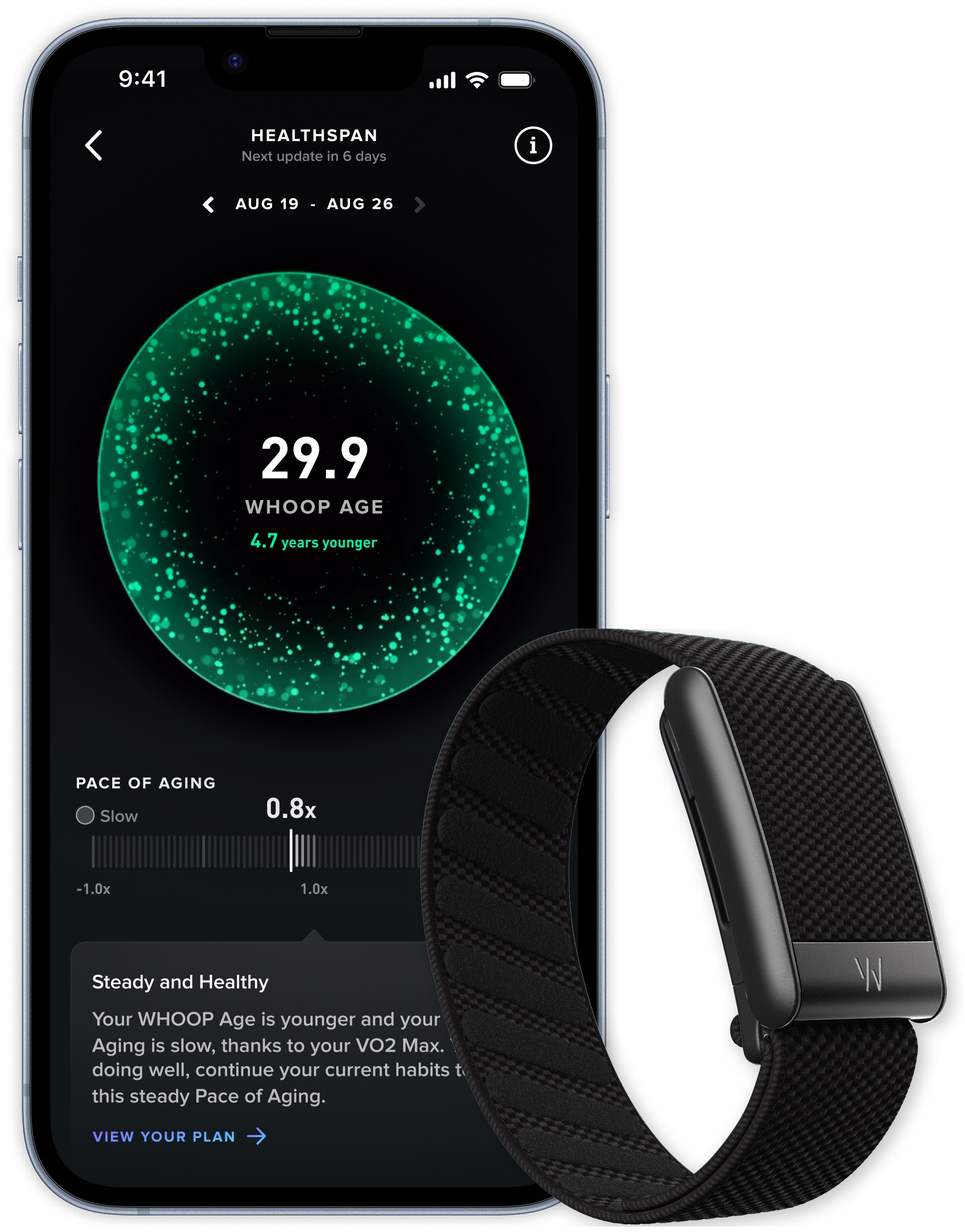
I rely on WHOOP for continuous HRV, resting heart rate, and sleep strain tracking. The most recent 30 days of recovery data show a 62% average (n=30) with HRV 28.0 ms and resting HR 72 bpm.
Sleep data over the same window averages 7.3h in bed, 6.6h asleep, 2.2h REM, 1.4h deep, and 76% sleep performance. That composition tracks with my long-term pattern (all-time 30.6% green days, 52.2% yellow, 17.2% red across 1,646 recoveries).
30-day average strain sits at 6.9 with peaks at 14.1. The battery pack mechanism avoids the battery-degradation issues I experienced with other wearables, which is why WHOOP replaced my Oura ring in this slot.
Data flows directly into my daily readiness model to decide whether to push Speediance volume, scale back, or shift to mobility and BJJ work.
My Last 30 Days of WHOOP Data
Window: 2026-08-24 → 2026-09-22 · 1,700 recovery records on file · last WHOOP sync 2026-09-22
All-time Recovery Distribution
These numbers come from my actual WHOOP 5.0 device and are recomputed on every site rebuild. If the values look stale, run npm run build after the WHOOP sync finishes.
The Good
- • Continuous 24/7 monitoring without off-wrist charging downtime
- • Consistent HRV and recovery trend modeling (1,600+ days of personal history)
- • No battery replacement failure mode like ring form factors
- • Strong strain/sleep correlation with subjective readiness
Watchouts
- • Subscription model required for ongoing use
- • Screenless design requires phone app for real-time checks
- • Web experience has degraded over multiple product cycles
Real data from 1,600+ days of personal use — the live section on this page recomputes on every build.