The Levels of Jiu-Jitsu: Tying Your Pants Mid-Roll
When an upper belt reties their pants mid-roll without losing position, it demonstrates the 'invisible levels' of the game. This essay explores how skill automation frees up mental bandwidth for both combat and wardrobe management.
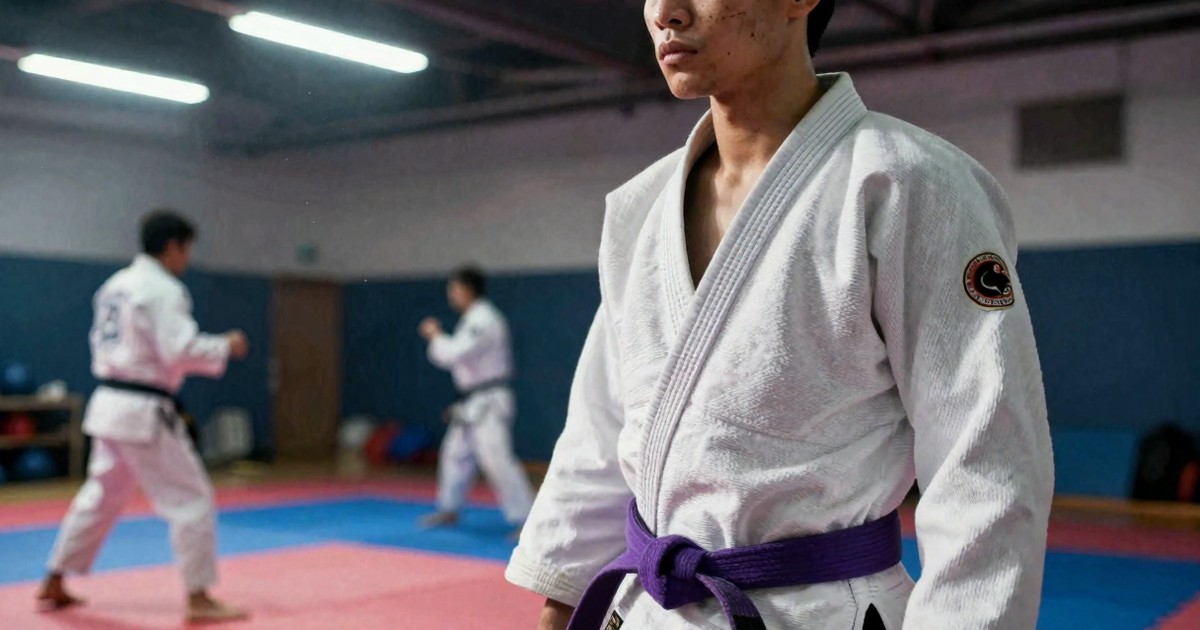
It happened again last week. I was mid-roll, my partner was driving a hard guard break, and my pants decided to slide. Not dramatically. Not a full moon situation. Just that slow, creeping half-unty that happens when you spend too long on your side and the knot migrates from belt-line to hip. So I did the only thing I could do in the moment: I started retying them.
Now, I want to be clear about what I was doing and what I was not doing. I was not pausing the roll. I was not asking for a timeout. I was not standing up to fish the drawstring out of my pocket. I was retying my pants the way you might retie your shoes while walking down the street, or scratch your nose while carrying a drink. My hands were busy, but my feet were busier.
And my partner noticed.
The Look on the Mat
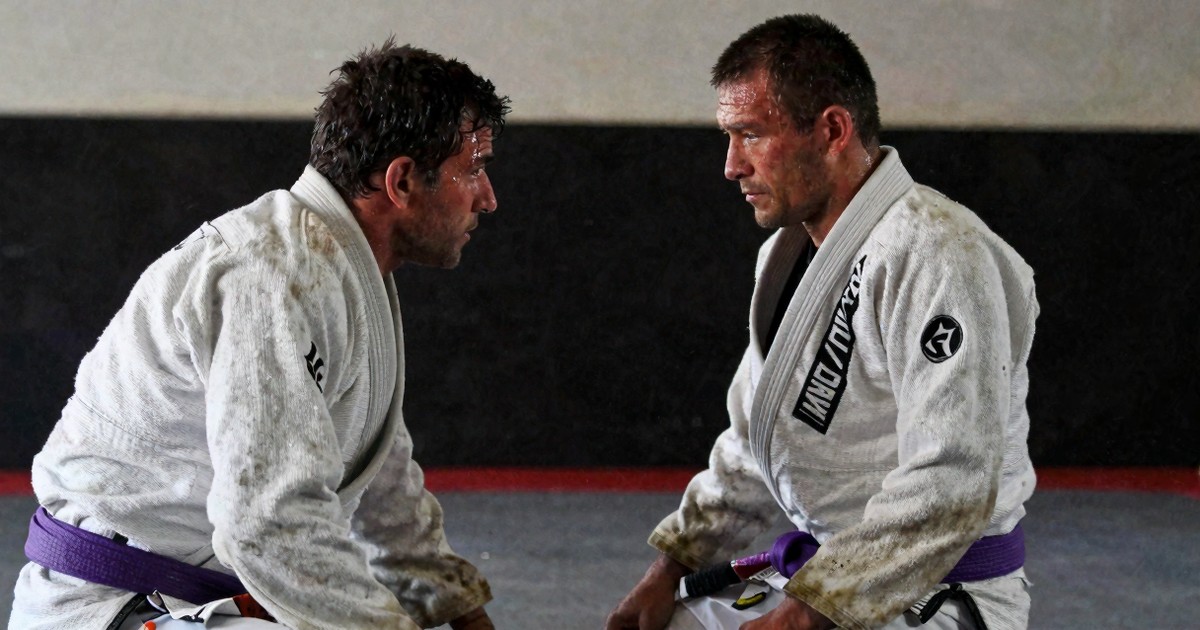
If you have ever been the brown belt in this scenario, you know the look I'm talking about. It's not anger. It's not even frustration. It's that wide-eyed, mouth-slightly-open expression that says, I cannot believe what I am witnessing right now. My partner, who happens to be a fresh white belt, glanced down between exchanges and just shook his head.
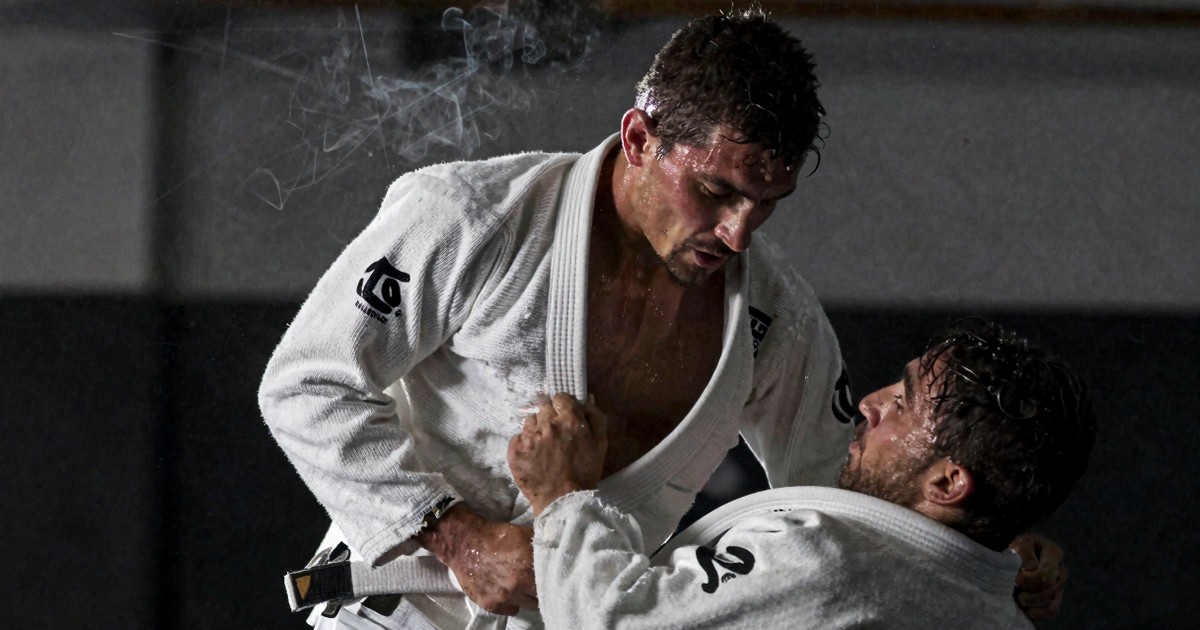
Later he told me what he was thinking. He said something like, "I am going 100% trying to pass your guard, and you are sitting there tying your pants like we are at brunch." He was half laughing, half genuinely confused. To him, the roll was the most important thing in the room. To me, the roll was still the most important thing in the room. The pants were just a side project.
And that gap, that gap right there, is what we mean when we say there are levels to this.
What "Levels" Actually Means
The word levels gets thrown around jiu-jitsu gyms constantly, usually by white belts who just discovered a black belt YouTube channel, and by upper belts reminiscing about how long it took them to stop spazzing. But the levels people are usually talking about are the visible ones. The heel hook entry from a position you didn't know existed. The berimbolo that turns a guard pass into a back take. The pressure pass that feels like a parked car.
What I want to talk about is the invisible level. The one that lets you solve a problem you didn't plan for, in real time, while your brain is doing something completely different.
When my pants started to slip, my conscious mind had exactly one job: think about the knot. What kind of knot was it? A standard loop-over bow? A double knot? Where was the tension sitting? How long would the new knot need to last? Was I about to roll again in five seconds or could I take my time? My unconscious mind, meanwhile, was running the entire roll. Foot placement, base, framing, hip movement, breathing. All of it was firing on autopilot because the conscious mind was occupied with the drawstring.
A white belt does not have this option. Their conscious mind is fully booked. They're thinking about the grip, then the elbow, then the knee, then the breathing, then the fact that their own gi is also slipping. The idea of solving an unrelated problem mid-roll isn't a flex. It's a fantasy.
The Automation Principle
This is the part that applies beyond jiu-jitsu, and it's the part I think every hobbyist and athlete should write down somewhere.
Skill, real skill, looks like this: the things that used to take all of your attention become invisible. They get moved off the main stage. They run in the background. They free up bandwidth for the next problem.
When you first learn to drive a car, you are thinking about the steering wheel. You are thinking about the pedals. You are thinking about the mirrors. There is no room left in your head for the radio. Then one day you drive an hour across town, walk into the house, and realize you don't remember a single turn. You were singing the whole way. The driving was background. The singing was foreground.
That is what tying my pants mid-roll was. The defense was background. The pants were foreground.
And the white belt was watching both, because both still took conscious effort for him.
Why the Pants Matter (More Than You Think)
Let's get practical for a second, because the gear side of this is real.
Loose pants during a roll are not just an inconvenience. They can:
- Trap your foot in the wrong direction at the worst possible time.
- Give your opponent a free grip when they grab your knee.
- Distract you for a full second while you try to fix them, which at higher intensity is enough to lose position.
- Wedge between your hip and the mat and create a weird bridge that breaks your base.
If your pants are coming untied once a session, you have a tying problem. If they are coming untied once a roll, you have a pants problem. And if they are coming untied multiple times in a single round, like the situation that prompted this whole reflection, you have a wardrobe problem and you should probably solve it before your next class.
The fix is unglamorous. You learn a better knot. You invest in pants with a proper drawstring instead of a flimsy elastic. You do the embarrassing thing and tuck the excess into your waistband so it can't snag. You figure out which knots survive your bridge-and-shrimp sequences and which ones die at the first inversion. None of this is interesting. All of it matters.
The Embarrassment Gap
Here's the part I keep coming back to. My partner was embarrassed. Not for me, but at me. He felt secondhand embarrassment that a brown belt would be doing something so casual during a serious effort.
And I think that embarrassment is itself a level marker.
When you are new, everything is serious. Every grip is a battle. Every position change is an event. To do anything casual, anything unrelated, anything that says "I am not fully allocating my resources to this confrontation," would feel disrespectful to the roll. So the white belt's reaction isn't wrong. It's the correct response from inside their level.
But from the level above it, the casual move isn't disrespect. It's a bigger signal. It says, "I have solved enough problems that I can take on another one without losing the original." It is, weirdly, a kind of compliment to the roll. I was comfortable enough to multitask.
What to Do With This on the Mat
If you are reading this and you are a white belt, don't try to retie your pants mid-roll next week. You will get swept. Instead, take the lesson for what it is. Notice what your conscious mind is full of right now. Notice that there are problems on the mat you aren't even seeing yet because your mental RAM is completely spent on the problems you already have. The path forward is not just memorizing more techniques; it is doing the ones you know until they drop out of your conscious mind entirely.
If you are reading this and you are an upper belt, pay attention the next time a beginner looks at you like you are performing witchcraft. That look is data. It is showing you, in real time, exactly how far you have come. It is also a reminder that the levels are not just technique stacks. They are attention budgets.
And if you are reading this because you, too, are a brown belt who keeps losing the war with your drawstring, my only advice is this: learn the knot, fix the pants, and keep training. The next time some fresh white belt looks down at you mid-roll with that expression of disbelief, just smile, tighten the bow, and keep moving your feet. There are levels to this. You are somewhere on the ladder. So are they. Both of you are exactly where you are supposed to be.
Continue the training story
Put this BJJ story in the context of the full training record
See the belt timeline, competition notes, and the videos behind the written analysis.