How One Month of No Training Aged My Body
A month off training pushed my wearable's body age score above my real age. Here is why this controversial metric is more useful than critics claim.
The Month My Watch Decided I Was Old
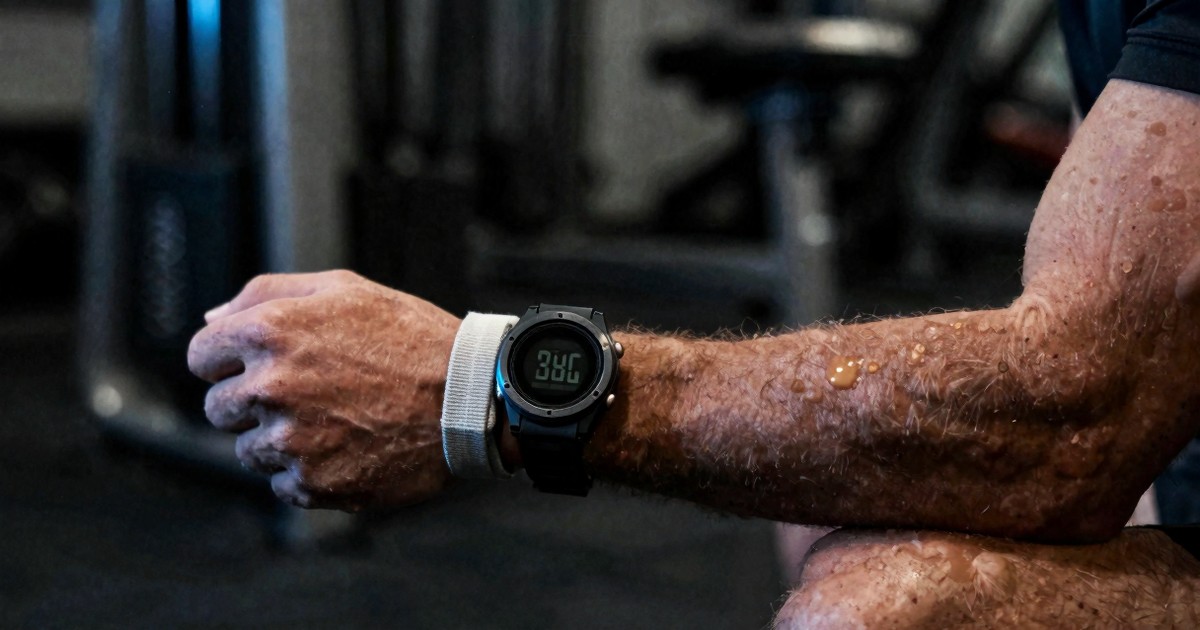
I've been wearing a fitness tracker with a proprietary "body age" algorithm for about eighteen months now. The reason I keep it on my wrist — even through all the software updates, even when I get tired of charging it, even when a new shiny device shows up in the mail — is the feature that gives you a single, jarring number: your biological age. Some fitness enthusiasts and data purists online complain that this metric shouldn't be called an age. They say it's reductive, arbitrary, or that it puts a value judgment on your physiology. I understand the critique. But after eighteen months of living with the number, I think "age" is actually a remarkably clean way to communicate a complex health score.
And right now, that number is older than my actual chronological age. A year ago, I had it dialed down to where the algorithm said I was significantly younger than I really am. Now, after a string of vacations and a full month with essentially zero training, the watch has decided I've crossed over into "older than Toby" territory. On reflection, this is exactly what should happen if you stop moving for four weeks, and the clarity of that data point is what makes it valuable.
Why "Age" Actually Works as a Metric
The argument against body age as a metric usually goes something like this: health isn't linear, biology isn't chronological, and reducing your cardiovascular fitness to a single number that happens to correspond to a year is misleading. Some of that is fair. Body age isn't a medical diagnosis; it's a model. It's the watch's best guess based on whatever inputs it's pulling — resting heart rate, recovery trends, VO2 max estimates, training load, and sleep quality. It is a proprietary weighting that most users don't have full visibility into.
But here's why I still like it: people understand age. If you tell me my body is functioning like a 45-year-old when I'm 38, I have an immediate mental model. I know what a 45-year-old can and can't do at the gym. I know roughly what their recovery looks like. I know what their resting heart rate probably is. It's an analogy, not a verdict. And analogies are useful precisely because they're sticky.
The critics would prefer a score — something out of 100, a letter grade, or a percentile. Maybe they're right that age carries emotional baggage. But the alternative metrics I've seen on other platforms are often too abstract to act on. A number that says "your cardiovascular system looks like someone seven years older than you" is the kind of thing that actually makes me lace up my shoes the next morning. A score out of 100 just makes me shrug. The human brain is wired to track distance from a baseline. "Am I younger or older than my actual age?" is a question with a binary, intuitive answer. Age gives you a permanent mental yardstick.
What a Month Off Actually Does
I didn't plan to take a full month off training. It happened in pieces. A work trip. A family vacation. A long weekend that turned into a long week. A few nights where I was just tired and decided to sleep in instead of getting to the BJJ mat. By the end of it, I'd gone roughly four weeks without a real session — no lifting, no structured cardio, and none of the things I usually do to keep the score honest.
What I noticed, in order, was a total physiological shift. My resting heart rate crept up by about 4-5 beats per minute within the first two weeks. My recovery scores started trending the wrong direction, indicating lower heart rate variability (HRV). Sleep quality got worse, even though I was going to bed at the same time. The body age number moved slowly at first, then jumped. None of that is surprising, and none of it required a wearable to tell me. I felt it. I was sluggish on the stairs. My back, which usually feels fine, started complaining. The first session back was harder than it should have been. But the watch confirmed what I already knew, and it did so with a number that I couldn't rationalize away.
The Signal and the Noise
Is the body age score perfectly accurate? Almost certainly not. No single-number fitness metric is. They're all reductive by design. The question isn't whether the number is "true" in some philosophical sense — it's whether the number is useful. The signal the algorithm is picking up is real: deconditioning happens fast. The things that make you feel younger — consistent training, decent sleep, manageable stress — decay quickly when you stop doing them. The noise is in the exact magnitude and the relative weight of each input. I don't trust the number to the decimal; I trust the direction.
That's the tradeoff with any wearable metric. You give up precision for trend-spotting. The body age score is at its best when you compare it to itself over months and years, not when you stare at it on any given Tuesday morning. A single reading is a snapshot. A series of readings is a story. It captures the compounding effect of habits over time.
The Real Lesson: Consistency Compounds Both Ways
The thing this month reinforced for me is that fitness is a maintenance game more than it's a building game. Most of the year, my "job" is to not lose what I have. The training I do isn't always about hitting new PRs — a lot of it is just about staying where I am. And the watch's body age score is, in some ways, a more honest reflection of that job than any other metric I track.
It's easy to assume that because you've trained hard for years, you own a certain level of fitness permanently. You don't. Detraining is faster than training, and the watch is happy to remind you of that the moment you stop showing up. That's not a bug; that's the feature doing its job. I don't think calling it an "age" is the problem. I think the problem is that most of us, myself included, would rather not know how quickly a month of nothing can push us backward. But I'd rather know. And as I get back into the routine, watching that body age number finally start moving back in the right direction is the only motivation I need.
Use the data
Compare the wearable, then see what the numbers look like
Continue into hands-on comparisons, live WHOOP recovery data, and the broader tracker guide.