Age Is Not the Excuse: Why Testing Yourself Still Matters
If champions, executives, and everyday hobbyists can step onto the competition mat in their 40s and beyond, age is not the real barrier. The harder question is whether you are willing to test yourself honestly.
There is a specific kind of excuse that sounds reasonable until you put it next to reality. In jiu-jitsu, one of the most common versions is: I am too old to compete.
On the surface, it feels fair. You have work. You have family. You have injuries, obligations, stress, poor sleep, and a body that does not recover the way it did at 22. If you are in your 40s, you are not wrong to acknowledge that things are different. They are different.
But different is not the same as impossible.
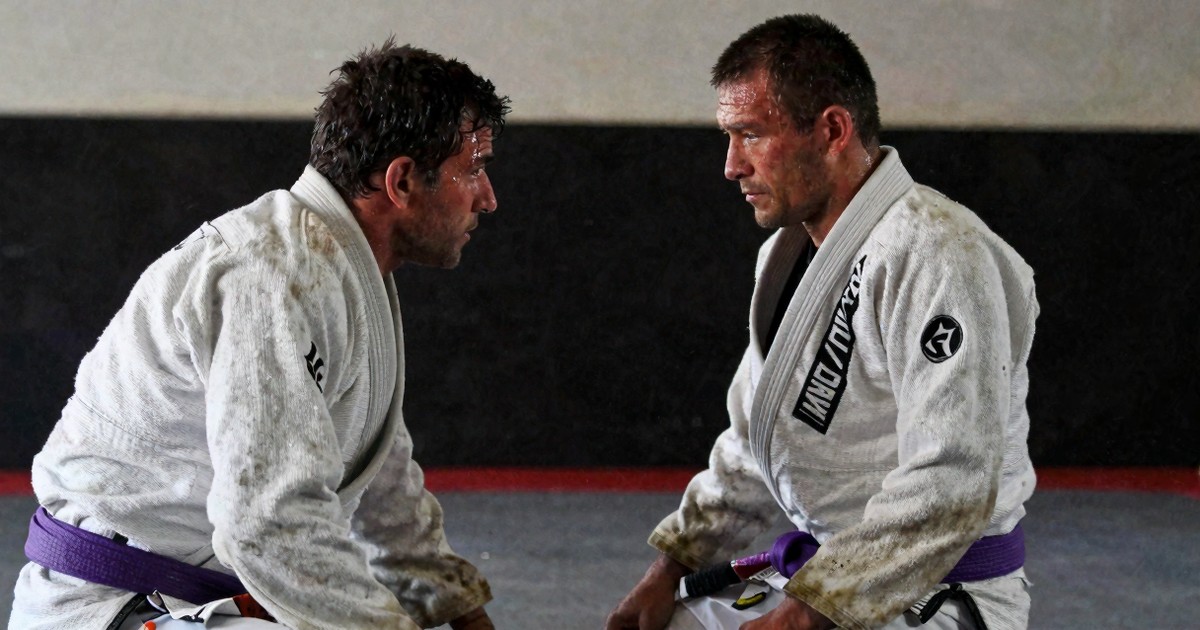
The transcript that sparked this post circles around a simple point: age should not be used as a blanket explanation for avoiding competition, especially in Brazilian jiu-jitsu. There are entire masters divisions built for this exact reality. People in their 40s, 50s, and beyond compete all the time. They may not be trying to become world champions. They may not be chasing a professional career. But they are still showing up, making weight, shaking hands, and finding out what their training actually looks like under pressure.
The Competition Question
The critique in the transcript is not really about any one public figure. It is about a pattern: someone trains seriously, surrounds themselves with elite coaches, talks about progress, maybe even has the resources to access world-class instruction, but never tests the work in a competitive setting.
That gap matters.
Competition is not the only measure of jiu-jitsu. Plenty of excellent practitioners rarely or never compete. Some people train for health, community, self-defense, mental clarity, or simply because they love the art. That is legitimate. But if the conversation is about rank, performance, credibility, or whether someone has really stress-tested their game, then competition becomes relevant.
It is not because medals magically validate your worth. They do not. It is because competition removes a lot of the comfortable ambiguity that exists in the gym.
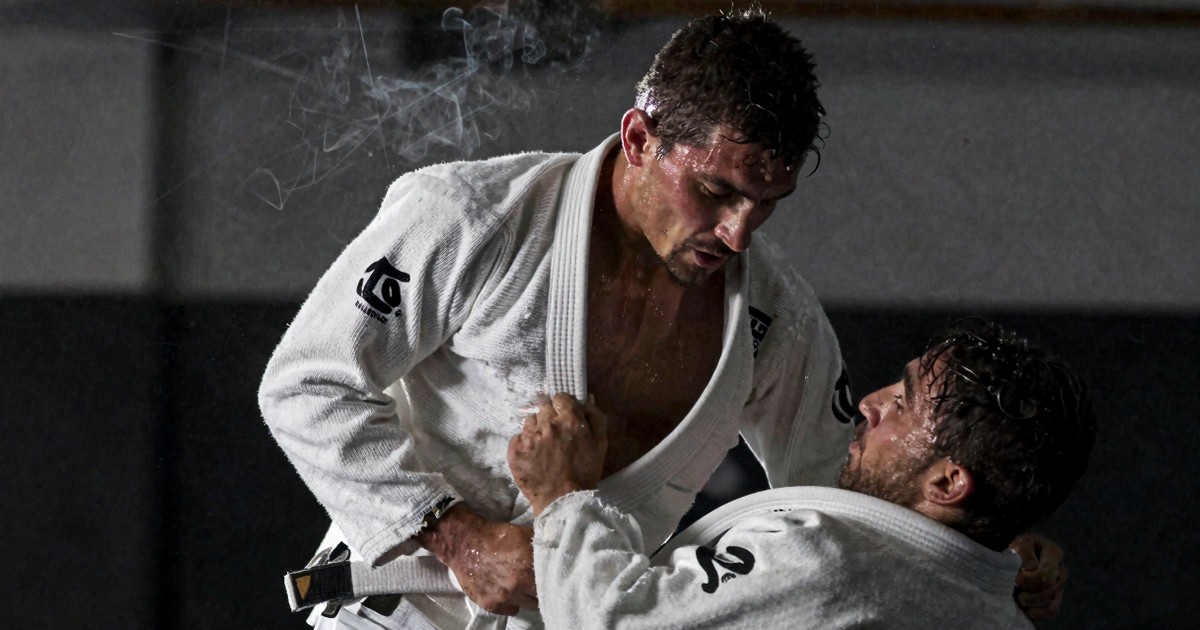
In the gym, people know you. They may flow with you. They may avoid your injuries. They may let you work. The rounds are real, but they are also wrapped in relationships, familiarity, and social contracts. At a tournament, the other person does not owe you that comfort. They have their own goal, their own nerves, their own coach yelling from the side, and their own desire to win.
That environment tells the truth in a different language.
Age Is a Factor, Not a Verdict
Of course age matters. A 45-year-old athlete generally cannot train exactly like a 25-year-old athlete. The warm-up matters more. Strength and mobility matter more. Recovery is not optional. You cannot stack hard sparring, poor sleep, bad nutrition, and emotional stress forever and expect the body to keep absorbing it.
But this is precisely why masters divisions exist.
Most jiu-jitsu tournaments understand that age changes the playing field. You are not necessarily being thrown into a bracket with college wrestlers who have endless gas tanks and no mortgage. There are divisions for older athletes because older athletes compete. The infrastructure is there because the demand is there.
So when someone says, I am in my 40s, as if that alone ends the discussion, it should raise an eyebrow. Not because everyone in their 40s must compete, but because age by itself is not a complete explanation.
A better explanation might be: I do not want to compete. Or: I am not healthy enough right now. Or: My priorities are elsewhere. Or: I am afraid of losing. Those are more honest answers. Some are perfectly respectable. Some are uncomfortable. But they are clearer than hiding behind a number.
Even the Ultra-Successful Still Step on the Mat
One of the interesting examples mentioned in the transcript is Mark Zuckerberg competing in jiu-jitsu. Whatever someone thinks about him as a public figure, the act itself is notable. Here is one of the richest and most scrutinized people in the world choosing to put on a gi, enter a local tournament environment, and risk losing in public.
That matters because status usually gives people more ways to avoid discomfort, not fewer. Wealth can buy privacy. Fame can create insulation. Success in one domain can make people allergic to being a beginner in another. Yet the mat does not care about your net worth. Once the match starts, you still have to grip, move, breathe, defend, and solve problems.
That is one of the best things about jiu-jitsu. It is brutally democratic in the moment. Your resume does not pass guard for you.
When successful people still compete, it removes another excuse. If someone with massive public visibility can risk looking awkward, tired, or beatable, then the average hobbyist can probably survive a local masters bracket.
The Belt-Level Reality Check
The transcript also includes a personal reflection: competing and winning at white belt, competing and winning at blue belt, not competing at purple belt, and then returning at brown belt to medal with a third-place finish.
That is a useful arc because it shows how competition is not always a neat upward line. You can win early and then miss a phase. You can feel regret for not testing yourself at a certain belt. You can come back later, perform well, but still not get the result you wanted. That is not failure. That is data.
Every belt has a different competitive lesson.
- White belt teaches you how chaos feels when both people are new and adrenaline is high.
- Blue belt teaches you whether your first real game holds up against people who now have answers.
- Purple belt often reveals whether you can impose a mature style instead of relying on toughness or surprise.
- Brown belt exposes small technical gaps because opponents are experienced enough to punish them.
- Black belt is where details, timing, composure, and strategy become even less forgiving.
Skipping competition at a belt does not invalidate your training. But if you care about knowing where you stand, you may feel the absence later. That regret is not about ego. It is about curiosity left unanswered.
Competing Is Not About Being Ready
Many people wait to compete until they feel ready. This is understandable and usually backward.
You rarely feel ready before your first tournament. You feel underprepared. Your cardio seems suspect. Your takedowns feel shaky. Your guard pull timing is uncertain. Your weight cut is annoying. Your mind starts inventing disasters. What if I gas out? What if I get submitted fast? What if my teammates see me lose? What if I embarrass myself?
Good. That is the point.
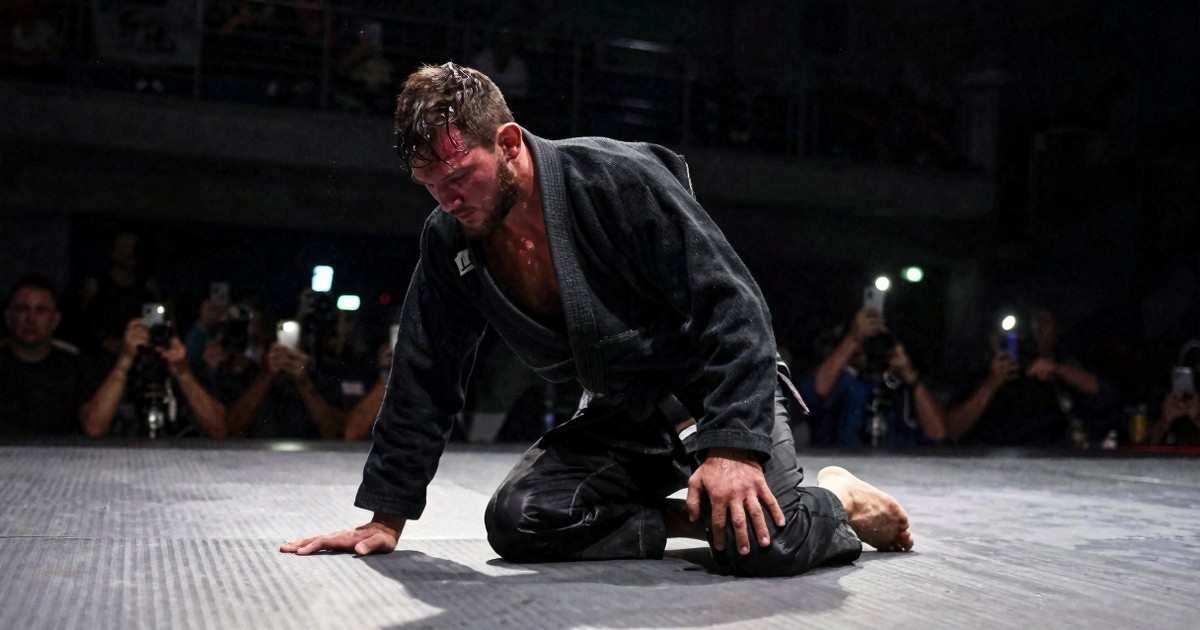
Competition reveals the emotional side of training that normal class can hide. It shows how you respond when your grips fail, when the referee gives the other person an advantage, when your lungs burn, when your coach is yelling instructions you can barely process, and when your favorite move is not there.
You do not compete because you are perfectly ready. You compete to learn what ready actually requires.
The Right Way to Think About Masters Competition
If you are older, the goal should not be to cosplay as a reckless 20-year-old. The goal is to compete intelligently.
That means choosing the right event, the right division, and the right preparation cycle. It means being honest about injuries. It means building strength and conditioning that supports jiu-jitsu instead of just adding fatigue. It means drilling the positions you are most likely to see. It means having a simple game plan rather than a fantasy highlight reel.
For a masters athlete, success may look like this:
- Entering one or two well-chosen tournaments per year.
- Training with enough intensity to adapt, but not so much that you break down.
- Prioritizing sleep, mobility, and strength work.
- Knowing your safest takedown, guard entry, escape sequence, and scoring path.
- Reviewing matches afterward without turning the result into an identity crisis.
This is where age can become an advantage. Older athletes often have more patience, better emotional regulation, and a clearer sense of why they are there. You may not have the same explosiveness, but you may have better discipline. You may not recover as fast, but you may prepare more thoughtfully.
Be Honest About the Real Reason
The deeper issue is not whether someone competes. It is whether they are honest about why they do or do not compete.
If you simply do not enjoy tournaments, say that. If your body is not in a place where competition is wise, say that. If your family or work demands make it unrealistic this year, say that. Those are adult answers.
But if the answer is fear, it is worth naming that too. Fear of losing is normal. Fear of public failure is normal. Fear of discovering that your gym performance does not translate is normal. None of those fears mean you are weak. They mean you are human.
The problem is when fear dresses itself up as philosophy. Suddenly competition is beneath you. Or it is only for young people. Or it does not prove anything. Or you would compete, but the brackets are not right, the timing is not right, the rules are not right, the preparation is not perfect.
Maybe. Or maybe you just do not want to find out.
The Mat Does Not Need Your Excuse
Jiu-jitsu has a way of cutting through stories. That is why so many people love it and why so many people avoid its sharper edges. Competition is one of those edges. It is not necessary for everyone, but it is uniquely clarifying.
If you are in your 40s, you are not disqualified. If you are busy, you are not unique. If you are nervous, welcome to the club. If billionaires, coaches, hobbyists, parents, executives, and beat-up masters athletes can step onto the mat, then age alone is probably not the real reason.
The better question is this: do you want to test yourself?
If the answer is no, own it. If the answer is yes, pick a date, prepare intelligently, and go learn something that ordinary training may never teach you.
You might win. You might lose. You might medal. You might get humbled in the first round. But you will have done the thing that excuses are designed to prevent: you will have found out.
Continue the training story
Put this BJJ story in the context of the full training record
See the belt timeline, competition notes, and the videos behind the written analysis.