Is Mike Israetel a Legit BJJ Black Belt? The Real Question
A few viral clips sparked a familiar internet pile-on, but BJJ belt standards are more complicated than hot takes allow. This piece digs into the gap between looking elite and being legitimately ranked.
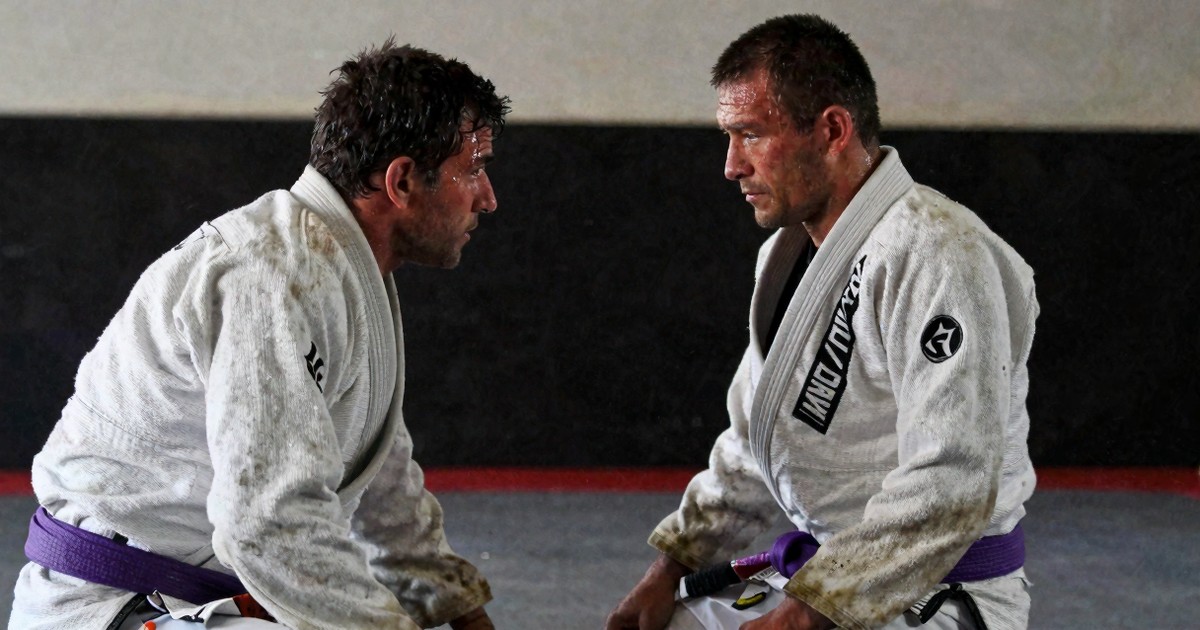
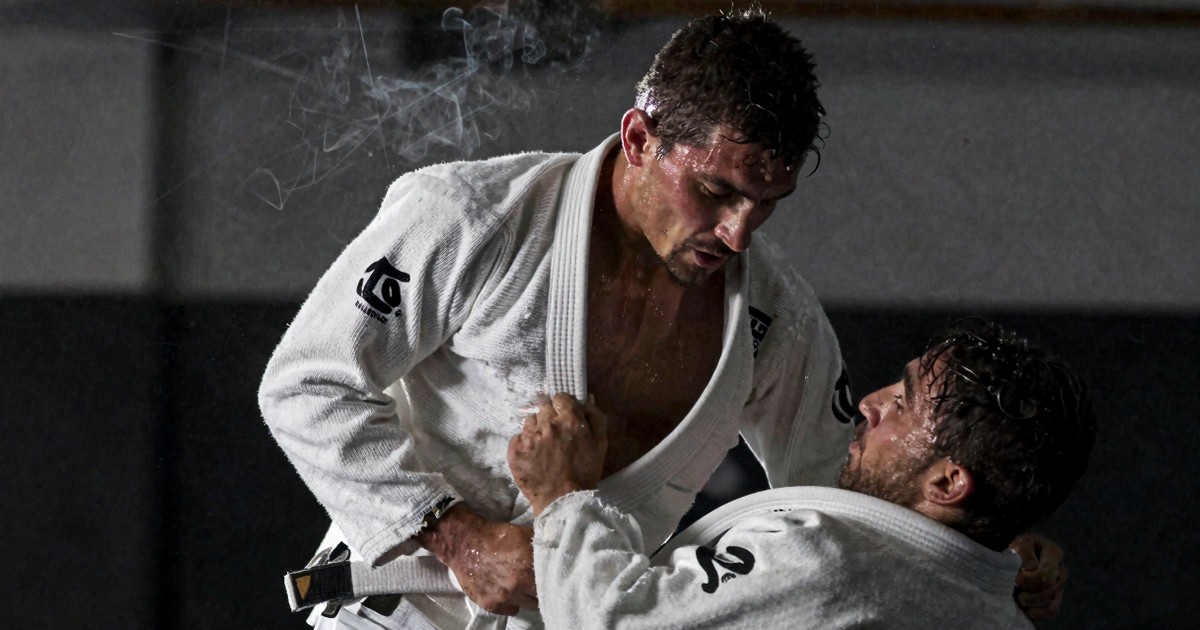
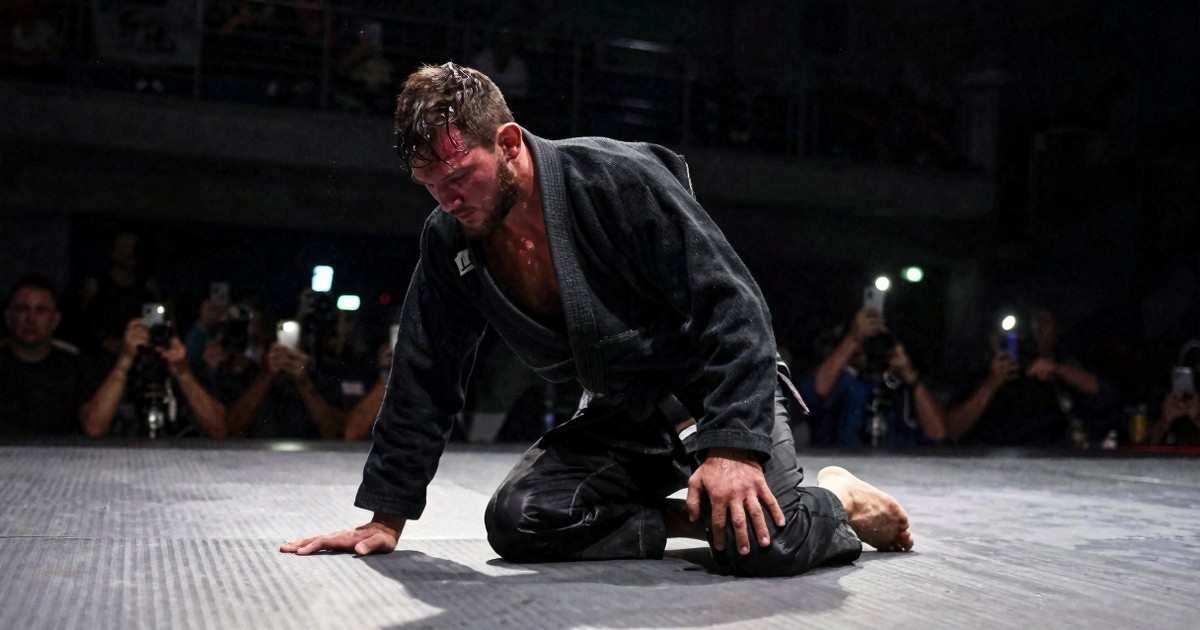
The internet loves a pile-on, and lately Mike Israetel’s Brazilian jiu-jitsu black belt has been the target. The basic accusation is familiar: he doesn’t move like an elite grappler in a few clips, therefore he must not be a legitimate black belt. That sounds clean and satisfying online. It also collapses the moment you understand how wide the skill spectrum is inside jiu-jitsu.
My view is simple: you can criticize Mike Israetel’s jiu-jitsu, cardio, movement quality, tactical decisions, or training priorities. But those are not the same thing as proving he is a fake black belt. That distinction matters, and too many commentators are bulldozing right past it.
What I’ve Actually Seen
I’m not speaking as a random spectator. I’m a brown belt, and a few years ago I saw Mike Israetel in person at a competition when he was still a brown belt. I didn’t roll with him, and I didn’t interview him, so I’m not going to pretend I can certify his skill from one glance. But I did see enough to reject the laziest internet narrative.
At that event, Mike stood out immediately. He and the man next to him—who appeared to be his coach or at least someone from his camp—were absolute units. Short, massively built, and impossible to miss. More importantly, one of the competitors from that group went against one of my own guys, a very successful white belt who had been forced up into tougher divisions because of how many wins he had accumulated. We lost, and not in a way that left me thinking, “These guys are frauds.” Quite the opposite.
That matters. If the coaching environment around Mike was producing tough, capable competitors, it becomes much harder to buy the idea that this is just some belt mill handing out rank for cash or clout.
The Core Mistake: Confusing “Black Belt” With “World-Class”
The biggest problem in this whole debate is that people talk as if there are only two categories in jiu-jitsu: elite champion and fake. That’s nonsense.
A black belt does not automatically mean you are one of the best grapplers on earth. It does not mean you will look amazing against elite training partners. It does not mean you’ll be explosive, modern, athletic, or aesthetically pleasing to watch. It means, ideally, that you have a high level of technical understanding, timing, experience, and effectiveness relative to the broader jiu-jitsu population.
That population is enormous. The gap between a legit black belt and a world-class black belt is massive. The gap between a hobbyist black belt and someone like Gordon Ryan is not a gap. It’s a canyon.
So when people show footage of Mike not looking incredible against high-level opponents, that does not prove what they think it proves. In many cases, it only proves he isn’t among the very best in the sport. That is a totally different claim.
Why Clip Culture Leads People Astray
Internet analysis tends to rely on isolated clips, and isolated clips are terrible evidence in grappling.
You can make good practitioners look bad if you catch them tired, playful, experimenting, injured, or rolling with someone far above their level. You can also make mediocre practitioners look amazing with the right sequence, the right training partner, and enough editing.
That’s why I’m skeptical of people making absolute judgments from a few rounds of footage. Was the roll competitive? Was it instructional? Was the person trying to dominate, or just trying to create an entertaining exchange? Was the opponent dangerous, huge, or unusually skilled? Was there an injury concern? Context changes everything.
Even elite athletes have ugly footage. Craig Jones has talked openly about seminar rounds where a fresh blue belt at the end of the line becomes dangerous simply because the world-class guy is exhausted after rolling through everybody else. If you only saw that one bad sequence, you could build an absurd narrative. That’s exactly what the internet keeps doing.
Greg Doucette and Ariel Helwani Are Missing the Nuance
My frustration isn’t that outsiders are commenting on jiu-jitsu. It’s that some of them are speaking with total confidence while missing basic realities of the sport.
When someone suggests that an ordinary black belt should be able to survive comfortably with elite grapplers, that tells me they do not understand the difference between belts and champions. In pure jiu-jitsu, a massive skill gap can end things almost immediately. Against the very top of the food chain, “lasting 30 seconds” is not some trivial achievement. Sometimes the only reason a round lasts longer is because the better person allows it to.
That’s why comparisons matter. Mike Israetel may or may not be the kind of black belt you personally admire. Fine. But if the standard becomes “does he look unbeatable against world-class specialists?” then you’ve adopted a ridiculous standard that would make a lot of legitimate black belts look suspect.
My Own Competition Experience Is Exactly Why I’m Careful Here
I’m especially cautious because I know what competition variance looks like firsthand. I recently got back into tournament action after years away, after kids, without a full camp, and carrying injuries. I had moments where I performed well. I also lost matches I absolutely wish I could redo. In one division, I even lost in overtime to a blue belt in a ruleset that emphasized takedowns.
Does that mean I’m secretly blue belt level? Of course not. It means competition is chaotic, style matchups matter, rules matter, preparation matters, and one snapshot never tells the whole story.
That’s true for me, and it’s true for Mike Israetel. If someone pulled the wrong footage from one of my worst days, they could build a very misleading story. That possibility alone should make serious people more careful before declaring that another grappler’s belt is fraudulent.
Where the Criticism Is Fair
To be fair, not all criticism is crazy. There are real discussions worth having:
- Cardio and conditioning: Looking under-conditioned for grappling is a legitimate critique.
- Modernity of technique: Some techniques may look dated, conservative, or less polished than what elite competitors use.
- Competition record: Competing matters, and a lack of competitive proof always leaves more room for doubt.
- Belt standards in BJJ: Jiu-jitsu absolutely has an inconsistent promotion culture, and some gyms do rely too heavily on time-in-grade.
Those are real issues. But again, they do not automatically add up to “fraud.” They might add up to “not elite,” “not especially sharp,” or “hard to evaluate from public footage.” Those are much more defensible conclusions.
The Bigger Problem in Jiu-Jitsu
If there’s a real lesson here, it’s not about Mike alone. It’s about the sport’s broader belt problem.
Jiu-jitsu has no single universal standard. Some academies prize competition results. Some value teaching ability. Some emphasize time, loyalty, and consistency. Some are tough. Some are soft. That creates gray areas, especially at the higher belts.
I tend to think competition should play a larger role than it currently does. Live performance against resisting opponents is one of the best reality checks we have. At the same time, even that standard gets messy. Age, injuries, family life, work, and division depth all affect who can compete and how often. A rigid one-size-fits-all rule would leave out talented practitioners who are absolutely deserving of promotion.
So yes, the belt system has flaws. But that still doesn’t justify casual character assassination based on a few clips and a commentator’s confidence.
My Bottom Line
I can’t tell you Mike Israetel would tap every black belt. I can’t tell you I’ve rolled with him enough to personally certify his rank. What I can tell you is that the loudest online criticism often shows a poor understanding of how jiu-jitsu skill actually works.
There’s a huge difference between saying, “He doesn’t look world-class,” and saying, “He isn’t a legitimate black belt.” Too many people are pretending those statements mean the same thing. They don’t.
From what I’ve seen—his timeline, the level of people around him, the context of the footage, and the reality of how broad BJJ skill bands are—the fairest conclusion is not that the internet has exposed a fraud. It’s that the internet is once again flattening a nuanced topic into a viral hot take.
And in jiu-jitsu, nuance matters.
Continue the training story
Put this BJJ story in the context of the full training record
See the belt timeline, competition notes, and the videos behind the written analysis.