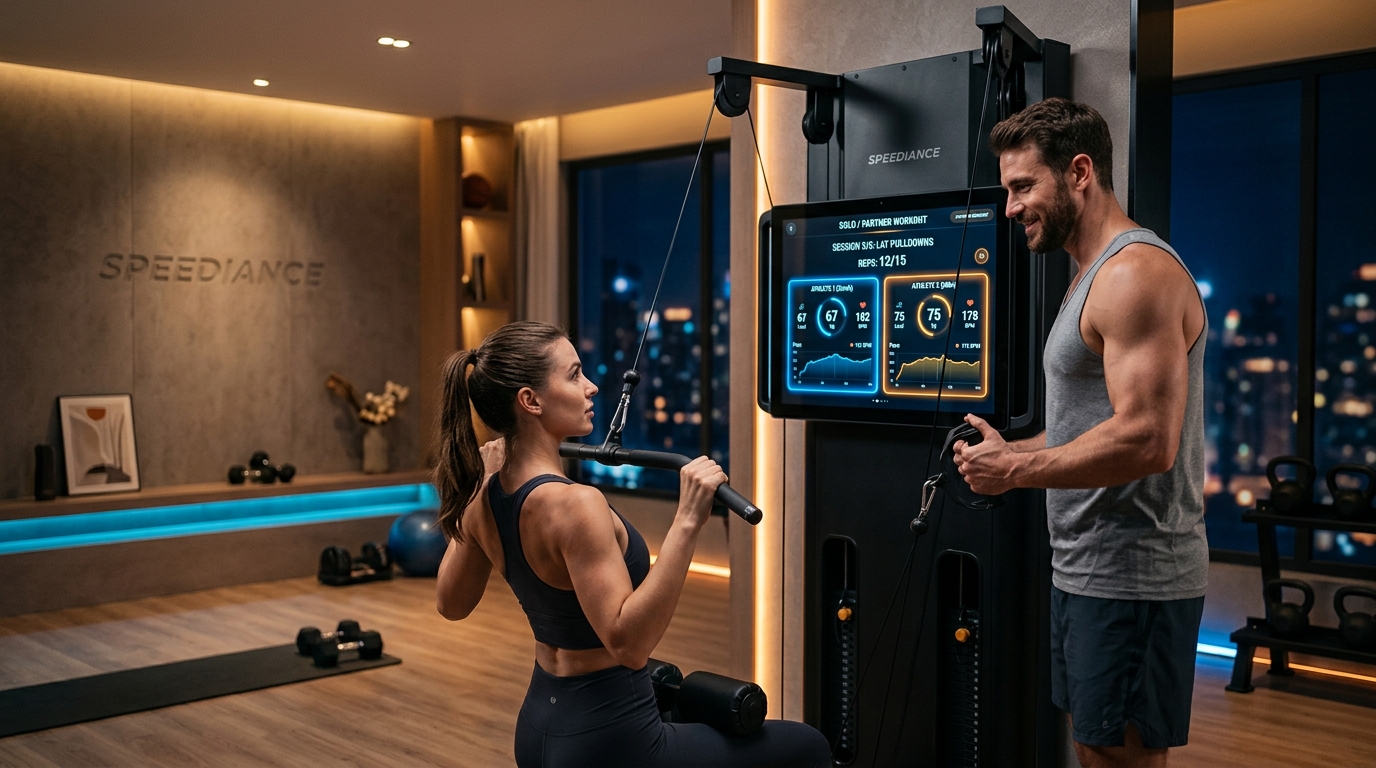
How Gym Tech Cuts Setup Friction and Makes Training Stick
The biggest barrier to consistent training often isn’t effort. It’s the tiny setup hassles that make workouts easier to skip than start.
Most people think the hard part of training is the training itself. The sweat. The fatigue. The discipline. But in real life, one of the biggest barriers to consistency is something much smaller and much sneakier: setup friction.
It’s the few extra minutes spent adjusting cables, swapping attachments, dialing in positions, deciding what variation to do, and mentally gearing up before the first real rep even starts. Those tiny bits of resistance add up. Over time, they can become the difference between “I trained today” and “I’ll do it tomorrow.”
That’s what makes modern digital cable systems so interesting. When used well, they don’t just change resistance. They change behavior. They cut down the little decisions and repetitive setup steps that make workouts feel harder to start.
And when starting gets easier, consistency gets easier too.
The real value of gym tech isn’t novelty. It’s speed.
One of the clearest takeaways here is simple: the device saves time. Instead of walking up to a machine and rebuilding the workout from scratch, the routine is already there. You can hit your custom workout, press go, attach the implement you planned to use, and begin.
That matters more than it sounds.
There’s a huge difference between a workout that could happen and one that is ready to happen. Ready wins. Ready removes hesitation. Ready reduces the number of opportunities for distraction, procrastination, or “I’ll do it later” thinking.
For busy people training at home, this is where connected strength tech shines. A system that remembers your settings, your structure, and your preferred flow can turn a workout from a project into a button press.
That is not laziness. That is good design.
Less variety can actually create more consistency
Another smart idea is the decision to stick to one implement per workout. No bouncing between handles, rope attachments, straight bars, ankle straps, and whatever else is lying around. Just one implement, one session.
That kind of simplification is powerful.
Fitness culture often pushes the idea that more variety is automatically better. More exercises. More equipment. More angles. More “muscle confusion.” But for many people, especially those trying to stay consistent over months and years, too many choices create drag.
By choosing a single implement for a workout, you reduce transitions. You reduce clutter. You reduce decision fatigue. Most importantly, you preserve momentum.
Momentum matters in training. Once you stop to make three adjustments, change attachments, or rethink the plan, the energy of the session drops. A simplified setup helps you stay in the workout instead of constantly pausing to manage the workout.
That doesn’t mean every program should be minimalist. It means your environment should support execution, not fight it.
Preset positions are an underrated training hack
Another useful strategy is limiting cable positions to a few repeatable zones instead of constantly making micro-adjustments. Think high, middle, and low. Three reliable sections. Not endless tinkering.
This is one of those ideas that sounds almost too obvious, but it can dramatically improve adherence.
When every exercise setup becomes a precision puzzle, workouts slow down. When you create default positions that work for most of what you do, the system becomes faster, more intuitive, and easier to repeat day after day.
That repeatability is a feature, not a flaw.
In fact, repeatability is often what people actually need. Not perfect novelty. Not endless optimization. Just a reliable setup that lets them train hard without wasting energy on the non-training parts.
For home gym users, this is one of the biggest benefits of digital resistance platforms: they can help standardize your process. And standardized process is what turns good intentions into habits.
The hidden theme here is compliance
On the surface, this sounds like it’s about workout setup, step counts, and appetite control. Underneath, it’s really about compliance: doing the behaviors that move you forward often enough for them to matter.
That’s the long game in fitness.
People don’t usually fail because they lack information. They fail because the right actions become too annoying, too inconvenient, or too mentally expensive to repeat consistently.
Anything that improves compliance is valuable. Sometimes that means better gym tech. Sometimes it means reducing the number of exercise choices. Sometimes it means keeping attachments simple. Sometimes it means setting a step goal that is ambitious but realistic.
The best fitness systems are not always the most advanced. They are the ones you can actually live with.
On appetite, weight loss, and what people really struggle with
This discussion also touches on another honest reality: hunger can make fat loss extremely difficult. Some people respond strongly to appetite-suppressing medications, while others don’t. Cost, side effects, access, and medical history all matter.
That section is worth handling carefully, but it points to something important: for many people, weight loss is not just about willpower. Hunger is a real physiological force. If someone is constantly hungry and never feels full, adherence becomes much harder.
That doesn’t mean there is one universal solution. Medication decisions should always be made with qualified medical guidance, and personal responses vary. But the broader lesson stands: if your system ignores appetite, recovery, energy, and daily reality, it probably won’t last.
Fitness technology can reduce friction in training, but body composition changes are still influenced by a bigger ecosystem: nutrition, hunger, sleep, movement, stress, and medical context.
Good tools help. Honest self-awareness helps more.
Why step goals still matter
The final theme is daily movement, with a clear preference for aiming at 10,000 steps per day while acknowledging that higher historical numbers are no longer realistic.
That is a healthy framing.
Too often, people get stuck comparing their current self to their peak self. They fixate on the old numbers instead of building around today’s capacity. But sustainability usually comes from setting targets that are challenging enough to matter and realistic enough to repeat.
A 10,000-step goal works well for many people precisely because it is simple, measurable, and meaningful. It creates a baseline of daily movement without requiring a full workout. It also complements strength training well, especially for people focused on body composition, recovery, or general health.
And just like the setup discussion, the principle is the same: reduce friction. If getting outrageous step counts is no longer realistic, then choose a target you can actually hit more often. Consistency beats nostalgia.
What this means for your own training
If you want to borrow the biggest lessons from this idea, start here:
- Remove setup friction. Save workouts, preset positions, and make starting as easy as possible.
- Simplify your sessions. Fewer attachments and fewer transitions can make training smoother and more repeatable.
- Standardize where you can. Default cable positions and repeatable movement patterns reduce wasted time.
- Be honest about compliance. The best plan is the one you will actually follow.
- Set realistic movement goals. A consistent 10,000 steps may beat chasing numbers you can’t maintain.
None of this is flashy. That’s exactly why it works.
Final thought
The future of fitness probably won’t be won by the most complicated program or the most extreme routine. It will be won by systems that make healthy actions easier to start and easier to repeat.
That’s why this kind of gym tech matters. Not because it looks futuristic, but because it removes excuses at the exact point where people usually stall. You walk up, load your workout, attach the tool you need, and go.
When prep time drops close to zero, training stops feeling like a negotiation.
And for most people, that’s the real game-changer.
Keep comparing
Make the next smart-gym decision with the full picture
Move from one review into model comparisons, real lifting data, and the matching video demonstrations.
Keep Reading
Related Posts
Arnold Classic, Speediance Bugs, and a Public Correction
Speediance Ring Clip vs Bare Ring: Which Actually Works?