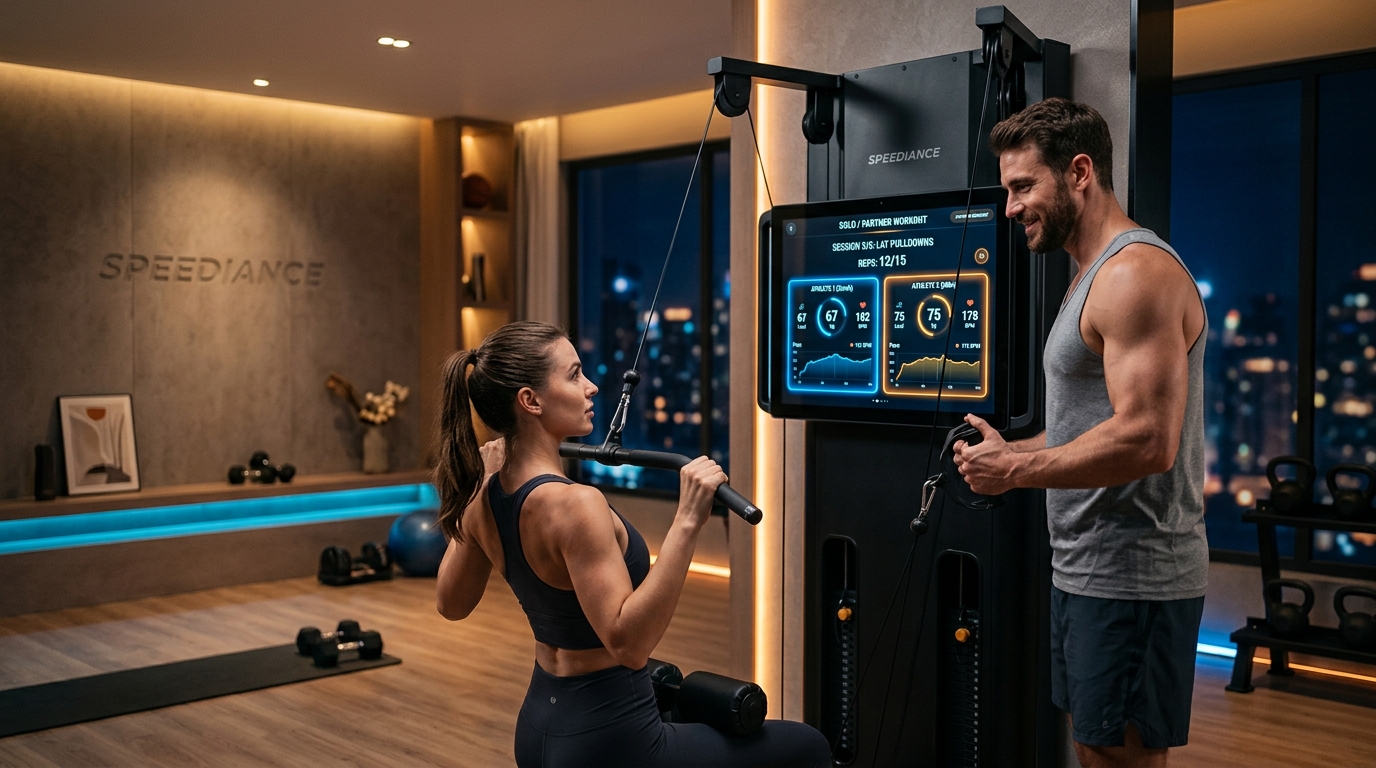
Speediance 2S vs Original: What Matters After 600,000+ Pounds
After extensive real-world use, the differences between the Speediance 2S and the original come into focus in ways spec sheets never show. This review breaks down the practical upgrades, quirks, and buying tradeoffs that matter most.
There’s a big difference between reviewing a smart gym after a few workouts and living with it long enough to find the real strengths, quirks, and workarounds. After more than 600,000 pounds lifted across both the Speediance 2S and the original Speediance Gym Monster, this is no longer a first-impression review. It’s a field report from someone who has pushed both machines hard, changed training styles around them, and learned what actually matters over time.
The headline is simple: yes, the Speediance 2S is better. But the original is still a very good machine—especially if you can find it at the right price.
The Big Question: Is the Speediance 2S Actually Faster?
One of the most common claims online is that the original Speediance feels laggier than the newer 2S. Toby went straight to the source and asked the Speediance team for clarity. The company confirmed that the original and the 2/2S do not use the same processor. The 2 and 2S share the newer chip, while the original uses a different one.
That matters—but probably less than people expect.
In day-to-day use, the difference shows up in smoother scrolling and slightly faster responsiveness when navigating menus and custom workouts. On the original, loading screens can linger just a fraction longer. But we’re talking about a minor difference, not a machine-breaking one. It is noticeable when you compare them side by side. It is not the kind of difference that ruins a workout.
If you’re worried the original is unusable or frustratingly slow, that hasn’t been Toby’s experience. The original still holds up as a capable, satisfying machine for full workouts.
Who Should Buy the Original?
If budget matters, the original Speediance still makes a ton of sense.
In fact, one of the strongest takeaways here is that open-box originals can be an absurd value. Toby points out that buyers have found them for roughly $1,000 to $1,500 with the full warranty still intact. At those prices, the original becomes one of the most compelling home gym deals out there.
That’s important because the real-world performance gap between the original and the 2S is smaller than the internet drama suggests. If you want the latest version and the smoother feel, the 2S is the better machine. But if you want tremendous value and the best deal per dollar, the original remains easy to recommend.
What 600,000+ Pounds of Use Reveals
Long-term use exposes things you won’t see in showroom demos or week-one reviews. It also reveals how your own training evolves around the machine.
Recently, Toby shifted from massive 30,000-pound sessions to shorter 5,000-to-10,000-pound daily workouts because of the Lunar Flow challenge inside the Speediance app. Instead of crushing big mixed upper-body sessions and taking recovery days, he started training one body part at a time to keep a streak alive.
That change turned out to be surprisingly enjoyable. It also highlights one of the underrated benefits of connected fitness platforms: challenges can meaningfully shape consistency. In this case, the challenge system nudged training toward more frequent, more sustainable sessions.
The Best Speediance Settings for Smarter Progression
One of the most useful parts of Toby’s setup is how he configures custom workouts for repeatable progression.
- Warm-up sets: 20 RM at 13 reps
- Working sets: 15 RM at 13 reps
- Goal: actually push beyond 13 and hit 15+ reps
- Mode: Stamina mode
- Key setting: Unlimited Set turned on
That last setting matters. With Unlimited Set enabled, the machine doesn’t cut the set off at the programmed rep count, which lets you push past the target and chase a better performance. That makes the programmed rep count more like a floor than a ceiling.
This approach gives Toby a structured warm-up, a meaningful working set, and a simple way to progress without overcomplicating the system.
One Small Setting That Became a Big Deal
After breaking a finger during jiu-jitsu, Toby changed his mind on another Speediance setting: tracking left and right arms separately.
That adjustment mattered because he had to train only his left side for two days, then gradually bring the right side back up as the injury healed. Without separate arm records, the machine would have pushed the injured side too aggressively.
It’s a great example of how smart gym features can become much more valuable when real life intrudes. Injuries, asymmetries, and recovery phases are where individualized tracking stops being a nice extra and starts becoming genuinely useful.
Where Setup Matters More Than Specs
If there’s one recurring theme in this review, it’s that smart cable machines reward thoughtful setup.
For example, bench position matters more than many people realize. During cable flies, Toby found the bench could actually slide backward under load and rub into the exposed cables. His solution? Place PowerBlocks behind the bench to stop it from drifting into the machine.
That kind of issue is not unique to Speediance. It’s part of training with cables at home. The machine can be excellent and still require spatial awareness, especially when you’re lifting heavy and using benches, ropes, and bars in tighter home environments.
Angle Adapters: Helpful, But Not All the Time
Speediance’s angle adapters are one of the more debated accessories, mainly because they can help reduce cable wear. But Toby’s experience is more nuanced than the usual “just leave them on all the time” advice.
At 6 feet tall, leaving the adapters on permanently limits full stretch on certain movements—especially curls. In his experience, they’re useful when cable angle would otherwise create rubbing or catching, but they are not ideal for every exercise.
The takeaway: use them when the movement demands them, not as a permanent default. If they were meant for every lift, the machine would likely have been designed around that from the start.
The Biggest Weakness? The Rope Handle
Most of Toby’s impressions of the Speediance hardware are positive. The barbell and core accessories feel robust, and there’s an argument to be made that parts of the Speediance hardware are better thought out than Tonal’s.
But one weak point stands out: the rope handle.
Compared to Tonal’s rope, the stock Speediance rope feels cheaper, with plastic end pieces that don’t inspire confidence or comfort under heavy load. For serious pulling work, grip quality matters, and this is one area where the stock setup falls short.
The good news is that it’s easy to fix. Toby swapped to a Tonal rope using a carabiner and also found an Amazon alternative with grippier rubberized ends that may be even better for maximal effort work. That matters because the goal in heavy training is to make raw strength the limiting factor—not pain from a bad handle or weak grip texture.
The Bugs: Annoying, But Mostly Manageable
No long-term smart gym review is complete without talking about software.
Toby ran into two issues worth noting:
- A workout disappeared mid-challenge after being interrupted, costing him a logged 17,000-pound session.
- One exercise recommendation wildly overestimated appropriate weight for an overhead triceps extension.
The first bug appears to have improved after a software update, with the machine now saving interrupted sessions more reliably. The second was more funny than dangerous in that specific case, but it still shows that auto-prescribed weights are not infallible—especially when exercise mechanics differ from simpler movement patterns.
There’s also a useful warning here for custom workout builders: if you use eccentric mode heavily, the default calculations may overestimate your capabilities unless you manually adjust the base weight downward. In other words, the machine can be smart, but you still need to understand your own programming.
So, Which One Should You Buy?
If you want the best Speediance experience, buy the 2S. It is the more refined machine, with better responsiveness and a newer processor.
If you want the best value, don’t overlook the original—especially open box. The real-world gap is much smaller than the spec-chasing crowd would have you believe.
And maybe that’s the biggest lesson from 600,000+ pounds lifted: the stuff that matters most isn’t always the stuff that looks dramatic on paper.
What matters is whether the machine keeps you training, helps you progress, fits your space, and can be adapted to your body and your goals. On that front, both Speediance machines have proven they can deliver.
The 2S is better. The original is still legit. And after this much use, that conclusion carries a lot more weight than a launch-day comparison ever could.
Keep comparing
Make the next smart-gym decision with the full picture
Move from one review into model comparisons, real lifting data, and the matching video demonstrations.
Keep Reading
Related Posts
Arnold Classic, Speediance Bugs, and a Public Correction
Speediance Ring Clip vs Bare Ring: Which Actually Works?