The Submission That Could Have Ended Everything
A risky jiu-jitsu exchange reveals the thin line between hunting a finish and gambling with your spine. This is a reflection on danger, ego, timing, and the responsibility that comes with attacking from dangerous positions.
There are moments in jiu-jitsu where the room gets very quiet inside your own head. The match is still moving. The grips are still fighting. The other person is still breathing hard on top of you. But internally, time slows down enough for one clean thought to cut through everything: this could go very badly.
That is the uncomfortable truth behind some of the most exciting submissions in grappling. The same positions that make people lean forward in the gym, the same setups that look slick in highlight reels, can also put your body in places where the margin for error is brutally small.
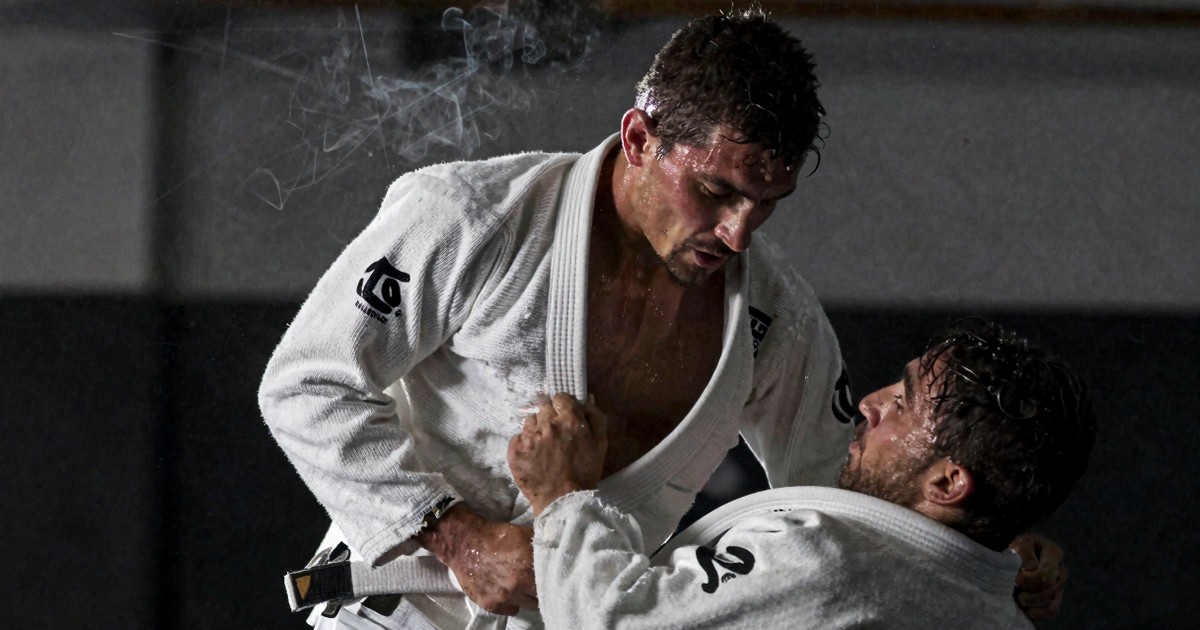
In this case, the danger was simple: trying to attack from a position that required putting almost all of my weight onto my neck. That is not a metaphor. It is not internet exaggeration. It is the kind of structural risk where, if the person on top decides to drop their weight forward with enough force, things can move from competitive to catastrophic in a heartbeat.
The Seduction of the Submission
Every grappler knows the feeling. You see the opening. You can almost taste the finish. The position is not perfect, but it is there if you are willing to commit. Maybe you invert. Maybe you roll under. Maybe you post on your head or stack yourself in a way that would make a physical therapist wince.
There is a reason people take those risks. Submissions are seductive because they offer resolution. They turn chaos into a tap. They turn pressure into victory. And in the middle of a hard round, especially against someone bigger, stronger, or more experienced, the chance to end the exchange can feel worth almost anything.
But jiu-jitsu has a way of making you pay interest on bad decisions. Sometimes the bill comes immediately. Sometimes it arrives years later as a neck that no longer rotates the way it should, a lower back that complains every morning, or a shoulder that never quite feels trustworthy again.
When Size Changes the Math
The risk becomes even more serious when the person above you is big. If someone the size of Mike Israetel, or any powerful heavyweight, decides to drop down and forward while your weight is loaded onto your neck, the physics are not on your side.
Technique matters. Frames matter. Angles matter. But mass is still mass. Gravity is still gravity. A black belt with timing, pressure, and body awareness can make a small movement feel like a landslide. If that movement lands on your cervical spine while you are already compromised, there may not be enough time to adjust.
That is the difference between drilling something in a controlled environment and attempting it live against a skilled, heavy opponent. In drilling, your partner usually gives you enough cooperation to understand the shape. In live training, they are trying to solve the problem you are creating. Their solution might be technically correct, competitively valid, and physically disastrous for you.
The White Belt Warning
I have been in a version of this situation before. I was attacking, my neck was exposed, and I realized the person above me was about to drop their weight down. Fortunately, they were a white belt. Not because white belts are safer in general; often they are not. But in this specific moment, they were slow enough that I had time to escape.
I shot my head underneath their legs to avoid taking the full force through my spine. It was not graceful. It was not some beautiful instructional sequence. It was survival. I saw the danger coming and moved just fast enough to avoid getting folded in a way that could have ended the round, the training session, or worse.
That experience stayed with me because it revealed something important: I had escaped partly because of my own awareness, but also partly because the other person was not fast enough to punish the mistake. That is not a reliable safety system.
If the same exchange happens with a brown belt, a black belt, or even a sharp upper purple belt, the timing window may not exist. Better grapplers do not just know more moves. They arrive earlier. They close space faster. They apply pressure more intelligently. They recognize when your structure is weak and make decisions before you have finished realizing you are in trouble.
Risk Tolerance Is Not the Same as Wisdom
I am willing to take risks in jiu-jitsu. That is part of how I train, part of how I learn, and part of what makes the sport compelling to me. But willingness is not the same as wisdom. Being brave enough to enter dangerous positions does not automatically mean those positions are good choices.
There is a difference between calculated risk and ego disguised as courage. A calculated risk asks: What is the likely outcome? What is the worst-case scenario? Can I escape if the opponent reacts correctly? Is this a competition setting, a gym round, or a casual roll with someone who has to go to work tomorrow?
Ego asks only one question: Can I get the tap?
That is a dangerous question when asked in isolation. The tap is not worth your neck. The highlight is not worth your spine. The gym story is not worth months of rehab.
The Partner Has Responsibility Too
This is not only about the person attacking the submission. The person defending has responsibility as well. In training, especially, there is a duty to understand when a defensive movement could cause unnecessary injury.
Dropping full body weight onto someone who is stacked on their neck might be a legal reaction in some contexts, but legal is not always wise. In the gym, the goal is not merely to win the round. The goal is to make each other better and still be able to train tomorrow.
That does not mean defenders need to become passive. It means they need to develop sensitivity. Pressure can be applied intelligently. Escapes can be made with control. A good training partner learns to distinguish between shutting down a technique and detonating another person’s body.
How to Think About Dangerous Attacks
None of this means you should never invert, never attack from underneath, never play risky submission games, or never explore unusual positions. Jiu-jitsu would become sterile if everyone trained only the safest possible patterns. But dangerous positions require a higher standard of awareness.
- Know your exit before you enter. If your attack fails, you should already understand where your head, neck, and hips need to go.
- Respect the size gap. A position that is manageable with someone your size may be reckless against a much heavier opponent.
- Account for skill level. Advanced grapplers punish structural mistakes faster. Beginners may move unpredictably. Both can be dangerous for different reasons.
- Train the position progressively. Do not jump from cooperative drilling to full-speed chaos without building layers of defensive awareness.
- Tap to pressure when needed. You do not need a locked submission to justify tapping. If your neck is compromised, tap early.
The Long Game Matters
The older I get, the more I think the real victory in jiu-jitsu is not any single submission. It is longevity. It is the ability to keep showing up. To keep learning. To keep testing yourself without turning every round into a coin flip with your joints and spine.
There will always be athletes who can live closer to the edge. Some people have exceptional mobility, timing, durability, or competitive need. But for most of us, especially those balancing training with family, work, and long-term health, the question cannot simply be, Can I make this work?
The better question is: Can I make this work repeatedly without paying a price I cannot afford?
That question changes the way you train. It makes you more selective. It makes you more honest. It does not remove intensity, but it gives intensity a purpose.
The Submission Is Never Just a Submission
The submission that could have ended everything is not really about one move. It is about the mindset behind the move. It is about the moment when ambition, danger, confidence, and vulnerability all collide on the mat.
Jiu-jitsu rewards courage, but it also rewards judgment. The best grapplers are not just the ones who attack hardest. They are the ones who understand when the attack is there, when it is bait, and when the cost of forcing it is too high.
I still love the hunt. I still love the strange, narrow pathways that lead to unexpected finishes. But I also know that some doors open onto cliffs. If you choose to step through them, you had better know exactly where your feet are, where your head is, and what happens if the person across from you decides to drop their weight.
Because sometimes the difference between a brilliant submission and a life-changing injury is not talent. It is timing, awareness, and one decision made half a second earlier.
Continue the training story
Put this BJJ story in the context of the full training record
See the belt timeline, competition notes, and the videos behind the written analysis.