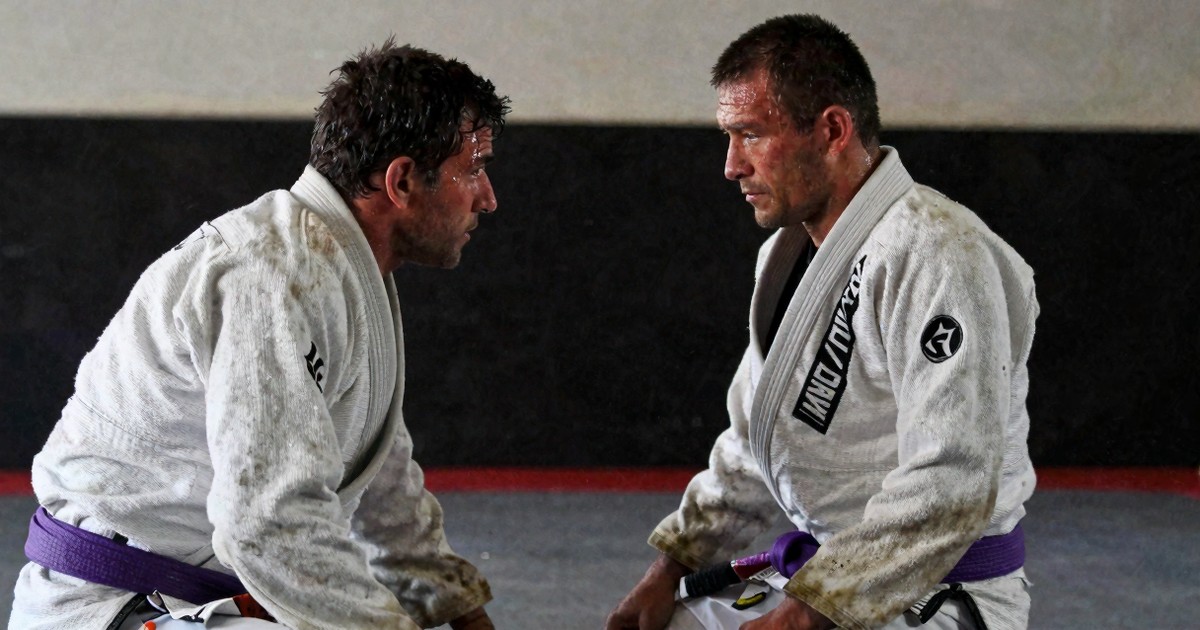
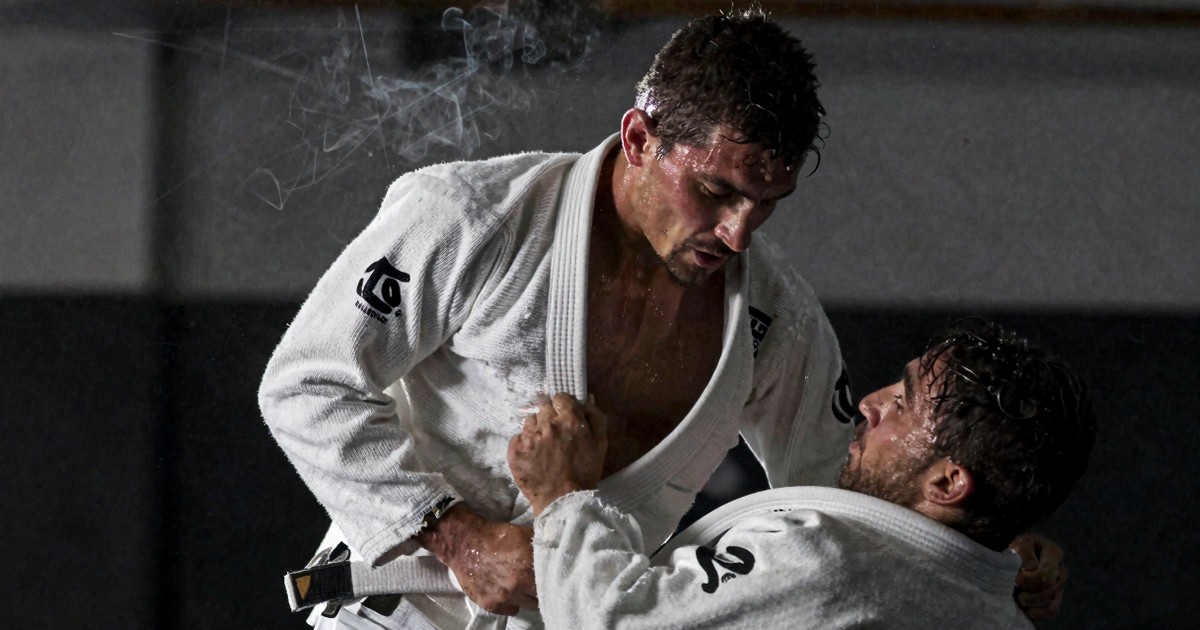
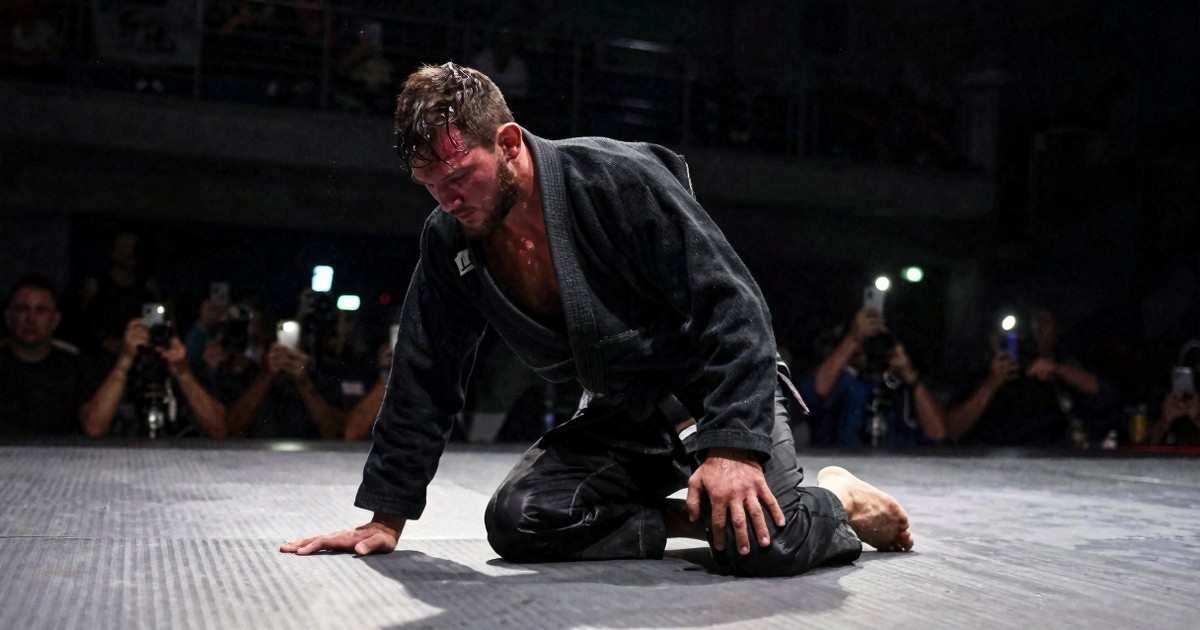
From Circle to Concrete: A Brutal Reminder About Competition Shape
My first grappling tournament in years started with a takedown that launched me off the mat and onto concrete. The bigger lesson was not the impact — it was what happened when the match went long.
There are gentle ways to return to competition. You shake off the nerves, feel out the pace, maybe exchange a few grips, and gradually remember what tournament intensity feels like.
Then there is the other version: your opponent launches you from inside the competition circle, you fly off the mat, and you land on concrete.
That was my welcome-back moment.
It was my first tournament in years, and before I had even settled into the match, I got a very physical reminder that competition grappling is not the same thing as regular training. The timing is sharper. The stakes feel different. The takedowns have more commitment behind them. And sometimes, apparently, the boundary between mat and concrete becomes more theoretical than practical.
The Wildest Start to a Match
The takedown itself was not dirty. That is an important point. He started it from inside the circle. He committed to the attack. The momentum carried us out, and I ended up off the mat and on the concrete.
In the moment, it felt absurd. One second I was in a grappling match, and the next second I was bouncing off the floor outside the competition area. It was almost comical in retrospect: welcome to competition, Toby — here is some concrete.
Thankfully, I was fine. No injury, no damage, no dramatic pause. I got back up, returned to the center, and we restarted the match. That part matters too. In competition, you do not always get time to process what just happened. You take the hit, check that everything still works, and get back to the task in front of you.
Looking back, I actually think he probably should have received points for it. The action started legally, and he did complete the takedown. I do not remember him getting the points, but technically he had a good argument. Nothing about the attack itself was illegal. It was just an unusually violent introduction to the match.
The Part That Actually Cost Me
The concrete landing makes the better story, but it was not the real reason I lost.
I lost that match in overtime because I gassed out.
That is the honest version. It was my first competition in years, and the gap between being able to train and being ready to compete showed up exactly where you would expect it to: when the match went the distance.
My opponent was in competition shape. I was not. I had enough skill to stay in the match. I had enough awareness to keep fighting. I had enough grappling to make it competitive. But when it became a question of repeated high-intensity wrestling exchanges, my gas tank was not where it needed to be.
That is a hard truth, but it is also one of the most useful truths you can get from competition. Training can hide things. Competition exposes them.
Overtime Does Not Care About Your Excuses
The overtime format came down to first takedown. At that point, the match had already shown the pattern. He was winning the takedown exchanges.
He got the first takedown — the one that sent me off the mat. Later, he took me down again inside the area, and I was able to reverse him. That reversal helped tie the score and keep me alive in the match. But if we are being honest about the takedown battle, I lost it.
I lost the first takedown. I lost the second takedown. And when overtime arrived, I lost the third one too.
That is not a small detail. In a match decided by takedown ability, the person who wins the wrestling exchanges usually controls the story. You can have good jiu-jitsu. You can be dangerous in scrambles. You can reverse positions and survive bad moments. But if the format rewards the first clean takedown in overtime, then your stand-up game and conditioning are not optional.
The Difference Between Having Takedowns and Owning Takedowns
I have some decent takedowns. I am not helpless on the feet. But there is a difference between having takedowns in your toolbox and being able to impose them under tournament fatigue against someone who is actively prepared to wrestle hard.
That difference is enormous.
It is easy in training to feel like your stand-up is good enough. You hit entries. You finish on familiar partners. You have a few reliable attacks. But competition asks a different question: can you hit those attacks when your heart rate is spiking, your grips are contested, the other person is exploding, and the clock is turning every mistake into consequence?
In that match, the answer was not good enough.
That is not self-hatred. That is data.
Competition Shape Is Its Own Thing
One of the biggest lessons from that match is that general fitness, training fitness, and competition fitness are not the same thing.
You can be fit enough to train hard and still not be ready for the specific demands of a tournament match. Competition shape includes more than cardio. It includes:
- The ability to recover between explosive exchanges.
- The ability to make decisions while exhausted.
- The ability to wrestle without panic when grips and balance are compromised.
- The ability to keep attacking late in the match instead of simply surviving.
- The ability to handle adrenaline without burning through your gas tank in the first two minutes.
I knew, at some level, that cardio might be a problem if the match went long. That is exactly what happened. The match went the distance, the takedown exchanges kept coming, and my conditioning gap became the deciding factor.
Why This Was Still a Valuable Match
It would be easy to frame the match as unlucky because of the wild start. But that would miss the point.
The concrete launch was memorable. It was dramatic. It is the part everyone would want to talk about. But the useful part is what it revealed.
It showed me that I could take a rough moment and keep going. It showed me that I could stay composed after an absurd start. It showed me that my scrambling and reversal instincts were still there. But it also showed me that if I want to compete well, I cannot treat takedown conditioning as an accessory.
For masters athletes, returning competitors, or anyone coming back after a long break, that lesson is especially important. You may still have the knowledge. You may still have the techniques. But the match does not care what you used to be able to do. It only cares what you can do today, under pressure, against someone prepared.
The Takeaway
If you are getting ready to compete, do not just ask whether you know enough jiu-jitsu. Ask whether you can repeatedly fight for position at tournament pace. Ask whether your takedowns hold up when you are tired. Ask whether you can still make good decisions after a hard scramble. Ask whether your gas tank matches the rule set you are entering.
Because sometimes the match starts with chaos. Sometimes you get launched onto concrete. Sometimes the referee restarts you in the center and the scoreboard does not quite reflect what happened. But eventually, the match settles into the truth.
In my case, the truth was simple: I survived the concrete, but I lost the takedown battle. And when overtime came, that was the match.
That is the kind of loss worth paying attention to. Not because it feels good, but because it points directly at the work.
Continue the training story
Put this BJJ story in the context of the full training record
See the belt timeline, competition notes, and the videos behind the written analysis.