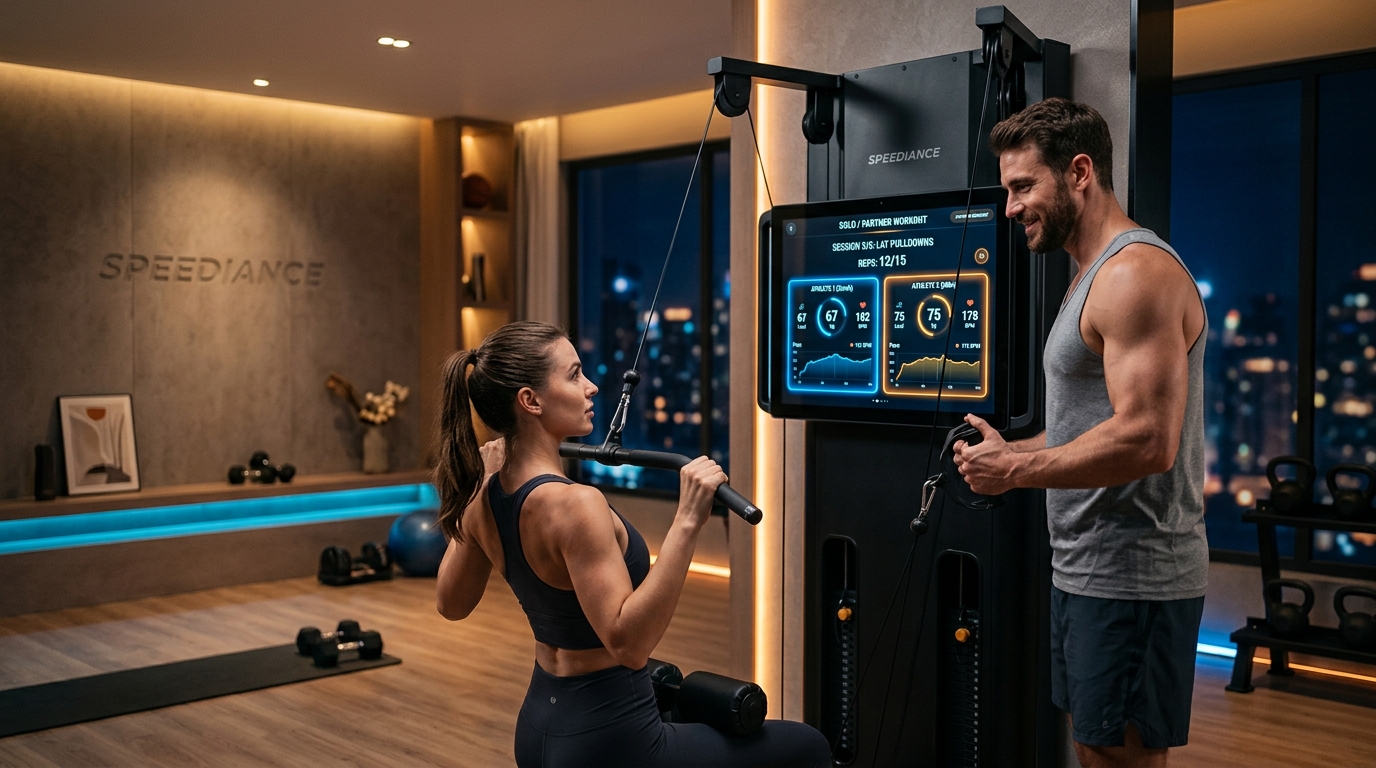
Speediance 2S 1RM Exposed: Yes, You Can Unlock 260 Pounds
The Speediance 2S looks capped at 220 pounds in one menu, but that is not the full story. Here is what happens when you use its dynamic weight and one-rep-max system the right way.
There has been some confusion around the Speediance 2S and whether it can actually deliver the full 260 pounds outside of free lift mode. I understand why. If you go into a custom movement, hit customize, and manually type in a weight, the machine caps that entry at 220 pounds. That makes it look like the 260-pound claim only applies to free lift.
But that is not the full story. The Speediance 2S can absolutely set a lift above 220 pounds inside a workout. The catch is that you need to use the dynamic weight modes and let the machine work from your one-rep-max data. If you only use the manual custom weight field, you are looking at the wrong part of the system.
The 220-Pound Limit Is Real, But It Is Not the Whole Machine
When you create or edit a custom exercise and choose the customize option, Speediance limits the manual input range to 16 to 220 pounds. That part is real. If you try to type in 260 pounds there, it will drop the number back down.
That is where a lot of people get tripped up. They assume the manual entry limit means the machine cannot use more than 220 pounds in a structured workout. But the dynamic modes are different. In gain muscle, stamina, and strength modes, Speediance uses your profile data, your lift history, and your one-rep max to determine the working weight. That system can assign more than 220 pounds when your numbers justify it.
In my deadlift workout, Speediance had already assigned 225 pounds for nine reps. That alone proves the machine can go over the manual customization limit inside a programmed lift. But I wanted to test the bigger claim: could it actually recognize and use 260 pounds properly, and would it update my one-rep max afterward?
The Test: 260 Pounds for 12 Reps
I created a simple deadlift workout: one set of barbell deadlifts at a prescribed rep range. The machine initially set the weight to 225 pounds based on my existing data. From there, I manually increased the working weight all the way to 260 pounds before starting the set.
This matters because I was not using free lift mode. I was inside an actual custom workout, using the barbell deadlift movement and the Speediance workout structure. That is exactly the scenario people were claiming could not happen.
Then I did the set: 12 reps at 260 pounds. It was not a casual test. At that load and rep count, you are going to be out of breath. I even used a mouth guard because heavy lifts are one of the few times where I worry about biting my lip. This was a real lift, not a theoretical menu setting.
At first, I did not immediately see the PR notification and thought maybe the machine had failed to register it. But when I checked the stats for the individual deadlift movement, the result was clear: Speediance recorded a new one-rep max of 388 pounds.
What That Proves
The result answers the main question. Yes, the Speediance 2S can run a lift at 260 pounds inside a workout. Yes, it can calculate a new one-rep max from that effort. And yes, that new one-rep max then feeds back into future workouts.
The user who thought the machine was broken was not crazy. The interface makes this confusing. If you only look at the customize field, it looks like 220 pounds is the ceiling. But if you use the dynamic weight system properly, the machine can assign and track heavier working weights.
How Speediance Seems to Handle PRs
The interesting part is not just that 260 pounds works. It is how Speediance decides what counts as a new PR.
Based on my testing, simply doing extra reps with unlimited sets turned on does not necessarily update your one-rep max. If the workout prescribed 12 reps and you do 14, those extra reps may increase volume, but they do not automatically trigger a new 1RM calculation. That is different from Tonal, where extra reps can feed more directly into the strength PR system.
On Speediance, the more reliable way to update your one-rep max appears to be lifting the prescribed number of reps at a higher weight. In other words, if the machine says 12 reps and you believe you can handle more load, increase the weight and complete those 12 reps. That is what triggered the new deadlift 1RM for me.
Why I Actually Like This Approach
At first, I thought this was a problem. If I am doing extra reps, why would the machine not automatically increase my PR? But after using it more, I actually think this may be safer.
It lets you build volume for a while without forcing every workout to become heavier immediately. If a set calls for 13 reps and you start hitting 16, 17, or 18 reps, you know you are getting stronger. But the machine does not instantly jack up all of your future warm-up and working weights just because you had one good day.
When you are ready, you manually bump the weight, hit the prescribed reps, and then the machine updates your PR. That creates a slightly slower progression curve, but it may be a better fit for people who also train jiu-jitsu, run, play sports, or deal with recovery variability.
The Current Software May Not Be Progressively Overloading Automatically
One thing I noticed in the current Speediance software is that it does not seem to be aggressively increasing weights on its own. My workout volume went up on some days because I performed more reps, but the machine did not automatically increase the load the next time.
My guess is that Speediance may have dialed this back after users complained that previous versions progressed too quickly. I have seen that happen myself. There were times when the machine suggested a weight and I immediately knew I could not lift it safely. If you have been training long enough, you can look at certain numbers and know they are not happening that day.
So for now, the practical takeaway is simple: do not assume Speediance will always progressively overload for you. Watch your reps. When you are comfortably beating the prescription, increase the weight yourself and let the machine recalculate from there.
Where to Find the Right Stats
Another confusing part is that Speediance has multiple stats screens. If you click stats from the overall workout summary, you see the data for that workout session. But if you want the one-rep-max history for a specific exercise, you need to go into the workout, tap the individual movement, and then open stats from that movement.
That is where you can see the 1RM chart for that lift. In my case, that is where the deadlift moved from a previous 293-pound one-rep max up to 388 pounds after the 260-pound test.
My Practical Advice for Speediance 2S Owners
- Do not use the manual customize field as your only reference point for the machine maximum.
- Use dynamic modes like strength, stamina, or gain muscle if you want the machine to calculate loads from your history.
- If you want to raise your one-rep max, increase the weight and complete the prescribed reps.
- Do not assume extra reps from unlimited sets will always update your PR.
- Check stats at the individual exercise level, not just the overall workout level.
- If you use eccentric mode, remember to set it for new exercises when creating new workouts.
Why This Matters Beyond One Lift
This is one of the reasons I value smart resistance machines. A functional trainer can last forever, but it does not remove the friction. You still have to track weights, reps, progression, and exercise history yourself. I had a functional trainer in my garage, and I barely used it. The Speediance gets used constantly because I can tap a workout and start lifting.
That tracking matters. If you are not logging your lifts, it is very hard to know whether you are actually progressing. Speediance is not just a cable machine with a screen. It is a log book, a progression tool, and a workout system in one place.
The Bottom Line
The Speediance 2S can unlock 260 pounds inside a real workout. The 220-pound limit only applies to the manual custom entry field, not to the full dynamic training system. If your one-rep max supports it, the machine can assign weights above 220 pounds, and you can manually raise a working set to 260 pounds during a programmed lift.
The important lesson is that Speediance PRs are not triggered exactly the way some Tonal users might expect. Extra reps may build volume without changing your one-rep max. To force a new 1RM calculation, increase the load and complete the prescribed work.
Once you understand that, the system makes a lot more sense. It is not broken. It is just not explained clearly enough. And after testing 260 pounds for 12 reps and watching the machine calculate a 388-pound deadlift one-rep max, I can say it plainly: the Speediance 2S can do it.
Keep comparing
Make the next smart-gym decision with the full picture
Move from one review into model comparisons, real lifting data, and the matching video demonstrations.
Keep Reading
Related Posts
Arnold Classic, Speediance Bugs, and a Public Correction
Speediance Ring Clip vs Bare Ring: Which Actually Works?