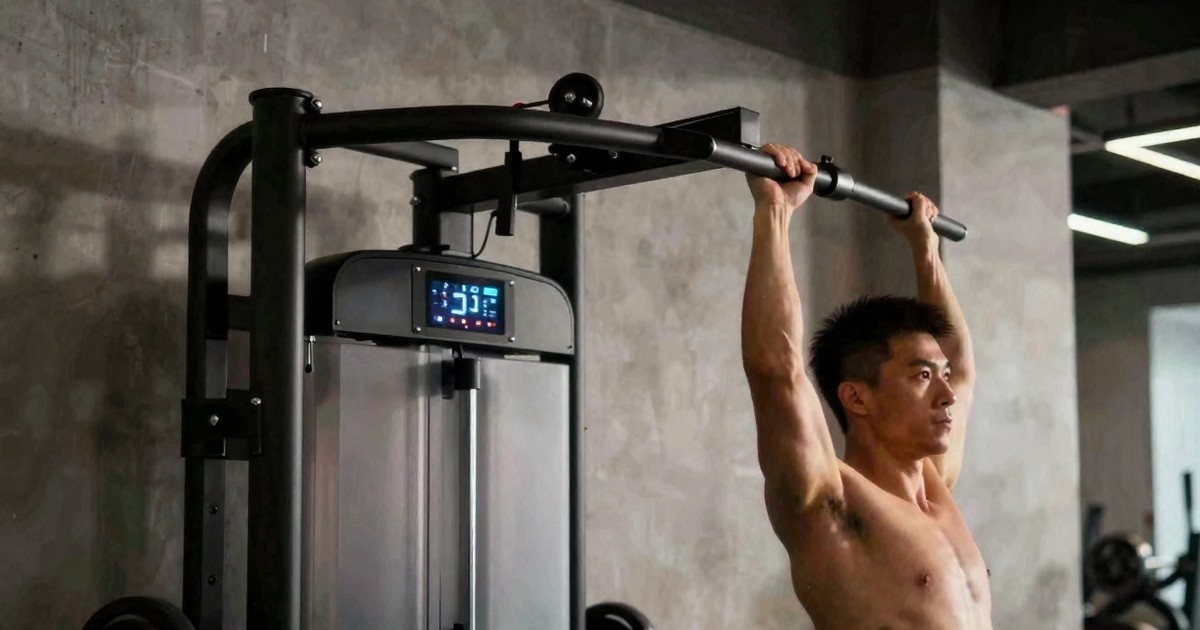
Speediance Gym Monster 2: Can It Handle Serious Strength Training?
A heavy lifter puts the Gym Monster 2 through its paces to see if this digital gym can withstand the rigors of high-intensity training. We explore whether it's a durable powerhouse or just a fragile gadget.
There's a moment in every smart home gym owner's life where you stop admiring the touchscreen and start asking the real question: is this thing going to survive me? Not survive a few months of casual use. Not survive a beginner's progressive overload. I’m talking about surviving the kind of training where you load the digital resistance like you actually mean it, and you keep doing that for years without the internals turning into a pile of expensive scrap metal.
That's the question I've been asking about the new Speediance Gym Monster 2. And the reason I'm asking it with a slightly raised eyebrow is because I've been here before with a different, very popular machine, and the experience left me skeptical about the 'smart' fitness industry’s definition of durability.
The Tonal Lesson
Before the Gym Monster 2 landed in my training space, I spent serious time on a Tonal. For a while, I genuinely loved it. The electromagnetic resistance felt futuristic, the form feedback was helpful, and the footprint was small enough that I stopped pretending I was going to use a full squat rack in my garage more than twice a week. It was elegant, sleek, and wall-mounted perfection.
But here's the thing about Tonal—and the thing nobody tells you in the marketing material—the proprietary handles and the internal cable tracks are essentially consumables. The accessories that attach to that magnetic resistance system take a beating every single rep, and over time, they fail. I am the kind of lifter who breaks the insides of a Tonal handle. Not because I'm reckless or throwing the weights, but because I'm strong, I train often, and I don't sandbag my working sets. When you are constantly pulling 200 pounds of digital tension, small plastic components inside proprietary locks eventually give up the ghost.
So when the handles gave out, I wasn't surprised; I was disappointed. I expected more from a machine at that price point, and I certainly expected a more robust solution for people who actually lift heavy. That experience set the bar for what I needed from my next machine.
What Brought Me to the Gym Monster 2
After that experience, I started paying closer attention to the mechanical build quality of the smart home gym category as a whole. The Speediance Gym Monster 2 caught my eye for several reasons that differentiated it from the Tonal philosophy. First, the unit is floor-based. While it uses high-torque digital motors rather than physical weight plates, the architecture is more akin to a commercial functional trainer than a piece of wall art. That floor-based design means the forces are distributed into the base and the frame, not into your drywall.
Second, the unit itself feels substantial. When you unbox it, you're not pulling a delicate piece of consumer electronics out of foam. You're unboxing a piece of gym equipment. The frame is heavy steel. The welds look clean. The pulleys feel like actual pulleys, not plastic parts pretending to be pulleys. Most importantly, it uses standard carabiner-style attachments. This is a game-changer. If a handle breaks, I can buy a $20 replacement from any gym supply store. I’m not locked into a proprietary ecosystem that requires a service call.
Third—and this is the part that actually matters for long-term ownership—Speediance has shown a relentless pace of iteration. They listened to the feedback from the original Gym Monster, beefed up the motor cooling, and improved the cable feel. That tells me they are concerned with the engineering, not just the interface.
My Plan: Stress Testing the Limits
I'm not going to pretend this is a definitive long-term review after a few weeks. It isn't. What I can do is tell you what I see in the unit, what I plan to do with it, and what I'll be watching for over the next several training cycles. I am planning on a major strength peak this winter. My training has been consistent, but I haven't pushed my absolute limits in a while. The Gym Monster 2 is going to be the tool I use to do that.
I plan on taking it through the same kinds of sessions I'd put any commercial cable machine through. Heavy rows. Heavy lat pulldowns. Max-effort chest presses. Slow eccentrics that force the motors to fight back against the load. Dropsets that keep the system under tension for minutes at a time. The kind of work that exposes weak points in the motor's thermal management and the cable's structural integrity.
The Four Pillars of Durability
Over the next several months, I'll be paying close attention to a handful of specific things that will determine if this machine stays in my gym or goes on Craigslist.
1. Cable and Pulley Wear
This is the single most important metric. Cables and pulleys are the heart of any cable machine. The Gym Monster 2 uses coated steel cables. I want to see how they look at the three-month and one-year marks. If there's visible fraying, it means the internal track isn't smooth. If the pulleys develop any play or noise, it indicates the bearings aren't up to the task of high-volume training.
2. Thermal Management
Digital motors generate heat, especially when you’re using them for heavy eccentrics or 'chains' mode. I’ve seen other machines throttle the resistance when they get too hot. I’ll be watching to see if the Gym Monster 2 can handle back-to-back heavy sets without losing its 'bite' or needing a cool-down period.
3. Frame and Joint Integrity
The frame is steel, which is great. What I want to see is whether the bolts and joints develop any creaking or flex over time. A well-built frame should feel as rigid at month twelve as it did on day one. If I start hearing squeaks every time I do a heavy row, that’s a sign of hardware fatigue.
4. Software Stability Under Load
Because the resistance is digitally controlled, the software needs to be rock solid. If the app crashes or the Bluetooth disconnects mid-rep while I have 200 pounds of tension over my face, that's more than a bug—it’s a safety issue. So far, the connection has been stable, but I’ll be testing it under the stress of high-frequency use.
First Impressions of the Build
Pulling it out of the box, my first thought was: this thing is built like a tank. The cables feel thick. The handles feel solid. The frame doesn't have any of the hollow resonance you get from cheaper all-in-one units. It feels like someone designed this to be used hard. It doesn't mean it's indestructible, but the design intent appears to be durability over disposability. For someone who has already broken a Tonal, that shift in philosophy is worth every penny.
Most buyers might never push the Gym Monster 2 to its 220lb limit. For them, this machine is overkill. But for those of us who intend to treat our home gym like a laboratory for strength, overkill is exactly what we’re looking for. I’ll be reporting back soon to see if the machine is still standing after I give it my worst.
Keep comparing
Make the next smart-gym decision with the full picture
Move from one review into model comparisons, real lifting data, and the matching video demonstrations.
Keep Reading
Related Posts
Speediance Ring Clip vs Bare Ring: Which Actually Works?
Speediance Partner Custom Workouts Are Finally Here: The Surprise Update That Changes Everything