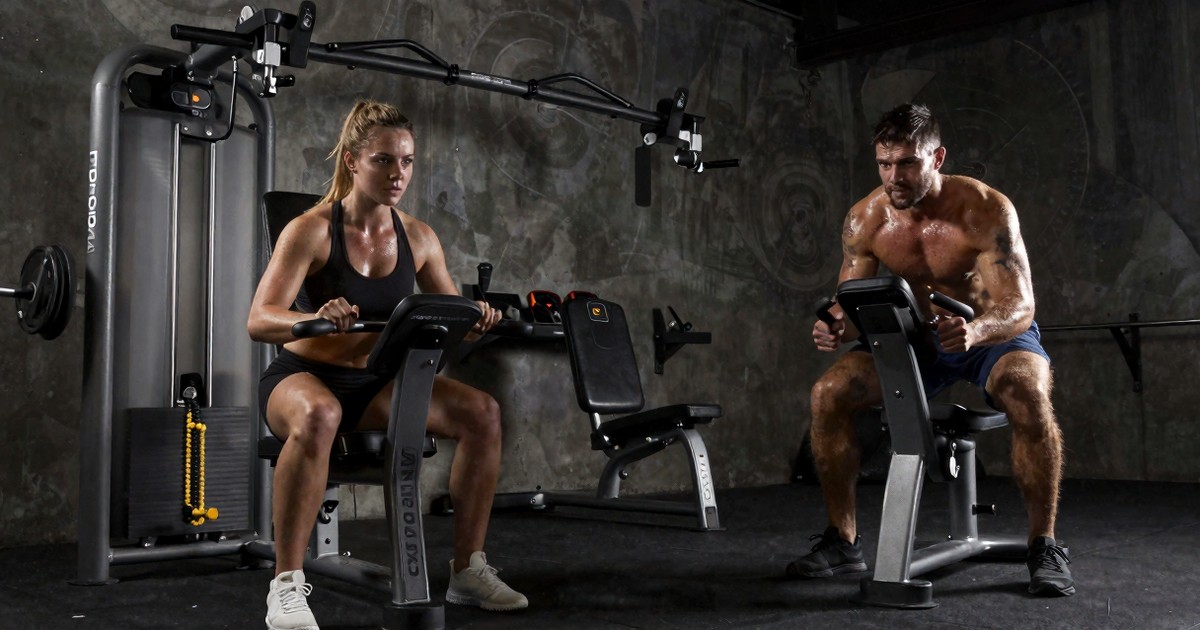
Tonal vs Speediance: The Arnold Blueprint Problem
If you want to run the Arnold Blueprint exactly as written, Speediance is the superior choice. Here is why Tonal's exercise library limitations compromise the integrity of legendary programs.
The short answer: If your goal is to actually perform the Arnold Blueprint workouts the way Arnold Schwarzenegger intended them, Speediance is the better choice. Tonal's library is smaller in scope, and its adaptation of the Blueprint split the workouts up and quietly included exercises you physically cannot do on the machine. That is a real problem if you bought the system specifically for this programming.
What the "Arnold Blueprint Problem" actually is
I keep seeing people excited that the Arnold Blueprint workouts landed on connected fitness machines. The excitement is fair. The Blueprint has a real cult following, and being able to follow those sessions on a smart home gym feels like a milestone. The problem is in how it was implemented. When you port a program designed for a Gold's Gym environment into a smart home gym, the hardware must be able to keep up. If it cannot, the software has to compromise.
Whoever ported the Blueprint to Tonal split the workouts across multiple sessions and included what they called "off Tonal" components. Translation: there are movements in the Blueprint—like specific barbell rows, certain pull-up variations, or bench-dependent leg curls—that simply do not exist in Tonal's digital exercise library. Instead of removing those movements cleanly or finding a creative hardware solution, the Tonal version tucked them into supplementary work or skipped them, which breaks the integrity of the program. You are not doing the Blueprint. You are doing a Tonal-fied version of it that lacks the flow and intensity of the original split.
That is what I mean by the Arnold Blueprint Problem. The hardware limited the programming, and instead of admitting it, the platform quietly cut pieces out and fragmented the experience.
Where Tonal falls short
Tonal is a wall-mounted, digital weight machine with two adjustable arms and a cable-based resistance system. It is a polished product. Its UI is clean. Its coaching is well-produced. None of that changes the fact that its exercise catalog is small relative to what the Blueprint calls for. Because Tonal relies on a wall-mounted vertical plane, it struggles with movements that require floor-based anchoring or traditional bench configurations that don't involve the cable arms.
The library size is the primary bottleneck. Tonal's number of exercises is minuscule in comparison to what you can do on Speediance. When you try to replicate a free-weight, dumbbell, or bodyweight-heavy program like the Blueprint on Tonal, you run into walls constantly. Movements that rely on a barbell, a bench, a pull-up bar in a specific configuration, or a kickback-style leg curl just do not translate to the arm-based system.
And that is the second part of the problem: the user experience of "off-machine" blocks. Tonal does not pretend those exercises don't exist, but it pushes them out of the main workout and into a separate, smaller session. This means if you want the "full" Blueprint, you are switching between tracked and untracked sets, which destroys the data-driven appeal of the machine. You think you are doing one Blueprint workout, but you are really doing one-third of it on the machine, and the rest is split off into an afterthought.
Where Speediance wins on this specific use case
Speediance is a different category of machine. Because it is a floor-based platform rather than a wall-mounted unit, it has more moving parts, more setup options, and a wider library of supported movements. The catalog is not just slightly bigger; it is meaningfully larger. The gap is large enough that Speediance trumps Tonal by a massive percent when it comes to the sheer number of exercises you can actually perform on the device without having to "substitute" or go off-platform.
Why does this matter for the Blueprint? Because the Arnold Blueprint assumes you have access to a full gym-style setup. It calls for dumbbells, cables, benches, a squat rack, and pulldown options. Tonal covers a narrow slice of that. Speediance, with its integrated bench and floor platform, covers significantly more. If your goal is to run a high-volume bodybuilding program as written, the closer you get to a real gym setup, the more faithfully you can run the program. On Speediance, you aren't constantly being told to "go find a set of dumbbells" to finish a superset.
Side-by-side: how they handle the Blueprint
Here is the comparison that matters if the Arnold Blueprint—or any traditional high-volume program—is your reason for buying.
| Factor | Tonal | Speediance |
|---|---|---|
| Exercise library size | Small; limited by wall-mount arm geometry | Larger; platform-based with higher variety |
| How Blueprint is delivered | Split across multiple fragmented sessions | Can run the program more cohesively in one block |
| Off-machine exercises | Requires significant "off Tonal" external equipment | Covers more of the movements natively on the unit |
| Faithfulness to original program | Compromised; edited to fit the hardware | Closer to the original 1970s intent |
| Best fit for | Users who want a curated, sleek, coach-led experience | Users who want to run pro programs exactly as written |
Who should choose Tonal
Pick Tonal if:
- You want a low-footprint, wall-mounted setup that looks like a piece of high-end consumer electronics.
- You are happy working within a smaller, curated exercise library and do not care about replicating traditional free-weight programs move-for-move.
- You value the coaching and production quality of Tonal's own proprietary content over third-party licensed programs.
- You are training for general fitness and health, rather than trying to replicate a specific bodybuilding split designed around a full commercial gym.
For this buyer, the Blueprint-on-Tonal compromise is not a deal-breaker. They likely won't notice the missing pieces, or they will be happy to use the AI features on the movements that *are* supported.
Who should choose Speediance
Pick Speediance if:
- The Arnold Blueprint, or any program written for a full commercial gym, is the primary reason you are investing in a smart gym.
- You want a connected home setup that gets as close as possible to the exercise variety of a real gym, including floor-based movements.
- You do not want a program split into a "main" workout and an "off machine" afterthought that breaks your flow.
- You are willing to trade some of Tonal's sleek wall-mounted polish for a much larger movement library and hardware versatility.
For this buyer, the deciding factor is faithfulness to the program. Speediance wins that comparison because the hardware doesn't force the software to lie about what it can do.
The deciding tradeoff
The tradeoff comes down to this: Tonal gives you a more polished, more curated experience with a smaller exercise library. Speediance gives you a less polished but far broader exercise library. For most people, that tradeoff is reasonable and obvious. For anyone chasing the Blueprint, it is decisive. You cannot run a program faithfully on hardware that does not support half of its movements. Tonal's decision to fragment the Blueprint across multiple workouts and tack on "off Tonal" components is a tell. The team knew the library was too small. They shipped it anyway because the branding was too good to pass up.
I am not saying Tonal is a bad product. For general fitness, it is excellent. I am saying that for this specific use case—the Arnold Blueprint—Speediance is the objective winner. The hardware is closer to what the program actually asks for, and the experience will not be quietly edited behind your back to hide hardware limitations.
The bigger lesson for connected fitness buyers
There is a pattern here worth naming. Connected fitness platforms love to license famous programs because the marketing writes itself. But if the hardware cannot support the program, the platform must either cut movements, split sessions, or bolt on "off platform" work. None of those are the program you signed up for. Before you buy any smart gym for a specific program, check whether the program can actually be performed on the machine. If a meaningful chunk of the workouts live "off the machine," that is a red flag, not a feature. You are paying for a smart gym so that the machine handles the load and the tracking; once you move to a floor mat with a pair of rusty dumbbells to finish a "Tonal" workout, the value proposition evaporates. For the Arnold Blueprint specifically, the red flag is obvious. If you want the real deal, go with Speediance.
Keep comparing
Make the next smart-gym decision with the full picture
Move from one review into model comparisons, real lifting data, and the matching video demonstrations.