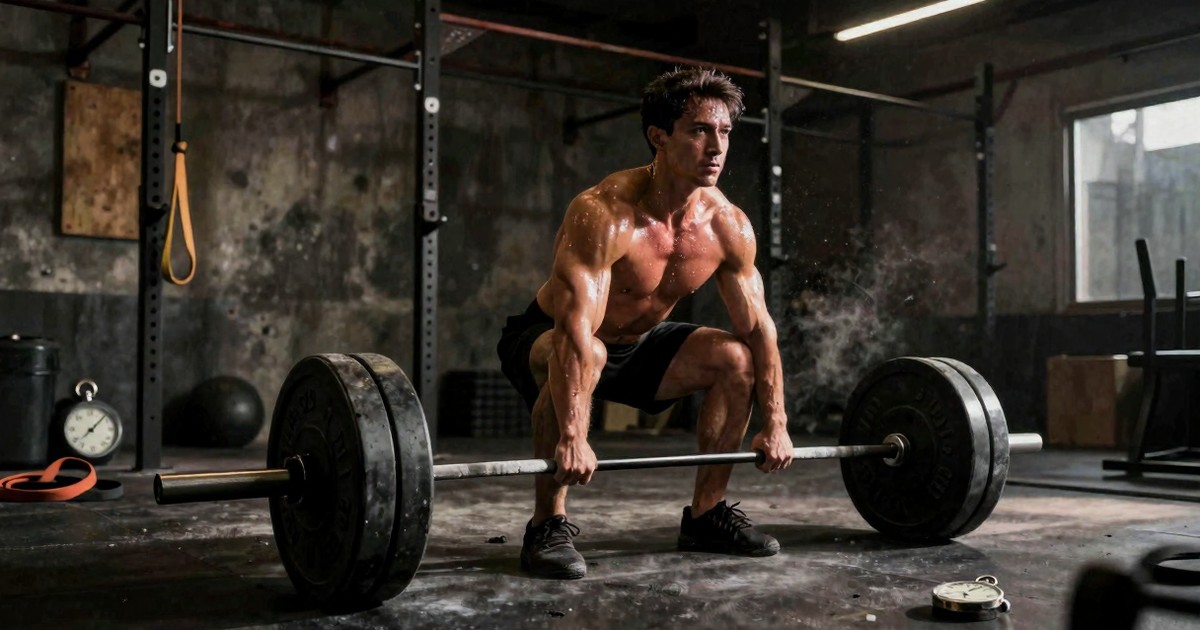
Full Body Minus Legs: The Split I Actually Stick To
The perfect training split is useless if it does not fit your life. Here is how I rebuilt my lifting around Speediance, recovery, and the workouts I can actually repeat.
At some point in training, the question becomes less about what is theoretically optimal and more about what you can actually repeat. That is where my current split came from: a full body workout, minus legs, built around the movements I like most and the reality of my current schedule.
I know that sounds like a compromise, and it is. But it is the right compromise for where I am right now. If I add a full leg day into the same workout, I know what happens: I probably will not do the workout. So instead of pretending I am going to follow the perfect plan, I built the plan I will actually execute.
Why I Moved Away From Push-Pull-Legs
For a long time, my training was heavily influenced by Arnold-style push-pull-legs programming, modified for smart gym machines like Tonal and Speediance. That approach absolutely works. It helped me build a lot of my physique, especially during the period when I dropped from around 250 pounds to 185 pounds.
Back then, I was far more rigid. I followed the plan. I did not end workouts early. I treated the structure like it mattered because it did matter. The goal was transformation, and the training had to match the seriousness of the goal.
But life changes. Right now I have two little kids, multiple sports pulling at my recovery, and less interest in lifting every single day. I still train every day in some form, but I do not want to lift every day anymore. I want to hit the machine two to four times per week, train hard when I am there, and then move on with my life.
The Full Body Minus Legs Template
The split I settled on is basically full body minus legs. It is not one single workout. I have several variations built from my favorite lifts, plus a few movements I wanted to experiment with. The common structure is simple:
- One warm-up set for each exercise
- One hard set to failure
- Mostly upper body work
- A lot of back and upper-back volume
- Calf raises included because of ankle rehab and resilience
- Occasional lower-body work, like deadlifts, depending on the variation
One of these full workouts recently came out to about 41,500 pounds of total volume. Even the warm-up-only version can land around 10,000 pounds lifted. So when I say warm-up sets only, that does not mean nothing happened. It is still meaningful work.
The way I sequence the workout is also based on machine efficiency. With Speediance, transitions matter. If you can group movements in a way that reduces setup friction, the workout becomes much easier to finish. So the plan is not just based on muscles. It is based on how to move through the machine efficiently without wasting time or mental energy.
The Lunar Challenge Taught Me Something
The big test came during a Speediance Lunar Challenge where the goal was to work out every day. At first, I thought my full body minus legs approach would be perfect. I figured I could do a full workout on Sunday, warm-up-only sessions on Monday and Tuesday, then another full workout on Wednesday.
That did not work.
After three days, I was too fatigued even to keep up with the warm-up-only plan. I had to skip a day, then come back and do the full workout again. That was the moment I realized this structure was great for my normal life, but not for a daily lifting challenge.
So I redesigned the program and built more of a classic bro split: individual days focused on individual muscle groups. For the rest of that challenge, it worked much better. And I learned something useful from it.
Where the Bro Split Still Wins
I do not think the bro split is dead. In fact, I saw noticeable gains during that challenge, especially in my biceps, from having a dedicated arms day. My normal full body workouts include arm work, but they do not include ten arm exercises in a row. They are mostly back-focused with some arms mixed in.
When I added a specific arms day, the stimulus was different. It was targeted. It worked. The problem is that it only worked while the challenge itself gave me a reason to show up every day.
Once the competition ended, the bro split immediately became a bad fit for my real life. I knew I would miss days. And if your split depends on never missing days, it can fall apart quickly. That is why I kept the arms workout as an optional add-on rather than making it the foundation of my training.
Why My Workouts Are So Back-Heavy
One thing that stands out in my current programming is how much upper-back work I do. That is intentional. I have a history with shoulder issues, and I also do jiu-jitsu. Since switching to smart gym machines, I have had far fewer shoulder problems than I used to have with free weights.
That does not mean free weights are useless. I still like them. But everything has an application. If you are doing cross-sport training, especially something like jiu-jitsu, I think machines like Speediance and Tonal can be much safer and easier to recover from.
I also train alone. That matters. In the past, I lifted heavy in my basement with no spotter. I have dropped weight before. I have bent a bar. I have had a failed lift stuck on me. Those moments change how you think about safety.
With a smart gym, I can train hard and go to failure without needing one or two spotters standing around. Is the machine better than two good spotters? Probably not. But it is definitely better than no spotter, which is what I actually had most of the time.
Do Not Worship Completion
One of the biggest changes in my current training mindset is that I no longer worship completionism. There are days when I start a full workout and do not finish it. Recently, after a massive full session earlier in the week, I came back in and got through all my warm-ups and about half of the working sets. Then my strength started falling off hard.
So I stopped.
That is not failure. That is training maturity. If the workout is over, it is over. You do not get extra points for forcing junk volume when your body is clearly done.
That said, this depends on your goal. When I was in the middle of my body transformation, I did not give myself that much flexibility. I needed discipline more than grace. Now, because I already built the foundation, I can be more adaptive.
Training Priorities Change
Right now, lifting is not my only priority. I am preparing for a local four-mile race, and because of a recent ankle injury, running has moved to the top of the list. The ankle injury was familiar territory: I originally hurt the same area running years ago, then aggravated it again kickboxing. This time I tore the tendon off the bone, so calf raises and gradual rebuilding are not optional. They are part of the plan.
My current priority stack looks something like this: running first, lifting second, and jiu-jitsu third, with jiu-jitsu close behind lifting. That order can change. In other seasons, jiu-jitsu has been first. During my 2023 transformation, lifting and weight loss were clearly first.
This is the point: your split should serve your current priority, not the priority you had two years ago.
The Real Rule: Pick the Split You Will Do
If you are trying to build a great physique, push-pull-legs can work. I know because it worked for me. A bro split can also work, especially if you can train frequently and want targeted volume. Full body can work. Full body minus legs can work too, if that is the version you will actually repeat.
The best split is not the one that wins an internet argument. The best split is the one that fits your life, your recovery, your equipment, your injury history, and your current goal.
For me, right now, that means full body minus legs on Speediance, two to four days per week, with hard sets to failure, lots of back work, calf raises for the ankle, and optional arms work when I want it. It is not perfect on paper. It is better than that: it is sustainable.
Choose the next view
Move from the story into the underlying training data
Explore the weekly plan, video library, and the best place to start with the site.
Keep Reading
Related Posts
How Many Days Should You Train Each Week? Stop Asking
Train Around Elbow & Wrist Pain Without Losing Progressive Overload