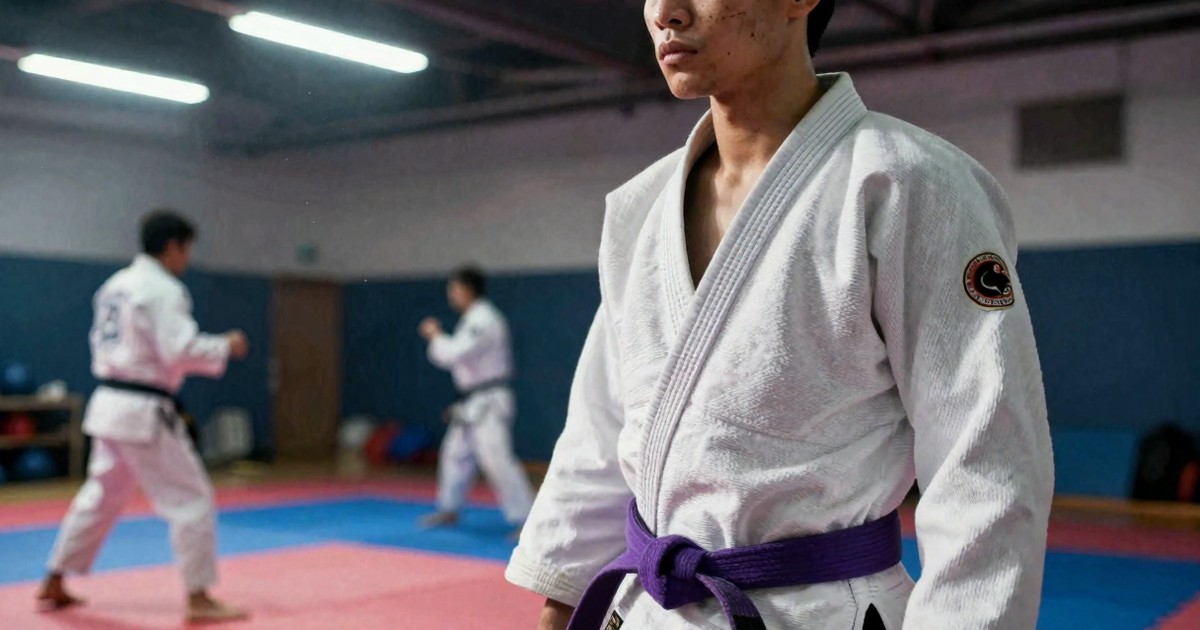
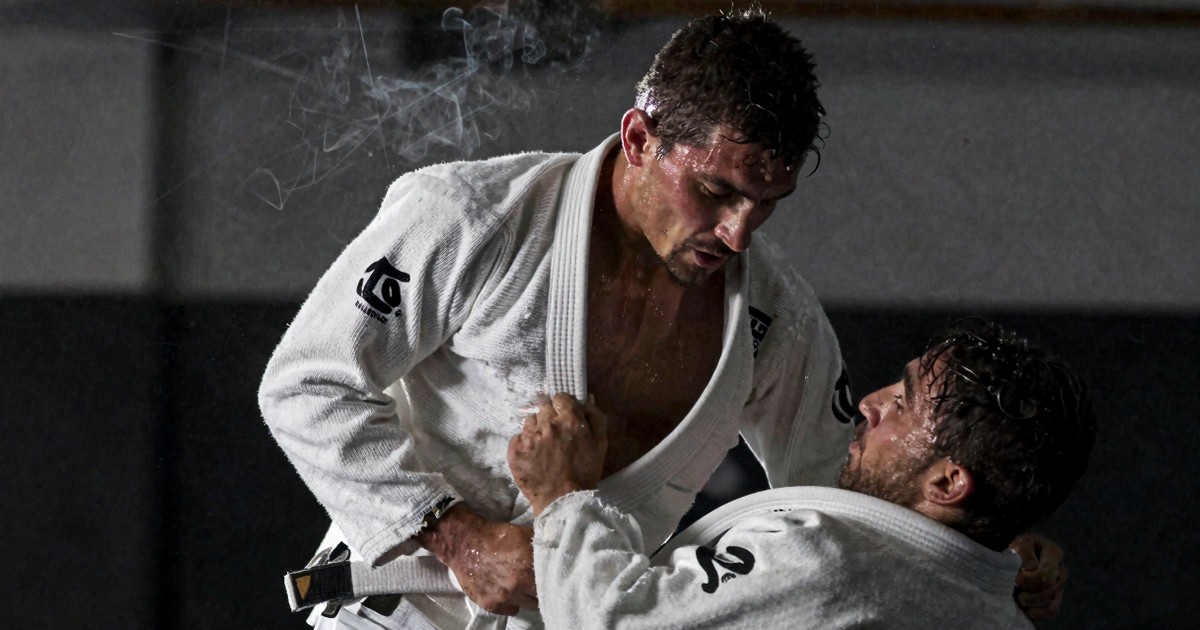
Stop Guarding the Belts: The Raw Truth About Jiu-Jitsu Promotion
Belts matter in jiu-jitsu, but the way we award them is often messier than we admit. Competition can reveal truth fast, but it cannot be the only doorway to progression.
Jiu-jitsu has a belt problem.
Not because belts are meaningless. Not because promotions are fake. Not because every academy is handing out ranks like participation trophies. The problem is more uncomfortable than that: belts are supposed to represent ability, but ability in jiu-jitsu is hard to measure cleanly. And when something is hard to measure, politics, tradition, insecurity, and personal bias start filling in the gaps.
The raw truth is this: tournament performance can expose the truth about a grappler very quickly. But requiring tournaments for promotion can also create a system that punishes the wrong people.
That tension is where most of the belt drama lives.
The Tournament Shows What Training Can Hide
There is something brutally honest about competing. In the gym, everyone knows the room. You know who is explosive, who is technical, who is nursing an injury, who starts slow, who lets you work, and who is secretly trying to murder you during every round. The social context of the academy changes the way rolls feel.
A tournament strips a lot of that away.
You get a stranger. You get points. You get a referee. You get nerves. You get the adrenaline dump. You get someone who did not come to help you improve. They came to beat you.
That environment reveals things that normal training may not. Can you impose your game when the other person is fully resisting? Can you stay composed while losing badly? Can you find a submission when the scoreboard says you are cooked? Can you perform under pressure without your coach resetting the round or your training partner easing off?
That is why competition matters. It is not just about medals. It is about verification.
You can look good in the room and still fold under pressure. You can have beautiful technique when drilling and still panic when someone is smashing through your guard. You can be promoted based on potential, attendance, and loyalty while never having your game stress-tested outside the familiar ecosystem of your academy.
Tournaments make that harder to hide.
But Medals Are Not the Whole Story
Here is where the simple answer falls apart: winning tournaments cannot be the only standard for promotion.
First, tournament results are noisy. A grappler can be excellent and still lose because of a bad matchup, a questionable referee call, an injury, a weird ruleset, or one mistake in a short match. Another grappler can win a small bracket and walk away with gold without being more complete than someone who lost in a deeper division.
Second, not everyone who deserves rank can or should compete.
Think about the older student with a full-time job, family obligations, grandkids, and a body that does not recover like a 22-year-old competitor. They may train consistently. They may roll intelligently. They may be technically sharp. They may be clearly operating at the next belt level in the room. But they are not going to spend a Saturday cutting weight, warming up for hours, and risking injury in a local tournament just to validate what everyone already sees every morning on the mat.
Would it be fair to hold that person back forever?
I do not think so.
And this is the uncomfortable part: a hard tournament requirement sounds objective, but it can become unfair very quickly. It can favor young, healthy, flexible schedules over older, working, family-centered practitioners. It can turn belt progression into a competition pipeline rather than a martial arts journey.
That does not mean competition is irrelevant. It means competition should be evidence, not the entire courtroom.
The Real Problem Is Unclear Standards
The deeper issue is not whether tournaments matter. The deeper issue is that jiu-jitsu often lacks transparent promotion standards.
One academy promotes based on attendance. Another promotes based on competition results. Another promotes based on whether the head coach feels like you are ready. Another keeps people at belts for years because the culture treats promotion like a sacred secret. Another promotes quickly because retention matters and students like progress.
None of this is standardized, and maybe it never fully can be. Jiu-jitsu is not math. A belt is not a lab result. But that does not mean the process should be vague.
If a student does not know what the next belt represents, they are left guessing. Is it technical knowledge? Is it sparring ability? Is it competition success? Is it leadership? Is it consistency? Is it time served? Is it loyalty to the academy?
When the answer is unclear, belts become political.
That is when people start guarding them.
Stop Guarding the Belts
Some coaches act like promoting a student somehow devalues their own rank. Some upper belts treat lower belts like they should suffer longer because they suffered. Some academies use belt scarcity as a branding strategy, as if holding people back automatically proves the room is tougher.
But a belt should not be guarded like treasure. It should be awarded when the evidence is there.
That evidence can come from competition. It can also come from years of consistent training, technical understanding, live rolling against resisting partners, helping newer students, showing composure under pressure, and demonstrating the ability to survive and problem-solve against people at or above the target level.
The belt is not supposed to be a medal. It is supposed to be a marker of development.
And development has more than one expression.
A Better Promotion Model
Instead of saying every student must compete, or pretending tournaments do not matter, jiu-jitsu would benefit from a more balanced promotion model.
1. Use competition as strong evidence
If a student competes, that should count. Not just wins, either. How they perform matters. Did they attempt their game? Did they stay composed? Did they escape bad positions? Did they lose because they were outclassed, or because of one tactical error? Did they show the attributes expected of the next belt?
A bronze medal with a gritty comeback submission can reveal more than an easy gold in a weak bracket.
2. Measure live rolling honestly
The academy room still matters. Coaches should watch how students perform against different body types, styles, and belt levels. A student who can consistently apply technique against resistance is showing rank-relevant skill, even if they never enter a tournament.
3. Account for age, goals, and life context
A 24-year-old competitor and a 62-year-old grandparent should not be evaluated identically. The art has to be broad enough to include both. Standards matter, but standards should not ignore reality.
4. Define what each belt means
Academies should be clearer about expectations. Not rigid checklists that reduce jiu-jitsu to memorized moves, but meaningful criteria. What should a blue belt be able to do? What separates purple from blue? What does brown belt responsibility look like? What does black belt represent beyond mat time?
5. Promote based on the whole body of work
No single day should define a grappler. Not one tournament. Not one bad round. Not one great submission. Promotion should come from a pattern of evidence over time.
The Belt Should Follow the Truth
The best promotions feel obvious. The room already knows. The coach knows. The student may be the last one to believe it, but the evidence has been piling up for months.
That is the goal.
Not surprise promotions based purely on attendance. Not endless sandbagging because a coach is afraid to move people forward. Not forcing every hobbyist into tournaments. Not pretending tournament-tested skill does not matter.
The belt should follow the truth.
If competition reveals the truth, use it. If daily training reveals the truth, use that too. If an older student is clearly operating at the next level, do not hide behind a tournament requirement they were never realistically going to meet. If a young athlete wants rank but avoids every chance to test themselves, maybe that says something too.
Jiu-jitsu is live, resistant, and honest. Promotion should be the same.
Stop guarding the belts. Start guarding the standards.
Continue the training story
Put this BJJ story in the context of the full training record
See the belt timeline, competition notes, and the videos behind the written analysis.