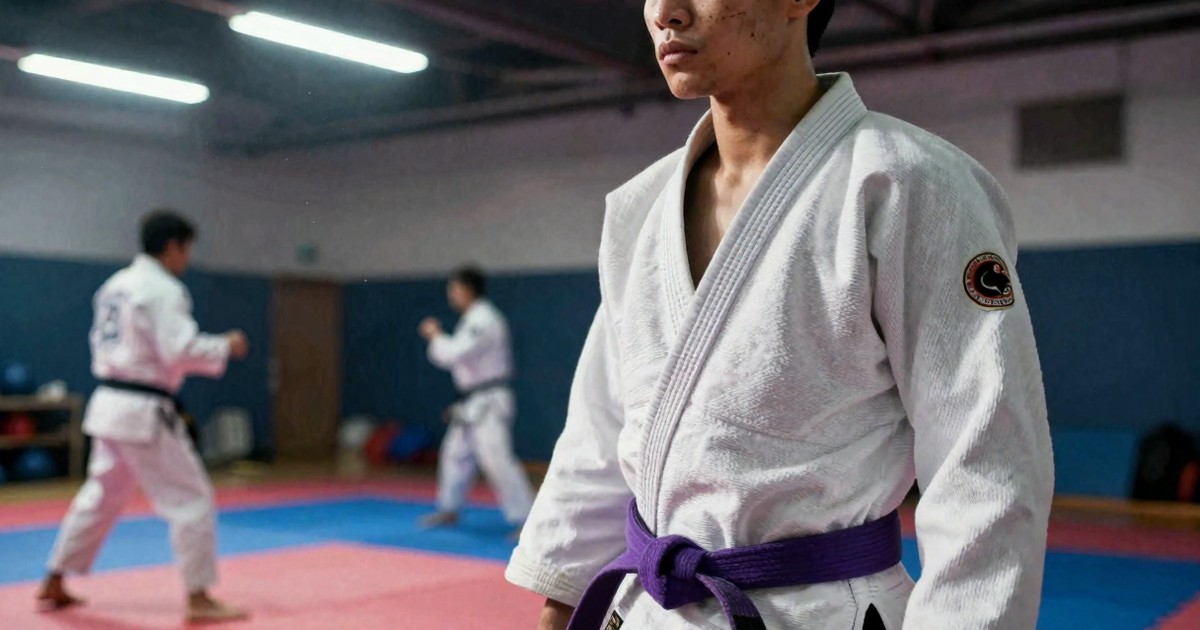
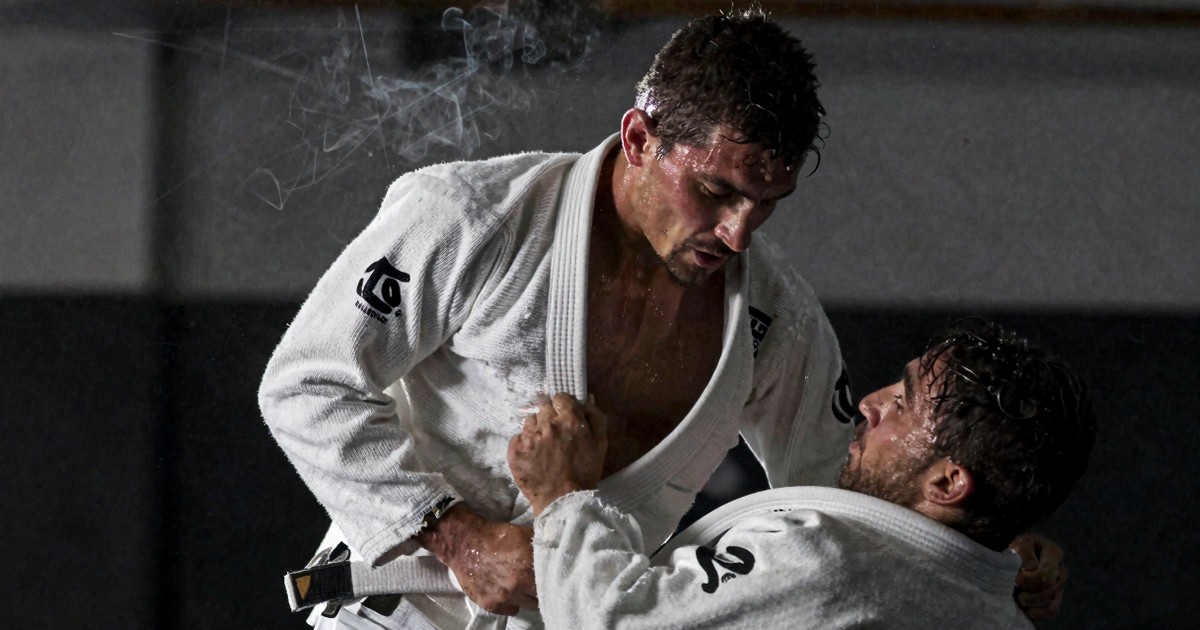
Should a BJJ Black Belt Require Competition?
A black belt is more than a medal count, but competition exposes truths that training-room comfort can hide.
Every so often, Brazilian jiu-jitsu gets pulled into a debate that is bigger than one person, one promotion, or one viral clip. The latest version is familiar: someone gets promoted quickly, people question whether the belt was earned, and the internet turns the whole thing into a referendum on legitimacy.
But the real question is not simply, “Did this person deserve a black belt?” The better question is: what should a black belt prove?
That question gets complicated fast. Jiu-jitsu is not one thing. It is sport, self-defense, problem solving, physical literacy, culture, coaching, and pressure testing all tangled together. A black belt can represent technical knowledge, competitive success, mat time, teaching ability, resilience, and character. But if we pretend competition does not matter at all, we lose one of the clearest ways to separate theory from reality.
The Problem With Judging From the Outside
One of the easiest traps in martial arts commentary is assuming that rank can be accurately judged from clips, rumors, or secondhand takes. If you have not trained with someone, rolled with them, watched them teach, or seen how they handle resistance over time, your confidence should be limited.
That is especially true when larger personalities outside the jiu-jitsu world weigh in with certainty. Criticism can be fair, but only when it is grounded in actual understanding of the sport. Jiu-jitsu has layers that are invisible until you have felt them. A person can look unimpressive in one exchange and still be deeply skilled. Another person can look athletic and dangerous while missing major technical foundations.
Size also distorts perception. A smaller elite grappler can feel like a truck. A larger hobbyist can survive longer against someone less physically imposing. And then there are athletes like the Tackett brothers, who remind you very quickly that high-level competitors operate on a different setting. Against someone in full competition mode, even a strong and experienced person may be launched, controlled, and submitted before they ever get to show their game.
That reality should make us humble. Watching is not the same as knowing. Commentating is not the same as training.
But Fast Promotions Deserve Scrutiny
At the same time, skepticism around unusually fast black belt promotions is not irrational. In jiu-jitsu, a three-year black belt is rare for a reason. The standard example people bring up is BJ Penn, and that comparison actually proves the point: Penn was not just “pretty good.” He was a prodigy and a world champion. When someone reaches black belt that quickly, the burden of proof becomes much higher.
That does not mean every fast promotion is fraudulent. It does mean people are going to ask questions, and they should. Rank is a shared language. If the meaning of black belt becomes too flexible, the language breaks down.
A black belt carries an implied promise: this person has been tested, refined, exposed, corrected, and pressure checked across years of hard training. They may not be a world-class competitor. They may not beat every younger, stronger, hungrier athlete. But they should have depth. They should have composure. They should understand the art under resistance.
Should Competition Be Mandatory?
Here is the uncomfortable position: not every black belt needs to be a champion, but every black belt should probably have to compete at least once.
Competition does something the training room cannot fully replicate. It removes familiarity. It removes the friendly rhythm of rolling with people who know your game. It adds nerves, fatigue, adrenaline, bad calls, awkward matchups, and the reality that the person across from you has no obligation to cooperate.
You learn things in competition that are hard to access anywhere else:
- Whether your A-game works under stress.
- Whether your cardio holds up when adrenaline spikes.
- Whether you can recover after a mistake.
- Whether your escapes are real or just gym-real.
- Whether your ego can survive public failure.
That last one matters more than people admit. Competition is not just a technical test. It is an honesty test.
If you enter a tournament and lose every match, that does not make you worthless. It may actually be one of the most valuable days of your jiu-jitsu life. But it should tell you something. If you are on the edge of a major promotion, and competition reveals that your skill does not hold up under pressure, it is reasonable to pause and go fix that.
There is dignity in that. There is no shame in saying, “I am not ready yet.” In fact, that attitude is probably closer to black belt than accepting a rank you do not believe you can represent.
Winning Should Not Be the Only Standard
Now, the opposite extreme is also wrong. If we say black belts can only be earned through winning competitions, we reduce jiu-jitsu to podium results. That would exclude older athletes, injured athletes, coaches, self-defense specialists, and people whose contributions to the art are not best measured by brackets.
A 45-year-old practitioner with a job, a family, and a repaired knee should not be judged by the same competitive expectations as a 22-year-old professional athlete training twice a day. Context matters. Divisions matter. Age matters. Body type matters. Goals matter.
But context should not become an excuse to avoid pressure forever. You do not need to win Worlds. You do not need to collect medals. You do not need to build your identity around competition. But stepping into a match at least once gives your rank a different kind of credibility. It says you were willing to test the work.
The Belt Is Not Just About Beating People
A mature view of rank has to hold two truths at once. First, jiu-jitsu must remain pressure tested. Second, a belt is not simply a scoreboard.
Technical understanding matters. Teaching matters. Consistency matters. The ability to train safely with different bodies matters. The ability to explain concepts, adapt, and keep improving matters. A black belt who can no longer compete because of age or injury may still be a legitimate black belt in every meaningful way.
But somewhere along the journey, there should be evidence that the person’s jiu-jitsu has survived resistance outside the comfort of their own room. Competition is not the only way to create that evidence, but it is one of the cleanest.
The Personal Standard
The most honest standard may be the one you can live with when nobody is arguing online. If you were promoted tomorrow, could you accept it without flinching? Could you walk into another academy and feel comfortable tying that belt around your waist? Could you lose, learn, and still represent the rank with humility?
For me, if I went into a competition and lost every match, I would have a hard time accepting a black belt until I went back and addressed what happened. Not because losing is shameful, but because the belt should mean I have faced that gap honestly. Even after competing, I would still want a better showing. I would still want to know what I could do with a full training camp, better preparation, and a cleaner performance.
That is the long game. Not chasing validation, not ducking criticism, and not pretending the belt is meaningless. The goal is to become the kind of practitioner who can carry the rank without needing to explain it.
Final Take
No, black belts should not be earned only through competition. That standard is too narrow. But yes, competition should matter. It should matter because pressure matters. It should matter because humility matters. It should matter because jiu-jitsu without testing becomes theory with pajamas.
Fast promotions will always attract scrutiny, and in many cases they should. But criticism should come from people who understand what they are looking at, not just people reacting to a headline. The answer is not blind defense or automatic outrage. The answer is a higher standard: train, test, compete if you can, and be honest about what the results reveal.
A black belt should not mean you are unbeatable. It should mean you have been through enough truth to stop lying to yourself.
Continue the training story
Put this BJJ story in the context of the full training record
See the belt timeline, competition notes, and the videos behind the written analysis.