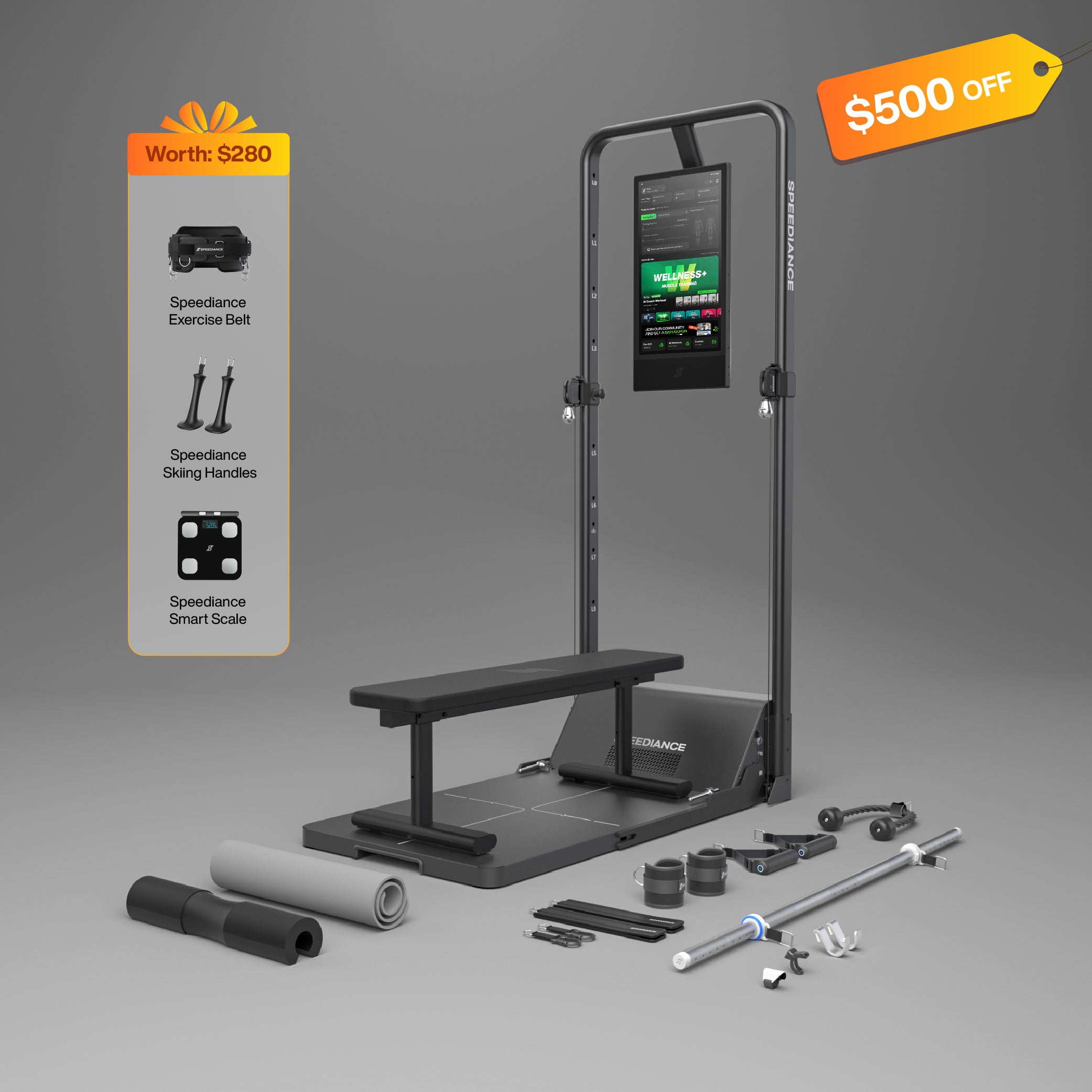
Don’t Drop a Speediance on Your Head: Why This 2S Upgrade Matters
The most meaningful upgrades are not always flashy. One subtle change on the Speediance Gym Monster 2S could make everyday setup feel smoother, safer, and far less stressful.
Not every meaningful upgrade in fitness equipment looks exciting on a spec sheet. Sometimes it is not a bigger screen, a higher resistance number, or a new AI training mode that changes the day-to-day experience. Sometimes it is something much simpler: a better hinge, a slower drop, a little more control, and a lot less risk of getting clocked in the head by your own machine.
That is the kind of difference highlighted here with the Speediance Gym Monster 2S. At first glance, the buttons on the side may look the same as before. The basic interaction appears unchanged. But in actual use, one clear upgrade stands out immediately: when the adjustable part is released, it lowers slowly instead of dropping abruptly.
And if that sounds minor, it probably only sounds minor until you have had a heavy piece of gym equipment come down faster than expected.
The upgrade you notice the first time you use it
What makes this detail so effective is how practical it is. There is no inflated marketing language needed to explain it. You press the button, release the part, and immediately notice that the movement is controlled. On the Gym Monster 2S, it goes down nice and slow. It feels as if there is some kind of spring, damper, or resistance mechanism built in to keep the movement from becoming abrupt.
That small change matters because these are not parts you adjust once and forget about. Users move them repeatedly during workouts. You reposition them between exercises, change cable height, switch from one movement pattern to another, or adjust the setup for a different user in the house. These little interactions add up. If the machine feels smooth and predictable every time, the entire ownership experience improves.
That is one of the easiest things to overlook when comparing connected home gyms. A machine can impress you with software, resistance profiles, and glossy training programs, then frustrate you with the physical basics. If the hardware feels harsh, clunky, or awkward, it creates friction every session. But when the machine feels controlled and forgiving, it becomes easier to trust and easier to use consistently.
Why standby mode matters when adjusting cable machines
Another practical insight is the reminder to take the machine out of standby mode when moving things around. That kind of owner knowledge rarely makes it into glossy launch materials, but it can have a real impact on everyday usability.
According to the speaker, putting the machine into an active state makes the cables feel lighter and looser. In plain terms, that means less fighting against cable tension when you are trying to reposition parts. It can make setup easier, transitions faster, and adjustments less annoying overall.
That is important because smart home gyms often have a learning curve that goes beyond the workouts themselves. You are not just learning exercises. You are learning how the machine behaves: how to wake it up, how to move attachments, how to change stations quickly, and how to avoid making simple setup tasks harder than they need to be.
For new owners especially, those operational details can shape the entire first impression. A machine that feels confusing during setup can seem more intimidating than it really is. A machine that becomes easier once you understand its rhythm feels more approachable and more polished.
A safety feature disguised as convenience
The best takeaway here is that convenience features are often safety features in disguise.
If a movable component drops slowly, that is more convenient. It is also safer. If a machine gives you more control during adjustment, that is more comfortable. It is also more forgiving when you are distracted, tired, or unfamiliar with the mechanism. Those benefits overlap in real life.
The humor in the original anecdote makes the point memorable: the earlier experience involved pressing the button and dropping the unit on his head. That is funny in retrospect, but it also explains exactly why this upgrade matters. A moving part that weighs around 30 pounds is not something you want accelerating downward unexpectedly.
Home gyms do not live in perfect showroom conditions. They live in garages, guest rooms, basements, apartments, and shared family spaces. They get used before work, after work, between chores, while kids are nearby, or when the user is mentally fried at the end of the day. Good product design accounts for those imperfect conditions. Great product design assumes them.
If the Gym Monster 2S adds a simple damping mechanism that prevents sudden downward motion, that is not just a quality-of-life tweak. It is evidence that the company is paying closer attention to real-world use.
What this says about the evolution of the Gym Monster line
There is one point of uncertainty: it is not fully clear whether this behavior already existed on the previous Gym Monster 2 or whether it is new to the 2S. But even without a perfect side-by-side spec comparison, the practical takeaway is clear. This behavior is present on the reviewed machine, and it is the kind of thing a user notices immediately.
That matters because mature product lines usually improve through refinement rather than reinvention. Once the headline features are established, progress often shows up in details like safer moving parts, smoother adjustments, less tension when repositioning cables, reduced intimidation for new users, and better tolerance for human error.
Those are not glamorous improvements, but they are the ones that determine whether a machine feels polished after months of use. Fitness tech companies love to market around peak capability: maximum resistance, smart coaching, analytics, and feature counts. Owners, meanwhile, live with the in-between moments. They live with setup, transitions, reconfiguration, storage, and small annoyances that happen every single session. A machine that handles those moments well earns trust.
The hidden value of idiot-proof design
There is a self-deprecating line in the transcript that deserves more attention: it is only a giant addition if you are an idiot like me. It is funny, but it gets at something deeply important in consumer product design.
The best equipment is a little bit idiot-proof.
That does not mean users are careless. It means products should anticipate predictable mistakes. In fitness, this matters even more because people are often tired, sweaty, distracted, and moving quickly between exercises. If a machine punishes common errors, it creates friction. If it softens those errors, it becomes easier to trust.
That kind of design philosophy is often what separates enthusiast gear from mainstream-friendly gear. A machine can have excellent specifications and still feel unforgiving. Another machine can look only modestly improved on paper, yet feel dramatically better because it handles everyday interactions with more grace. That seems to be the story here. The slow descent may not sound revolutionary, but it is exactly the kind of refinement that makes a product feel more finished.
What prospective buyers should take from this
If you are comparing versions of the Speediance Gym Monster, this example suggests you should pay attention not just to training features, but also to hardware behavior during setup and adjustment.
Ask practical questions like:
- How easy is it to reposition the adjustable arms or pulleys?
- Do components move smoothly or abruptly?
- How much effort does it take to manage the cables?
- Does the machine feel safe when changing configurations?
- Are there refinements that reduce the chance of user error?
Those questions may sound less exciting than workout analytics or resistance profiles, but they affect the experience every single time you train. Over weeks and months, those details can matter more than the features that dominate marketing copy.
For existing owners, there is a practical lesson too: make sure the machine is out of standby mode before moving things around. If the cables are looser and easier to manage in that state, it is a simple habit that can make operation smoother and reduce unnecessary strain during setup.
Final thoughts
The fitness tech world loves big claims, but this is a useful reminder that some of the best upgrades are humble ones. A controlled drop instead of a sudden one. A mechanism that feels damped instead of harsh. A setup process that is a little safer and a lot less annoying.
That may not headline a product launch. It probably will not dominate a comparison chart. But in real life, those are the details users remember. They are the details that make a machine feel thoughtful instead of merely impressive.
Because when a machine part weighs around 30 pounds, nice and slow is more than a design flourish. It is the difference between a polished experience and an unexpected impact. And if the Speediance Gym Monster 2S is improving in these small, practical ways, that may be one of the strongest signs that the platform is maturing in the right direction.
Related Posts
Speediance 2S Modes Explained and a Smarter Warm-Up Strategy
The Speediance 2S Arrived on a Pallet. Here's Why That Matters