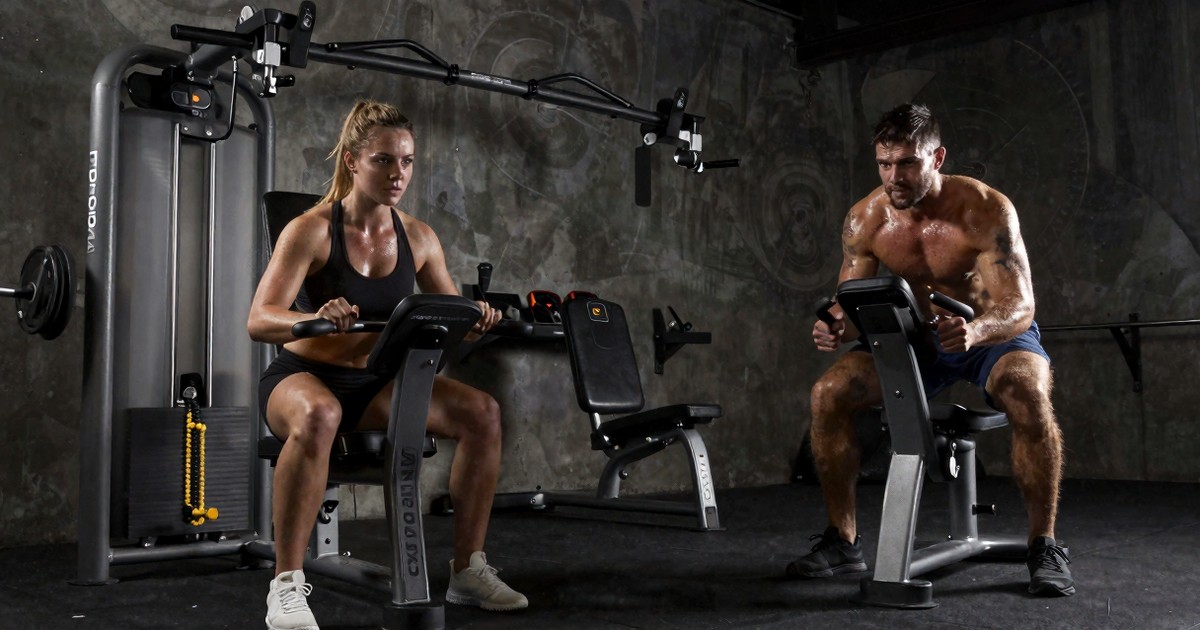
Deadlifting Shouldn't Feel Like Cardio: Switching From Tonal to Speediance 2
Twenty-rep deadlift sets at max weight left me wondering why I was paying for a strength machine to give me a cardio workout. Here is why I moved to the Speediance 2.
There is a specific kind of frustration that only someone who has tried to deadlift on a smart home gym really understands. You load up what the machine calls "max weight," and you set yourself up for a heavy pull, expecting that grinding, full-body tension that makes a deadlift feel like a deadlift. Instead, you spend the next several minutes bobbing up and down in a sea of reps, watching the timer tick, waiting to be done.
That was me on the Tonal. Twenty rep sets of 200 pounds of deadlifting. It felt really uncomfortable, and not in a good way. Not in the way a hard set is supposed to feel, where your hamstrings light up and your grip screams and you know you've moved real weight. It felt like I'd somehow wandered into a cardio workout in the middle of what was supposed to be a strength session. And I don't do cardio on these machines. That isn't why I bought one.
The Problem With High-Rep Everything
The thing about smart resistance machines is that they have to solve a tricky engineering problem: how do you replicate a heavy barbell movement when you don't actually have a heavy barbell? The answer most of them land on is to extend the rep range. If the machine can only realistically provide a certain amount of resistance at any given moment, then to make the set feel "hard," you lengthen it. You turn what would have been a five-rep deadlift into a twenty-rep deadlift.
On paper, that's fine. Volume is volume. Tonnage is tonnage. If you're moving 200 pounds for twenty reps, you are absolutely working. Nobody would tell you that wasn't a workout. But there's a difference between working and training, and there is a very real difference between training strength and doing cardio. They live in different neighborhoods of the gym. They stress your body in different ways, and they build different adaptations.
When I bought a smart gym, I bought it because I wanted to lift heavy things in a small space. I wanted progressive overload. I wanted the satisfaction of a true maximal effort, the kind that makes you set the weight down and stare at the ceiling for a minute before the next set. What I got, more often than not, was a high-rep pump session dressed up in the costume of a strength workout.
What Tonal Got Right (And Where It Started to Bug Me)
To be fair to the Tonal, it does a lot of things well. The form feedback is genuinely useful. The app is polished. The cable-based resistance feels smooth, and the footprint is small, which matters in a home setup. For upper body movements, especially, it delivers. Rows, presses, pull-aparts, curls — these all feel natural and adjustable in ways a traditional dumbbell or cable stack can't always match.
But deadlifts are different. Deadlifts are the movement that exposes every weakness a smart machine has. They're a hip hinge under load. They require the machine to feel like a barbell in your hands, to give you the floor reaction you expect, to allow the natural moment arm changes as the bar travels up your shins and past your knees. On a cable-based system, that doesn't really happen. The resistance curve stays largely consistent regardless of where you are in the lift, which means you can't truly load the bottom position the way you can with a barbell. So the machine compensates by asking for more reps.
And that's how you end up doing cardio on a strength machine.
Why I Started Looking at the Speediance 2
The Speediance V2 (the new one with the longer rails and the beefier internals) had been on my radar for a while. The appeal was straightforward: a digital weight system that still uses a cable, but in a configuration that handles heavier loading differently. The longer cable travel matters. The way the system manages resistance across a longer range of motion matters. And the brand has been making a point about supporting the movements people actually do, not just the movements that are easy to replicate on a small machine.
I wasn't looking for a reason to switch. I was looking for a reason to stay. I kept telling myself that any smart gym would have similar limitations, that no digital resistance system was going to feel like a 400-pound pull from the floor. That's true, and I'm not delusional about it. But the question isn't whether a smart gym can match a power bar and a 45-pound plate. The question is whether the smart gym can give me something that feels like a strength workout and not a conditioning one.
The Speediance V2, at least in early use, answers that question differently than the Tonal did for me.
The First Real Difference
The first thing I noticed was the deadlift setup. Speediance's Gym Monster-style attachments, with the long bar and the floor connection, give you a much closer approximation of a real pull. The weight feels heavier at the bottom because it actually is — the resistance profile changes as the cable travels. You can load the lift in a way that respects the hinge pattern, with the load increasing as you stand up. It doesn't replicate a barbell. Nothing in this category does. But it doesn't feel like twenty reps of cardio either. It feels like deadlifts.
I dropped my rep ranges. I started training in the 5-8 rep zone on most compound movements, which is where I've always felt strength work belonged. The sessions got shorter. The fatigue got more localized. I stopped getting the kind of systemic, breathing-hard, I'm-just-going-to-endure-this feeling that the high-rep Tonal deadlifts gave me. I started getting sore in the right places again.
What I'm Not Saying
I want to be careful here, because I don't want this to read like a hit piece on Tonal. The Tonal is a legitimate product that a lot of people love, and for good reason. The form analysis alone is worth considering. If you're primarily training upper body, if you enjoy the guided programs, if you have specific rehab or accessory work you do, the Tonal can serve you very well. The ecosystem is strong. The app experience is best-in-class.
What I'm saying is that for my training — which leans heavily on compound lifts and which prioritizes the feeling of moving real weight — the Tonal's approach to deadlifts in particular wasn't working. And once one of the main lifts you bought a smart gym for starts to feel like cardio, you have to ask what you're actually paying for.
The Takeaway
If you're shopping for a smart home gym, my advice is this: ignore the marketing rep ranges. Don't get seduced by the 20-rep set claims or the "you'll be done in 18 minutes" copy. Think about what you actually want from a session. If you want cardio, get a treadmill or a bike. If you want strength, get something that gives you the resistance profile of strength movements, even if it lives in a slightly smaller package.
For me, the Speediance 2 is the better match. It still isn't a barbell. It still won't replace the feeling of a real deadlift bar loaded with plates. But it gives me what I actually came for, which is a hard, low-rep, real-feeling strength session in my own home, without paying for a high-rep cardiovascular experience I didn't ask for.
That's worth the switch.
Keep comparing
Make the next smart-gym decision with the full picture
Move from one review into model comparisons, real lifting data, and the matching video demonstrations.