Is 40lbs Really 40lbs? A Smart Gym Reality Check
Testing the same 40-pound load across dumbbells, Tonal, and Speediance reveals a shocking discrepancy in digital resistance calibration.
I picked up a 40-pound dumbbell the other day and curled it. Then I switched to my smart gym and selected 40 pounds. And then I switched to a different smart gym and selected 40 pounds again. All three were supposed to be the same load, but they weren't. This is the rabbit hole I've been falling down lately, and it's been quietly reshaping how I think about the weights I train with every day.
The Setup: A Simple Bicep Curl Test
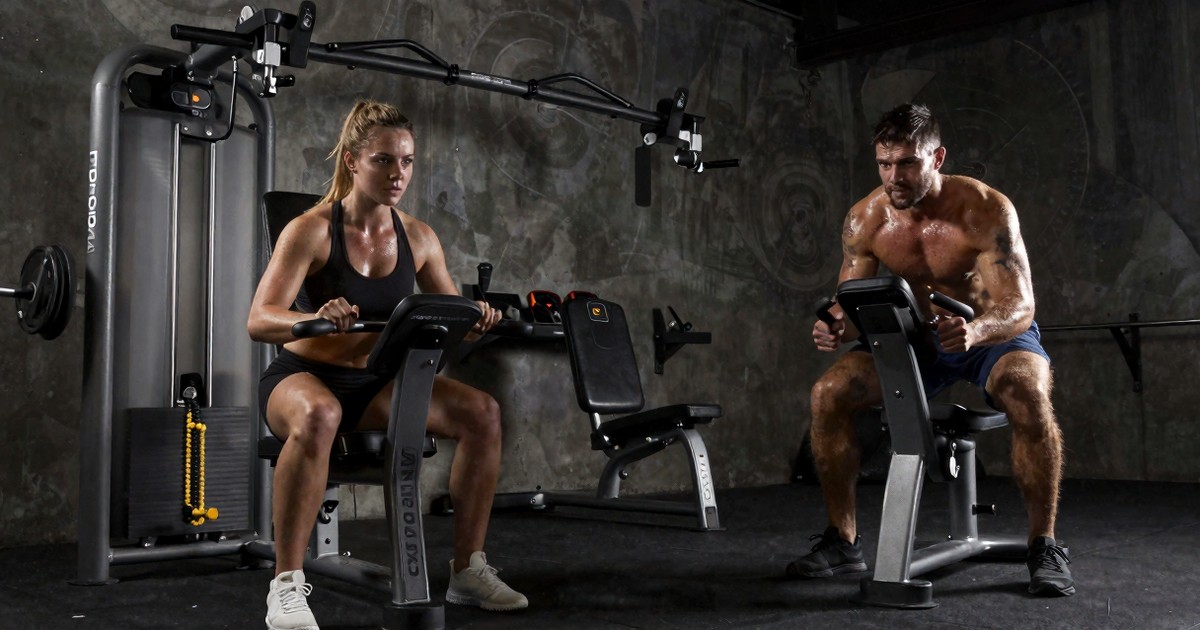
The test couldn't be simpler. Same exercise. Same target weight. Three different pieces of equipment: a traditional dumbbell, a Tonal, and a Speediance. The goal was just to see how each one felt at the exact same nominal load—40 pounds. A dumbbell is the gold standard for what 40 pounds "should" feel like. Gravity does its thing, the load peaks at the bottom of the curl when your bicep is fully shortened and stretched under tension, and the load drops off slightly as you approach the top due to the lever arm of your forearm. That's the natural strength curve of a curl.
A digital resistance machine, however, doesn't have to play by those rules. It uses electromagnetic motors to simulate weight, which opens up a world of variation in how that weight is actually delivered to your muscles.
What Happened on Tonal
I selected 40 pounds on the Tonal and started curling. Within a few reps, something felt off. The weight felt heavy—and I mean heavy in a way that 40 pounds really shouldn't. If I had to put a number on it, I would have guessed 60 pounds. Maybe a touch more. The reps felt grinding. The eccentric was a battle. By the time I finished my set, my forearms were cooked in a way that no dumbbell curl at 40 pounds had ever done to me.
Tonal’s resistance is unique because it is active. The motor is constantly pulling, providing a "heavy" eccentric phase that many users describe as feeling about 20-30% heavier than traditional iron. Tonal's 40 pounds, in other words, didn't feel like 40 pounds of iron. It felt like a significantly more taxing physiological stimulus.
What Happened on Speediance
Then I jumped over to the Speediance and dialed in 40 pounds. Same exercise. Same hand position. Same kind of grip. This time, the weight felt... right. Not exactly identical to a dumbbell—no digital resistance system truly mimics free weights perfectly—but close. The Speediance load tracked with what I would expect from curling an actual 40-pound dumbbell. The reps were challenging but doable. The fatigue pattern matched what I'm used to feeling at that load in a commercial gym.
So the Speediance 40 pounds felt like 40 pounds. Or at least, much closer to the physical reality of iron than the Tonal did. This raised a massive question: Why is there such a delta between two top-tier smart gyms?
So What Does "40 Pounds" Even Mean?
This is the question the whole experience kicked off for me. Both machines let me set the dial to "40." Both delivered a digital resistance curve. But one felt roughly half-again as heavy as the other. A few possible explanations are worth thinking through if you train on a smart gym.
1. The Universal Pound Doesn't Exist in Digital
The original resistance range on these machines varies. Speediance's resistance range tops out around 220 pounds (on the Gym Monster), while Tonal's range tops out around 200 pounds. When two machines claim to deliver "40 pounds," they may not be using the same internal definition of resistance. The motor, the cable system, the friction profile, and the way force is applied across the range of motion—none of it is standardized across brands. There is no universal pound; there is only "pounds on this machine, calibrated however this manufacturer decided."
2. Constant Tension vs. Variable Inertia
A free weight is hardest at the bottom of a curl and easiest at the top. Digital resistance doesn't have to follow that curve. Many of them hold the load relatively constant throughout the movement. This means you're getting a heavier load than a dumbbell at the top of the curl, where your bicep is at its strongest. Furthermore, digital weights lack inertia. You can't "swing" a Tonal weight to get it moving; the motor is applying the exact same force from millimeter zero to the end of the rep. This "dead weight" feel makes digital pounds feel significantly more difficult than iron pounds.
3. Motor Response and Friction
There's also a feel component that's hard to quantify: friction and mechanical advantage. Every pulley in a system adds a tiny bit of friction. If a machine's software doesn't perfectly compensate for the friction of the internal cable routing, 40 pounds of motor force might actually feel like 42 or 45 pounds at the handle. Speediance seems to have calibrated their output to feel more like traditional cables, whereas Tonal has leaned into the "heavier than iron" reputation.
Why This Matters for Your Training
If you're logging your lifts, tracking progress, or following a program written in pounds, this discrepancy matters. If you've been curling 40 pounds on Tonal for weeks and switch to a Speediance, or to dumbbells, 40 pounds will feel like a warm-up. You haven't lost strength; you've just changed the measurement system.
- Stay within one ecosystem: Treat your smart gym's weight as a relative score. Track progress against that system specifically.
- Do a calibration check: If you move between a smart gym and a traditional gym, spend a week finding your new baseline. Don't assume your Tonal PR is your barbell PR.
- Focus on RPE: Rate of Perceived Exertion (RPE) is a better metric than absolute poundage when hopping between digital platforms.
- Embrace the stimulus: If Tonal feels heavier, you are likely doing more work. That's a training advantage, not a bug.
The Bigger Picture
Smart gyms are incredible pieces of equipment. The convenience, the data, and the ability to swap exercises with a tap are revolutionary. But they are closed systems. When I curled 40 pounds on the Speediance, it felt like 40 pounds on a dumbbell. When I curled 40 pounds on the Tonal, it felt like 60. Same dial, same number, wildly different experience. The label on the screen is just a starting point; the only way to truly gauge the work is to listen to what your muscles are telling you under the load.
Keep comparing
Make the next smart-gym decision with the full picture
Move from one review into model comparisons, real lifting data, and the matching video demonstrations.